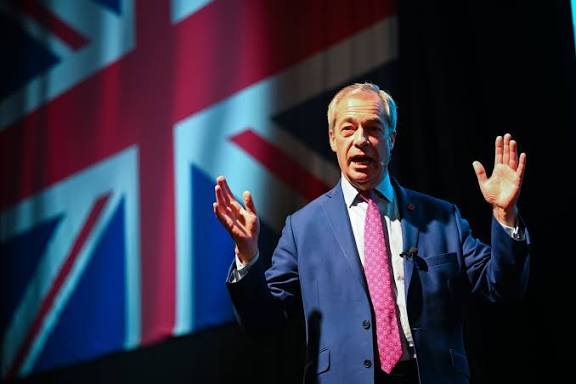
Danny Kruger, Reform UK’s head of Preparing for Government, said the party would seek to make most of the reductions during the early years of a Reform administration while restructuring how government departments operate.
“We’re going to radically reduce the size of the civil service,” Kruger said, arguing that the workforce had expanded significantly over the past decade. Reform says a smaller civil service could be accompanied by higher salaries and a greater performance-related element for some of the staff who remain.
More than 220,000 roles potentially affected
Official Cabinet Office statistics show the civil service employed 557,825 people at the end of March 2026, equivalent to 523,795 full-time-equivalent workers once part-time working is taken into account.
If Reform’s proposed 300,000 figure is compared with the current FTE total, the civil service would become roughly 223,800 roles smaller — a reduction of about 43%.


Reform has not yet published a detailed workforce plan explaining how much of the reduction would come from compulsory redundancies, voluntary departures, recruitment restrictions, natural staff turnover or departmental restructuring.
There is also an important distinction between headcount and full-time equivalent, or FTE. Headcount counts each employee as one person, while FTE adjusts the figures to reflect part-time working.
The latest Office for National Statistics figures show that 557,000 people were employed in the civil service in June 2026, down by about 1,000 from March but 6,000 higher than a year earlier. It was the first quarterly fall in civil service employment since June 2021.
That means Reform would need to clarify whether its 300,000 target refers to actual employees or FTE positions before the precise number of jobs potentially affected can be established.
Related news
UK civil servants told: resign if you cannot support Gaza policy
Reform UK councillor suspended from Home Office role over asylum claim comments
Farage backs away from £90bn tax cut pledge, cites economy
What does this mean for Nigerians in the UK?
The announcement is likely to attract attention among Nigerians and other diaspora communities working in Britain’s public sector.
However, there is no official figure in the latest civil service statistics showing precisely how many Nigerian or Nigerian-British employees work in the civil service, so it would be misleading to estimate how many Nigerians could be affected.
What the figures do show is that 19.2% of civil servants whose ethnicity is known come from ethnic minority backgrounds. There were 26,655 Black civil servants in March 2026, although that category includes people from different national and ethnic backgrounds and cannot be treated as a figure for Nigerian employees.
For Nigerian civil servants, the immediate position is therefore unchanged. Reform’s announcement is a proposal for what it says it would do if it entered government; it does not itself change employment contracts, redundancy rules or existing jobs.
Unions challenge scale of proposed cuts
Civil service unions have criticised the plan and questioned whether government services could continue at their current level after reductions on such a scale.
Prospect general secretary Mike Clancy argued that specialist areas including cyber security, environmental monitoring and disease control could be affected by large staffing reductions.
The FDA and PCS unions also raised questions about the consequences for major departments responsible for prisons, borders, taxation, welfare and defence.
Reform takes a different view. The party argues that Whitehall can operate with substantially fewer employees if government is reorganised and remaining staff are better rewarded.
Kruger said Reform would expect to make significant reductions while planning the transition so essential government work could continue.
For workers, the key point is that nothing changes immediately. The 300,000 target remains a Reform UK proposal rather than an approved government programme.
But if implemented in future, reducing a civil service currently employing more than half a million people to around 300,000 would amount to a substantial restructuring of Britain’s government workforce — with the potential consequences depending heavily on which departments, occupations and services are selected for reductions.