The senate has passed two key health financing bills seeking to increase funding for primary healthcare and generate additional domestic revenue for disease prevention and health promotion.
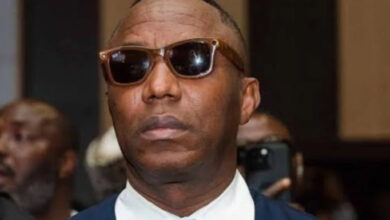
Chairman, Senate Committee on Health (Secondary and Tertiary), Senator Ipalibo Harry Banigo, disclosed this at the National Convergence on Sustainable Health Financing, organised by the Senate Committee on Health in collaboration with Caywood Brown Foundation, in Abuja


Banigo said the two bills; the National Health Act Amendment Bill and the Sugar-Sweetened Beverages (SSB) Levy Bill; were designed to strengthen Nigeria’s domestic health financing architecture and reduce reliance on external funding.
She said the Senate had passed the National Health Act Amendment Bill, identified as SB 86, which seeks to increase the statutory allocation to the Basic Health Care Provision Fund (BHCPF) from one per cent to two per cent of the Consolidated Revenue Fund of the Federation.
She added that SB 713, the Sugar-Sweetened Beverages Levy Bill, seeks to amend the Customs, Excise and Tariff (Consolidation) Act by replacing the existing flat excise duty of N10 per litre with a percentage-based levy.
According to her, the proposed SSB levy would earmark 50 per cent of its proceeds for health promotion and disease prevention.
Banigo said both bills had scaled third reading in the Senate and were currently before the House of Representatives for concurrence.
She described the two legislative proposals as complementary components of a broader health financing framework aimed at building a more resilient and domestically funded health system.
“Health financing is a national development question. No country can build a productive economy on an unhealthy population,” Banigo said.
She explained that inadequate investment in healthcare had implications for education, productivity and Nigeria’s economic development, noting that a sick child could not effectively attend school while a sick worker could not contribute optimally to the economy.
“Without legislative action, we cannot speak convincingly about poverty reduction, about economic productivity, about demographic dividends, without the health of our population being adequately financed,” she said.
The senator stressed that the challenge of health financing was not only about inadequate resources, but also predictability, planning, national ownership and resilience.
She said Nigeria needed a health financing system capable of responding to emerging health challenges, including the increasing burden of non-communicable diseases.
Banigo said the country must also determine what additional domestic resources would deliver for Nigerians, stressing that the objective should go beyond simply generating more money.
“It is not simply about how much money, really. It is about what this additional domestic financing will buy for Nigerians,” she said.
The senator said the proposed reforms should translate into tangible improvements in healthcare for children, women, older people, workers and other vulnerable groups.
She acknowledged the contributions of Nigeria’s development partners to health programmes, including immunisation, HIV, tuberculosis, malaria, maternal and child health and health-system strengthening.
However, Banigo said domestic resources must progressively become the foundation of Nigeria’s health financing framework.
“Domestic resources must progressively become the foundation of Nigeria’s health financing framework. It must be domestic,” she said.
She urged stakeholders at the national convergence, including federal and state governments, the National Assembly, civil society organisations, traditional and community leaders and the media, to build a shared understanding around the proposed reforms and support their implementation.