Owning a laptop, paying for regular internet access and having a reliable electricity supply, for many Nigerian students, remain significant barriers to fully participating in modern higher education.
While universities and other tertiary institutions increasingly depend on digital platforms, online libraries, virtual classrooms and electronic research resources, a large number of students still struggle to access the basic tools required to benefit from them.


The Tertiary Education Trust Fund (TETFund) is now seeking to address part of this challenge through the expansion of ICT Digital Experience Centres across the country.
The intervention is designed to provide students with free access to computers, high-speed internet, digital resources and alternative power supply, with the fund planning to extend the initiative to more than 270 beneficiary institutions nationwide.
The Executive Secretary of TETFund, Sonny Echono, said the ambition was not to limit the centres to a handful of institutions but to make them a standard feature of beneficiary campuses across Nigeria.
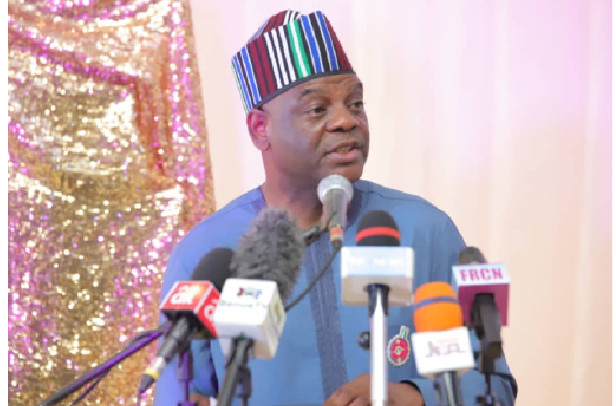
He disclosed this during the commissioning of an ICT Digital Experience Centre at the University of Cross River State (UNICROSS), Calabar, by the First Lady, Senator Oluremi Tinubu.
The initiative comes at a time when access to technology has become increasingly inseparable from access to education itself. From conducting research and accessing international academic journals to submitting assignments, attending online programmes and acquiring digital skills, students are expected to navigate an educational environment that is becoming more technology-driven.
Yet, the digital transition has not been evenly distributed. For students from low-income households, the cost of purchasing a laptop can be prohibitive.
Also, internet subscriptions add another recurring burden, while unreliable electricity can make it difficult to keep devices charged or maintain consistent access to online resources.
Against this background, Echono said the centres were conceived to bridge the digital divide by creating accessible spaces where students could use computers, connect to high-speed internet and access online educational materials without having to bear the cost themselves.
“We intend to cascade it to every institution. Every institution that is a beneficiary must have a centre like this on campus,” he said.
This represents a potentially significant expansion of digital access in Nigeria’s tertiary education system, considering the number of institutions that benefit from TETFund interventions.
Rather than treating digital infrastructure as a luxury, the initiative seeks to position it as part of the basic support structure required for contemporary higher education.
At the UNICROSS centre, the facility is also expected to serve as a digital hub where students can undertake academic work, explore research materials, develop innovative ideas and acquire skills that could improve their employment prospects.
Echono said the centres would provide students with digital resources required for academic work, innovation, creativity and entrepreneurship, while also giving them access to educational content from around the world.
The planned integration of the centres with TETFund’s TERAS platform is expected to further expand their usefulness. According to Echono, students would be able to access materials, discoveries and guidance that could support creativity, innovation and participation in digital and online activities.
“By the time we integrate these centres with our TERAS platform, they will have access to any material, any discovery and any guidance that they will need to be creative, innovative and to participate in any digital or online activity,” he said.
The emphasis on access is particularly important in a country where the digital divide often mirrors existing economic inequalities.
A student whose family can afford a laptop, mobile data and alternative power has a considerable advantage over another student who depends entirely on public computer facilities or struggles to stay connected to the internet.
The new centres could therefore provide a common platform for students from different economic backgrounds.