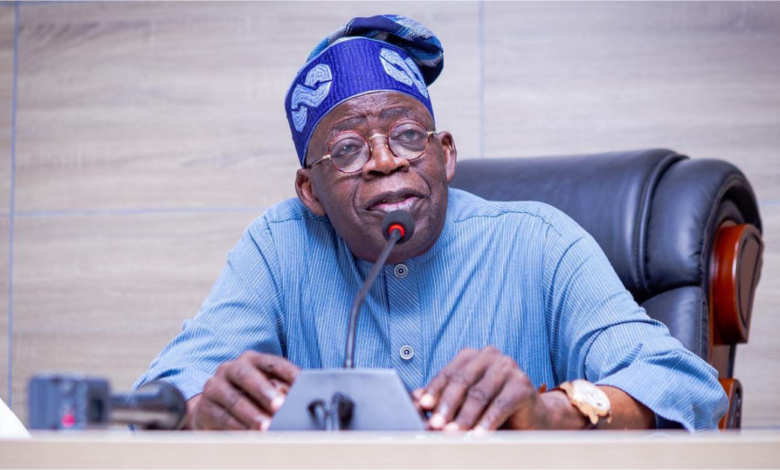
President Bola Tinubu’s extended stay abroad has raised fresh questions about who is formally leading Nigeria, particularly as Vice-President Kashim Shettima is also outside the country. Tinubu has spent more than 21 days away, but neither the Presidency nor the National Assembly has publicly confirmed that he transmitted a letter handing presidential duties to Shettima.
The issue goes beyond the location of the country’s two most senior leaders. It centres on Section 145 of the Nigerian Constitution, which sets out the procedure for transferring presidential responsibilities during a holiday or temporary inability to serve.
Tinubu left Nigeria on 30 August for what the Presidency described as a working holiday in Europe. His trip, which reportedly included visits to France and the United Kingdom, was initially expected to last about three weeks.
The Presidency later announced that he had extended the trip by a few days. Shettima subsequently travelled to New York to represent Nigeria at the 81st United Nations General Assembly, leaving both men outside the country at the same time.


Their absence does not mean Nigeria has no government. Ministers, senior officials and security agencies continue to operate, while the president can communicate and issue instructions from abroad. However, the situation has revived a constitutional debate about transparency and the formal transfer of authority.
What the Constitution requires
Section 145 states that when a president proceeds on holiday or is otherwise unable to perform the functions of the office, he must send a written declaration to the Senate president and the speaker of the House of Representatives.
After the declaration is received, the vice-president assumes the president’s duties as acting president until the president sends another letter confirming that he is ready to resume work.
The Constitution also covers cases in which a president fails or is unable to transmit the declaration within 21 days. It says the National Assembly must pass a resolution, supported by a simple majority in each chamber, mandating the vice-president to serve as acting president.
This transfer does not take place merely because the president has crossed the 21-day mark. The Senate and House of Representatives must complete the constitutional process.
There has been no public announcement confirming that Tinubu sent a handover letter before leaving Nigeria. That does not prove that no communication was submitted, but the absence of official clarification has allowed uncertainty to grow.
Presidency insists Tinubu remains in control
Presidential adviser Daniel Bwala has dismissed claims that the country is without leadership. He argued that the president’s constitutional powers are not limited by his physical location.
“For avoidance of doubt, the power of the president to govern Nigeria is not limited to geography,” Bwala said.
He added that Tinubu could continue to give orders, delegate duties and manage government affairs from anywhere in the world.
Bwala’s comments, reported by New Daily Prime, reflect the government’s position that Tinubu remains fully in charge while abroad.
Opposition figures and some legal commentators disagree with that interpretation. They argue that the availability of phones, email and video meetings does not remove the need to follow the procedure laid down in Section 145.
Their concern is not simply whether Tinubu can work from Europe. It is whether Nigerians and public officials have been clearly told who holds formal executive authority during his extended trip.
Akpabio rules out acting-president role
Senate President Godswill Akpabio has said he is not acting president while Tinubu and Shettima are away.
Nigeria’s Constitution does not automatically transfer presidential powers to the Senate president whenever the president and vice-president travel abroad.
Under Section 146, the Senate president can temporarily take control only when both offices become vacant through circumstances such as death, resignation, removal or permanent incapacity. Foreign travel does not create such a vacancy.
NewDailyPrime previously reported Akpabio’s clarification following public speculation over the country’s leadership arrangements.
Why the handover question matters
The Constitution provides a handover procedure to prevent confusion, particularly when urgent security, economic or diplomatic decisions must be taken.
A president may remain involved in government business while overseas, but formally appointing an acting president creates a clear chain of command. It also tells ministers, lawmakers, security chiefs and the public who has final authority during that period.
For Nigerians living in the diaspora, the dispute is important because it concerns confidence in the country’s institutions. Investors, international partners and citizens expect constitutional processes to remain clear regardless of where political leaders are located.
The uncertainty could be resolved through a direct statement from the Presidency or National Assembly confirming whether Tinubu transmitted the required declaration and explaining the current leadership arrangement.
What readers should know
Tinubu’s prolonged stay abroad does not make the presidency vacant, and it does not automatically place Akpabio in charge. The key question is whether the president submitted the declaration required under Section 145 and, if he did not, whether the National Assembly will follow the constitutional procedure that applies after 21 days.
Related news