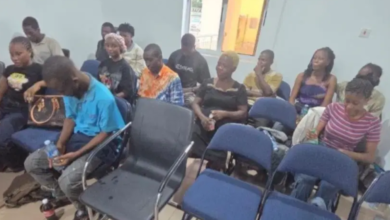
The Federal Government Claimed to Pay ₦33.7 Billion to Vulnerable Nigerians. But There’s No Receipt


Imagine being responsible for sending ₦33.7 billion to more than three million households and then having an auditor ask you to prove exactly who received it.
That is the situation surrounding Nigeria’s National Cash Transfer Office (NCTO), after the Auditor-General for the Federation, Shaakaa Kanyitor Chira, raised concerns about ₦33.751 billion in electronic cash transfers made in 2023.
According to the 2024 Annual Report on Non-Compliance and Internal Control Weaknesses in Ministries, Departments and Agencies, the money was transferred to 3,295,207 households and beneficiaries across 35 states. But the Auditor-General says the records available were not enough to verify the said payments.
Before we get into why any of this is a big deal, let’s start with what this cash transfer programme is actually supposed to do, and why anyone outside an accounting office should care.
Nigeria’s National Cash Transfer Programme is part of the country’s social protection system for poor and vulnerable households.
The programme is managed by the National Cash Transfer Office, while the National Social Safety-Nets Coordinating Office (NASSCO) supports the identification of eligible households through the National Social Register (NSR). According to the government, the programme identifies households through geographic and community-based targeting before including them in the register.
The idea is fairly simple. The government identifies households considered poor or vulnerable, and eligible beneficiaries receive direct financial assistance.
The programme has been operating since 2016 as part of Nigeria’s larger social safety-net system. The government says its purpose is to provide regular financial support to poor and vulnerable households, alongside other forms of livelihood assistance.
In all of this, the National Social Register (NSR) is important because it is supposed to provide the database from which eligible households can be identified and supported. So, when billions of naira are subsequently transferred to people on that register, there should be enough records to trace the money from the government to the beneficiaries. And government agencies shouldn’t have to go back-and-forth on who was paid or where the money went.
The 2024 report was submitted by the Auditor-General for the Federation to the Clerk of the National Assembly on July 17, 2026.
It said electronic transfers totalling ₦33.751 billion were made to 3,295,207 households and beneficiaries in 2023, but problems started when auditors tried to balance the payments with the relevant beneficiary records.
According to the audit, payment vouchers did not contain sufficient information about the beneficiaries, while the NCTO did not provide the relevant REMITA statements that auditors said they needed to reconcile the payments with the NSR and National Beneficiary Register.
These findings do not mean the ₦33.7 billion disappeared, nor does the audit itself establish that the government paid fake beneficiaries. But they reinforce the auditor-general’s claims that there simply isn’t enough evidence to independently verify the payments.
This should raise eyebrows because an audit query is essentially a request for an agency to account properly for public money. So, when you hear that the records are not complete, know that there’s fire on the mountain.
The NCTO has disputed the concern. In a statement made available to the press on September 9, the office said remittance records were sent to the auditors and explained that its payment records are maintained electronically.
This leaves an issue that should be resolved with documents rather than competing statements: the government should be able to show the records that establish who was paid, when they were paid, and how those payments correspond with the official beneficiary registers.
One, public money needs a trail. For a programme involving millions of beneficiaries, the system should make it possible to follow a payment from the government account to the beneficiary. It should also make it possible to identify errors, duplicate payments, ineligible beneficiaries, or cases where someone listed on the register did not receive the money.
Without reliable records, an auditor has a harder time determining whether the programme worked as intended. The cash-transfer programme is designed to support the country’s poorest and most vulnerable households. So, if a beneficiary receives the money, the records should show that. If a beneficiary doesn’t receive it, the same system should make that failure visible. The point of an audit is to make these things verifiable.
The ₦33.751 billion in the Auditor-General’s finding is from 2023, but Nigeria’s cash-transfer system has continued to expand.
The current National Social Safety Net programme has been designed to provide support to millions of vulnerable Nigerians, and the government has continued to emphasise the use of beneficiary databases and identity verification in its social-protection programmes.
NASSCO’s current system, for example, tracks NSR records and National Identification Number (NIN) validation as part of efforts to improve the quality of beneficiary data.
The government has also announced larger cash-transfer initiatives in recent years. In April 2026, it announced plans to expand its 2023–2026 conditional cash-transfer programme from 9.2 million beneficiaries to 15 million Nigerians, with the government saying the payments would be tied to systems including NIN to improve transparency and integrity.
That makes proper record-keeping non-negotiable. As the number of beneficiaries and the amount of money moving through the system increase, weaknesses in verification and reconciliation can affect much more than one audit period.
The Auditor-General’s finding needs to be resolved with evidence. The NCTO should provide the payment records, beneficiary information and reconciliation documents needed to establish how the ₦33.751 billion was transferred.
There is also a lesson here for Nigeria’s social-protection system. A cash-transfer programme depends heavily on accurate data, reliable payment systems and records that can withstand independent scrutiny.
A government agency cannot say millions of vulnerable Nigerians received billions of naira, while an auditor says the documents available don’t show that it’s true. Both statements have to be reconciled with the records being produced and verified. ₦33.7 billion is too much public money to leave that uncertainty hanging. Nigerians should be able to see how the money moved, who received it, and whether the programme’s target audience was actually reached.
It’s really as simple as that.
What do you think about this?
Drop your opinion in the comment section.
FOLLOW US & Share this with someone who needs to see this.