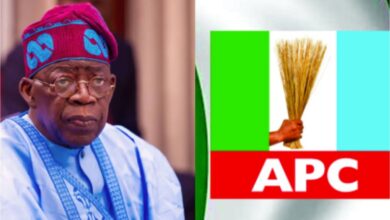
President Bola Tinubu has pointed to Nigeria’s 4.43 per cent economic growth in the second quarter of 2026 as evidence that his administration’s three-year reform programme is beginning to deliver results, while acknowledging that stronger growth must translate into better living conditions for Nigerians.
Tinubu, in a statement on Tuesday, said real gross domestic product rose from 4.23 per cent in the corresponding quarter of 2025 to 4.43 per cent in Q2 2026. He linked the performance to gains recorded across agriculture, manufacturing, oil and gas, and services.
The President said the economy also expanded in nominal terms, with GDP reaching N119.27tn, compared with N100.7tn in the same period last year. He presented the figures as evidence that the difficult economic measures introduced since his administration took office were beginning to stabilise the economy.
“These numbers matter because they show where our economy is going after three years of difficult but necessary reforms,” Tinubu said.


He said the administration had spent the past three years implementing measures designed to stabilise the economy and create conditions for sustained expansion.
Tinubu also cited what he described as improvements in Nigeria’s external and investment position. He said the country had recorded trade surpluses, while foreign reserves had reached their highest level in 17 years. He added that Nigeria’s credit rating had improved, investors who previously exited the country were returning, and oil and gas production was rising.
The President further listed infrastructure, education financing, and access to credit among areas where his administration claimed progress.
He said the government was constructing roads, railways, and superhighways, while universities had experienced a period without strikes. Tinubu also referenced the Nigerian Education Loan Fund (NELFUND), which provides student loans, and the CreditCorp scheme for affordable credit to civil servants.
But the President acknowledged that favourable economic statistics alone would not settle the question of whether Nigerians are benefiting from the reforms.
“Our responsibility now is to ensure that these improving numbers translate more quickly into the lives of our people,” he said.
That distinction is central to Tinubu’s assessment of the economy. While the government is presenting rising output and improved macroeconomic indicators as signs of recovery, the President said the next stage must be measured by what households can afford and what ordinary citizens experience.
“Growth must be something every Nigerian can feel at the dining table and in their pocket,” he said.
Tinubu said his administration would therefore focus in the coming weeks on measures aimed at easing pressure on vulnerable Nigerians. He listed cheaper transport, increased food production, and relief programmes targeted at communities as part of that effort.
The President also used the improved economic figures to defend his reform path against opposition parties proposing to reverse some of the policies introduced since 2023.
He said some opposition leaders were promising to return the country to policies and economic distortions that his administration had spent three years correcting.
“We will not turn back,” Tinubu declared.
He insisted that his government would not reverse the reforms.
The President said the economy was on what he described as an “irreversible path” towards stronger growth, although he acknowledged that the gains must reach households faster.
“The Renewed Hope Agenda is working,” Tinubu said.
He framed the latest GDP figures as a measure of progress and a justification for maintaining the course of his administration’s economic programme.
The statement, thus, places the 4.43 per cent Q2 growth at the centre of the government’s case for its economic reforms. It also points to a shift in emphasis from stabilising key indicators to converting those gains into cheaper transport, greater food availability, access to finance, and improved household purchasing power.
READ RELATED NEWS UPDATES
Why Tinubu doesn’t want FBI records released — Reno Omokri
Tinubu takes South Africa xenophobia row to AU
Tinubu heads to Europe for three-week leave ahead of 2027 campaign