President Bola Tinubu has called on the United Nations Security Council to take stronger action against the spread of nuclear weapons, as the global nuclear arsenal remains above 12,000 warheads and several nuclear-armed states continue to modernise their stockpiles.
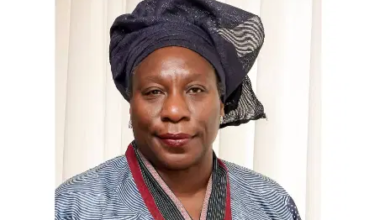
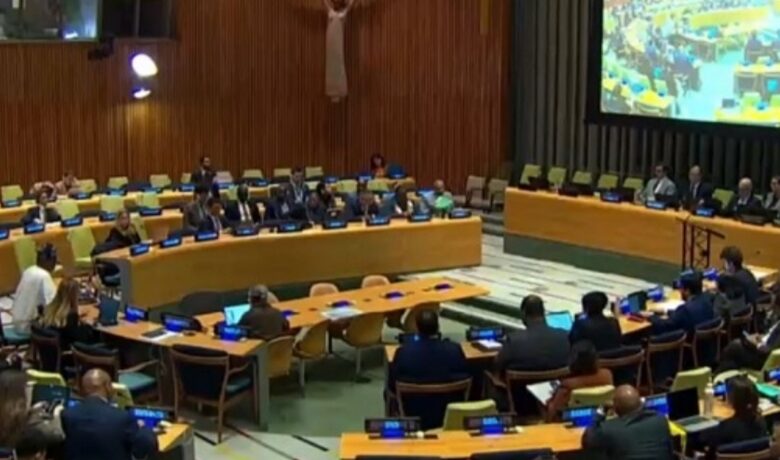
Tinubu’s position was delivered by Nigeria’s Permanent Representative to the United Nations, Ambassador Jimoh Ibrahim, during a high-level UN General Assembly meeting in New York on Tuesday to mark the International Day for the Total Elimination of Nuclear Weapons.
The President said Nigeria’s security does not depend on possessing nuclear weapons. He called for the Security Council to enforce the principles of the UN Charter, including sanctions against the proliferation of weapons of mass destruction and measures aimed at eliminating nuclear arms.
Ibrahim said Nigeria does not support the production or proliferation of nuclear weapons. He also cited Article 6 of the UN Charter on disarmament and Article 2(4), which prohibits the threat or use of force against the territorial integrity or political independence of states.

The Nigerian envoy described nuclear disarmament as the United Nations’ highest disarmament priority and highlighted the devastating human consequences of the atomic bombings of Hiroshima and Nagasaki during the Second World War.
READ RELATED NEWS UPDATES:
Why the 12,000-warhead figure matters
The scale of the global arsenal puts Nigeria’s position in context.
The UN said in its 2026 message marking the elimination day that the world had more than 12,000 nuclear warheads as of January, with about 2,100 to 2,200 kept on high operational alert and capable of being launched at short notice. The UN also warned that, for the first time since the Cold War, the global stockpile is expected to grow again as new warheads enter arsenals faster than older ones are dismantled.
That means the debate is no longer only about countries acquiring nuclear weapons. It also concerns the modernisation of existing arsenals and the security doctrines that allow states to retain them.
The UN has described the annual observance as an opportunity to build public awareness about the humanitarian danger posed by nuclear weapons and renew international efforts towards a nuclear-free world.
Nigeria’s position is not new
Nigeria’s stance also predates the Tinubu administration.
The country is a party to the Treaty on the Prohibition of Nuclear Weapons, having deposited its ratification with the United Nations in January 2021.
Nigeria is also part of the African Nuclear-Weapon-Free Zone created by the Pelindaba Treaty, which establishes Africa as a region free of nuclear weapons. The treaty is designed to prohibit the development, acquisition, testing, possession and deployment of nuclear explosive devices on the continent.
Nigeria has nevertheless maintained a distinction between nuclear weapons and peaceful nuclear technology. In a 2026 UN statement, the country backed the use of nuclear science for areas such as healthcare, agriculture, energy, food security and water management while supporting stronger safeguards against proliferation.
This distinction is significant for Nigeria, which is pursuing civilian applications of nuclear technology while rejecting nuclear weapons as an instrument of national security.
Ibrahim also commended African leaders for keeping the continent free from nuclear weapons testing and production.
The Nigerian intervention therefore places Abuja firmly within Africa’s long-standing nuclear-free framework while pressing the Security Council to address the much larger global arsenal.
The central challenge, however, lies beyond declarations. With thousands of warheads still in existence and some maintained on immediate alert, the question facing the international community is how commitments to disarmament can be converted into measurable reductions in nuclear arsenals.