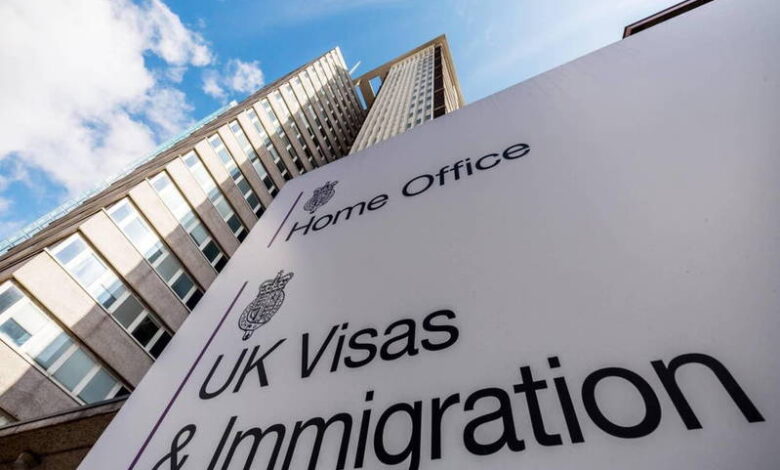
Nigerians planning to study in the UK will need to show more money for living costs when applying for a Student visa from 30 November 2026, after the Home Office confirmed an increase in the financial requirement for international students.
The change means applicants studying in London will have to demonstrate £1,570 a month, while those studying outside London will need £1,203 a month, for up to nine months. Applicants preparing to apply around the changeover date should check carefully which rules apply to them before submitting financial evidence.
The new figures were set out in the Home Office’s Statement of Changes to the Immigration Rules, HC 584, published on 3 September 2026.
The current requirement is £1,529 a month for students in London and £1,171 outside London. The increase therefore adds £41 a month for London applicants and £32 a month for those studying elsewhere in the UK.

For a course lasting nine months or more, a student in London could be required to show up to £14,130 in maintenance funds, compared with £13,761 under the present rules.
Outside London, the maximum nine-month requirement will rise from £10,539 to £10,827.
These amounts cover living costs and are separate from any outstanding tuition fees that an applicant may also need to demonstrate.
New Student visa requirement starts on 30 November
The higher financial threshold takes effect on 30 November 2026, but the change does not automatically apply to every application being considered after that date.
The Home Office‘s implementation rules state that applications made before 30 November will be decided under the Immigration Rules in force on 29 November 2026. Applications made from 30 November will be subject to the new maintenance figures.
That distinction could be important for Nigerians who are close to submitting applications.
The Home Office said the increase forms part of its annual adjustment to the Student route maintenance requirement. The amount is linked to maintenance support available to home students and has been increased to reflect the 2026/27 academic year.
The Government has also said official visa guidance will be updated when the new rules take effect, meaning applicants checking GOV.UK before 30 November may still see the existing figures.
Why Nigerian applicants should pay attention
The change applies to international Student visa applicants generally. It is not a special rule aimed at Nigerians.
However, Nigeria does not appear on the current GOV.UK list of nationalities covered by the differential evidence requirement. Applicants from countries on that list are normally not required to submit financial evidence at the initial application stage, although UK Visas and Immigration can still request it.
This means many Nigerians applying from outside the UK should be prepared to provide acceptable evidence showing that they meet the financial requirement.
There are exceptions.
A person applying from within the UK who has been living in the country with valid immigration permission for at least 12 months at the date of application generally does not have to prove the maintenance funds. Student Union Sabbatical Officers are also exempt from the normal requirement.
Applicants should therefore check their individual circumstances rather than assuming the rule applies in exactly the same way to everyone.
Funds normally need to be held for 28 days
Where financial evidence is required, applicants normally need to show that the necessary money has been held for at least 28 consecutive days.
The end of that 28-day period must be no more than 31 days before the visa application date. Acceptable evidence can include qualifying bank statements, certificates of deposit and certain student loans or official sponsorship arrangements.
Applicants using money held in naira should also leave some room for exchange-rate movements.
UKVI guidance says foreign currency is converted into pounds using the OANDA spot exchange rate on the date of application. A naira balance that is only just enough when the account is prepared could therefore fall below the required sterling amount if the exchange rate changes before the application is submitted.
Students should also remember that the maintenance figure is not the same as the full cost of studying in Britain. Applicants may still need to show enough money to cover outstanding course fees stated on their Confirmation of Acceptance for Studies, known as a CAS.
The wider change comes as international students continue to face shifts in UK immigration policy and university recruitment. New Daily Prime has previously reported on falling overseas student numbers, university visa pressures and concerns surrounding compliance with Student visa conditions.
Related news
Foreign pupils turn away from UK private schools as visa numbers fall
UCL leaves hundreds of international students in limbo after exceeding visa limits
Nigerians accused of exploiting UK student visas to get care jobs
What readers should know
The key point is that the higher UK Student visa maintenance requirement is confirmed and starts on 30 November 2026. Nigerian applicants submitting from that date should prepare for up to £14,130 in living-cost funds for London or £10,827 outside London for a nine-month period, in addition to any outstanding course fees. Applications submitted before 30 November are covered by the previous rules, while exemptions may apply depending on an applicant’s immigration history and circumstances.