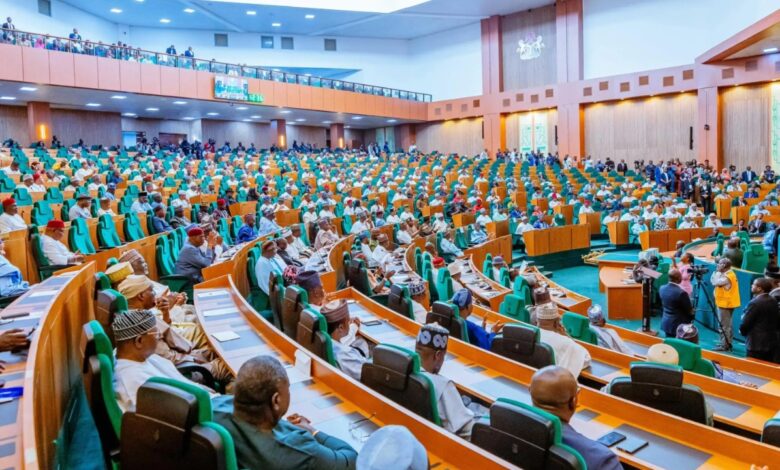
The bill, sponsored by Benjamin Olabinjo, who represents Ifako/Ijaiye Federal Constituency in Lagos State, was considered during plenary on Wednesday.
The proposed legislation seeks to create a specialised institution for training, research and continuing education in nursing, midwifery and related disciplines.
Presenting the bill, Olabinjo said the college would expand the supply of qualified nurses and midwives needed by hospitals and other healthcare facilities across the country.
“Ask any hospital in Nigeria what it needs most, and the answer is almost always the same: more nurses and midwives,” he said.


The lawmaker noted that nurses and midwives were indispensable to patient care, maternal health and newborn survival, but warned that Nigeria was losing skilled professionals at a rate that exceeded its capacity to train replacements.
“Yet we are losing them faster than we are training them. This bill is about training more of them, and training them where they are needed,” Olabinjo added.
The bill proposes that the institution offer professional certificates, diplomas, degrees and post-basic qualifications in nursing, midwifery and related specialities.
It also provides for the college to admit students, conduct examinations and research, organise academic programmes and deliver continuing education for practising healthcare professionals.
Under the proposed structure, the institution would operate a governing council, a School of Nursing and a School of Midwifery, supported by principal officers responsible for its administration and academic affairs.
Olabinjo said establishing the college would strengthen healthcare delivery, particularly maternal and child health services, by increasing the number of trained professionals available to provide essential care.
He maintained that expanding midwifery training was crucial to efforts to reduce preventable maternal and infant deaths, especially in communities where access to skilled birth attendants remained limited.
The lawmaker also highlighted the potential economic benefits of locating the institution in Ifako/Ijaiye, saying it would create educational and employment opportunities for young people in the constituency and other parts of Lagos State.
He explained that the college would provide jobs for lecturers, administrative personnel and support staff, while creating additional business opportunities for residents and enterprises in the host community.
“Training close to home means a real career for young people in this constituency and Lagos, without the cost of moving far away to study,” he said.
Seeking the support of his colleagues, Olabinjo argued that improving Nigeria’s healthcare system required sustained investment in the professionals responsible for providing frontline services.
“We cannot fix our healthcare system without the people who run it day and night. This bill invests in them,” he said.
He urged lawmakers to support the bill’s passage through second reading and refer it to the relevant committee for further legislative scrutiny before it returns to the House for consideration at third reading.
If approved by the National Assembly and signed into law by the President, the bill would establish the legal framework for creating the proposed federal institution.
Nigeria’s healthcare sector continues to face challenges relating to the availability and distribution of skilled personnel, with the migration of workers to countries offering better pay and working conditions adding to existing pressures.
Nurses and midwives play essential roles in primary healthcare, antenatal services, childbirth and postnatal care, making their availability central to efforts to improve maternal and child health outcomes.
The proposed college is intended to increase Nigeria’s capacity to train these professionals. However, its eventual contribution would depend on effective implementation, adequate funding, accreditation and the recruitment of qualified teaching staff.