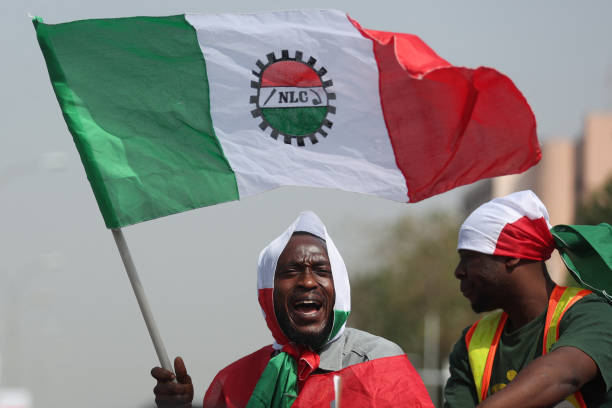
The Federal Government will pay workers a ₦70,000 transport allowance for six months from November 2026, under resolutions reached with the Nigeria Labour Congress (NLC) in Abuja.
The agreement also provides for payment of Peculiar Allowance arrears, settlement of outstanding health workers’ allowances and further action on the national minimum wage. However, both parties have yet to agree on when the new minimum wage should take effect.
The resolutions emerged from conciliation meetings held on 22 and 27 October at the Federal Ministry of Labour and Employment in Abuja. The ministry organised the meetings after discussions between the NLC’s Central Working Committee and National Executive Council.
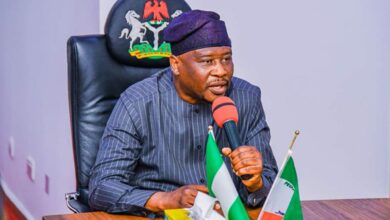
Labour Minister Muhammad Maigari Dingyadi chaired the meetings. NLC President Joe Ajaero led the union’s delegation.
Transport support and allowance payments
The Federal Government’s transport intervention will run for six months, beginning in November 2026. The agreed payment is ₦70,000, although the resolution does not specify the payment schedule for individual workers.
The government has also approved Peculiar Allowance with effect from 1 May 2026. Payment of outstanding amounts will start in November and be made in three equal monthly instalments.
READ RELATED NEWS
Health workers are to receive 19 months of outstanding allowances within three months, starting from December 2026.
The meeting also addressed tax relief for workers. The parties agreed that the matter would be taken to the National Executive Council (NEC) because taxation is governed by law.
The Federal Ministry of Agriculture and Food Security has submitted a list of beneficiaries and the estimated cost of hazard allowances to the National Salaries, Incomes and Wages Commission (NSIWC) for verification.
The commission expects to complete the checks within two weeks. It will then issue the template needed to implement the payments.
The NSIWC also promised to complete an update of the cost of the Consolidated Health Salary Structure (CONHESS) within three weeks. This will allow the Presidential Committee on Salaries to decide on the proposed adjustment.
Minimum wage talks and outstanding issues
The national minimum wage remains unresolved on one point: its effective date.
The parties agreed that the Minimum Wage Negotiation Committee would be constituted and begin meetings immediately. However, they did not reach agreement on when implementation should start.
The meeting also agreed that state and local governments should participate in the transport intervention. Labour unions were asked to work for its implementation at their respective levels.
Both parties agreed to meet again after one month to assess progress on the resolutions.
Other attendees included Director-General of Budget Tanimu Yakubu, Permanent Secretary of the Service Welfare Office, OHCSF, Garba Abdul S.U., and National Secretary of the Joint National Public Service Negotiating Council, Olowoyo Gbenga.
WHAT READERS SHOULD KNOW
The agreed measures have different timelines. Transport support is scheduled to begin in November 2026 and last six months, while Peculiar Allowance arrears will be paid in three monthly instalments from November.
Health workers’ 19 months of outstanding allowances are due for settlement within three months from December.
Verification of agricultural workers’ hazard allowances is expected to take two weeks, and the CONHESS cost update is due within three weeks.
The next meeting between the Federal Government and the NLC is scheduled for one month after the 27 October meeting. It will assess the level of implementation of the resolutions.
The minimum wage’s effective date is still unsettled, even though both sides have agreed to begin negotiations immediately.
For More News Details, Visit www.NewDailyPrime.news.