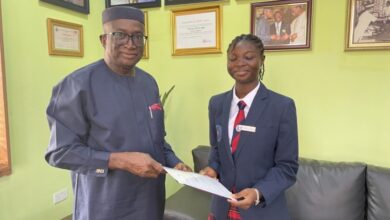
Vice-Chancellor of Joseph Sarwuan Tarka University, Makurdi (JOSTUM), Prof. Isaac Itodo, has said the decision to recruit about 70 first-class graduates into the school’s workforce was part of a deliberate human capital development strategy aimed at producing the next generation of academics and institutional leaders.
Itodo said his administration had prioritised the recruitment and development of brilliant young graduates because infrastructure alone could not guarantee the university’s sustainability.
Commenting on the development, the vice-chancellor said the university had increased its staff strength by over 500 academic and non-academic staff through two recruitment exercises conducted in the last couple of years.

“While I was setting up modern infrastructure across JOSTUM, I was very conscious of one thing; infrastructure can only stand the test of time when there are brilliant minds within the system to sustain, improve and build upon it,” he said.
According to him, the recruitment exercises were largely merit-based, with competence and the university’s needs as key considerations.
He, however, identified the Graduate Assistant (GA) cadre as a particular area of concern, describing it as the nursery where future academics, researchers, administrators and institutional leaders are nurtured, adding that his administration deliberately sought to identify and retain some of the university’s best young minds by encouraging outstanding former students to return to the institution.
Itodo said he had directed College Deans and Heads of Departments to focus on reintegrating the university’s brightest graduates into the system and is working through the JOSTUM Alumni Association, asking its leadership to identify and encourage former students who had completed the National Youth Service Corps (NYSC) and graduated with First-Class degrees to apply for Graduate Assistant positions.
“When the demands from the various Colleges came, I stood my ground. Although the available slots were limited, I adjusted the plans accordingly to ensure that we could absorb as many of these outstanding young graduates as possible,” he said.
The move, he said, resulted in the reintegration of about 70 First-Class graduates into the university system.
“Today, almost every department has welcomed some of its best brains back into the system. For me, this is more than an employment exercise; it is a deliberate human capital strategy to identify, retain and develop young minds who can become the future professors, researchers, leaders and innovators of JOSTUM,” the Vice-Chancellor said.
The Vice-Chancellor expressed optimism that the decision would yield significant benefits for the university in the years ahead, particularly as the young academics progress through their careers.
“Watch what happens over the next 20 years when these young minds become professors, deans, directors and institutional leaders. The impact on our institution will be significant,” he said.
He explained that several Second-Class and Third-Class graduates were also employed in other positions because they were also products of the university and deserved opportunities to contribute to its development.
The Vice-Chancellor described the approach as his template for employment, stressing that recruitment should be based on merit, competence and institutional needs rather than personal connections.