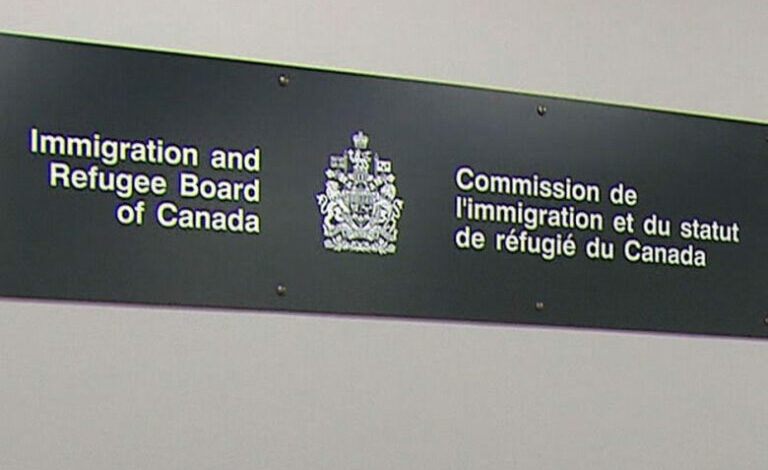
Canada approved 3,463 asylum claims from Nigerians in 2025. That is 55 per cent more than the 2,230 approved in 2024. In the first six months of 2026, it approved another 1,950, data from the Immigration and Refugee Board of Canada (IRB) show.
From January 2024 to June 2026, Nigerians received 7,643 grants of refugee protection. No other African nationality got as many.
Nigerians also took a bigger share of Canada’s approvals as time went on. In 2025, Canada finalised 79,462 claims from all countries, accepting 50,067 and rejecting 14,619. Nigeria’s grants were 6.9 per cent of the accepted claims. In early 2026, the board accepted 22,109 of 49,960 finalised claims, and Nigerians held 8.8 per cent of those grants.
Over the full 30 months, Canada finalised 202,878 claims. It accepted 118,656 and rejected 34,546. Nigeria’s share of accepted claims was 6.4 per cent. African countries together won an estimated 35,000 grants, or about 29.5 per cent. About one in every five of them went to a Nigerian.


Refusals and the waiting list
Not every Nigerian succeeded. Canada refused 3,080 Nigerian claims in the 30 months. Nearly three in every 10 Nigerians whose cases were decided were turned down.
A further 1,530 cases were abandoned or withdrawn. In all, 12,253 Nigerian cases were closed.
In 2024, the board closed 3,249 Nigerian cases and rejected 811. In 2025, it closed 5,039. Grants made up 68.7 per cent of them, and 1,377 were rejected. In early 2026, it closed 3,965 cases and rejected 892.
At the end of 2024, 19,889 Nigerian cases were still waiting. That is nearly six times the number closed that year.
Only the Democratic Republic of Congo (DRC) had more refusals than Nigeria, at 1,230. Ghana had 885, Kenya 639 and Senegal 595. Angola had 442, while Chad and Cameroon had 343 each.
Other African countries won far fewer grants than Nigeria. In 2025, Uganda came second with 2,089. Kenya had 1,532, Ethiopia 1,522 and Ghana 1,084. Cameroon had 742, the DRC 732 and Rwanda 710.
READ RELATED NEWS
6,255 Nigerians await Ireland asylum decisions as applications hit 11,040
Trump to cancel 200,000 visas held by B1/B2 visitors who later seek asylum
Canada grants asylum to 3,463 Nigerians, over 21,000 cases still pending
The order changed in early 2026. Kenya had 703 grants, Ghana 603 and Uganda 521. The DRC had 412, Rwanda 389, Ethiopia 378 and Cameroon 300.
Across the 30 months, Uganda totalled 3,943 and Kenya 3,888. Ethiopia had 2,982 and Ghana 2,000. The DRC had 1,867, Rwanda 1,699 and Cameroon 1,643.
WHAT READERS SHOULD KNOW
The IRB is an independent federal tribunal set up under Canada’s Immigration and Refugee Protection Act. Its Refugee Protection Division (RPD) hears and decides asylum claims made in Canada or at a port of entry.
A person starts a claim by telling the Border Services Agency at a port of entry on arrival. They can also report to an immigration officer. The board’s application guideline reads: “If the claim is eligible, it is sent to the RPD to start the claim for refugee protection process.”
The RPD first asks if the person is a Convention refugee under the 1951 United Nations Refugee Convention. Immigration, Refugees and Citizenship Canada says this means facing persecution because of race, religion, nationality, political opinion or membership in a particular social group.
The RPD also asks if the person is a “person in need of protection”. That covers anyone at risk of torture, death, or cruel and unusual punishment if sent home. Claimants must show evidence of that danger.
A refused claimant can appeal to the Refugee Appeal Division. Those who fail there may seek a judicial review at Canada’s Federal Court. A pre-removal risk assessment is the last option before deportation.
The RPD received 107,802 new refugee referrals in 2025 alone.
For More News Details, Visit www.NewDailyPrime.news.