The Nigeria Labour Congress (NLC) has called for a fresh review of Nigeria’s ₦70,000 minimum wage, citing state governments that now pay higher amounts despite earlier concerns about their ability to meet increased salary obligations.
NLC President Joe Ajaero made the demand on Friday, October 9, during an appearance on Channels Television’s Sunrise Daily. He maintained that the Federal Government should reassess its wage policy as the figures reported by some states challenge the financial concerns that shaped the 2024 negotiations.
Ajaero cited Imo State as paying ₦104,000, while other states reportedly pay ₦100,000, ₦85,000, ₦84,000 and ₦75,000 as minimum wages.
He said, “I think the least could be 72 or more. All the states are paying more than the federal government.”

The figures raise a critical question about the purchasing power of federal workers and the basis for maintaining a national minimum wage that is lower than the rates reportedly adopted by several states.
READ RELATED NEWS UPDATES
How the ₦70,000 wage qgreement emerged
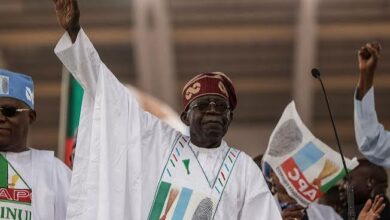
President Bola Tinubu signed the National Minimum Wage Act into law on July 29, 2024, establishing ₦70,000 as Nigeria’s statutory minimum wage.
Ajaero explained that labour accepted the amount after direct negotiations with Tinubu, following a deadlock over ₦60,000.
He recalled that the President had indicated his capacity to pay ₦150,000 but asked labour representatives to consider the financial circumstances of state governments.
“Part of the reason we agreed on 70,000, the president said, and I quote, you know, I can afford to pay 150,000, you know, but the sub-nationals, you have to put them into consideration in deciding, you know, this ₦70,000 Naira minimum wage and we were keyed into it,” Ajaero said.
The NLC president added that the final agreement resulted from direct discussions with the President, rather than negotiations through the minimum wage committee.
However, the subsequent wage increases reported by some states have prompted labour to question whether the original affordability concerns still justify the Federal Government’s position.
Fuel discount fails to settle Labour’s concerns
Ajaero also dismissed the Federal Government’s 30-day petrol discount as insufficient to address the hardship facing workers.
He questioned how the intervention would affect prices charged by independent marketers, particularly if the discount applied only to Nigerian National Petroleum Company (NNPC) Limited outlets.
The NLC president recalled that petrol sold for between ₦650 and ₦750 per litre when labour accepted the ₦70,000 minimum wage. He said workers needed clarity on the discount and what would happen when the 30-day period expired.
The union’s two-week ultimatum covers three key demands: renewed minimum wage negotiations, an interim wage award to cushion workers’ hardship, and appropriate petrol pricing.
Ajaero also called for tax relief under the 2023 agreement between labour and the Federal Government, which he said had yet to be implemented.
He accused the administration of failing to maintain meaningful engagement with the NLC, alleging that official correspondence had gone unanswered.
What the dispute means for workers
The disagreement extends beyond the figure written into the minimum wage law. It concerns how far workers’ earnings can stretch amid rising living costs.
A higher statutory minimum wage would require fresh negotiations and an assessment of the Federal Government’s capacity to fund increased salaries. Any agreement would also need to account for the financial implications for public institutions and employers.
As it stands now, Ajaero’s position is that the reported wage levels in several states warrant a fresh examination of the Federal Government’s rate.
The central question is whether the ₦70,000 benchmark still reflects the economic realities facing Nigerian workers, particularly when some state governments reportedly pay more.
For More Details, Visit New Daily Prime News