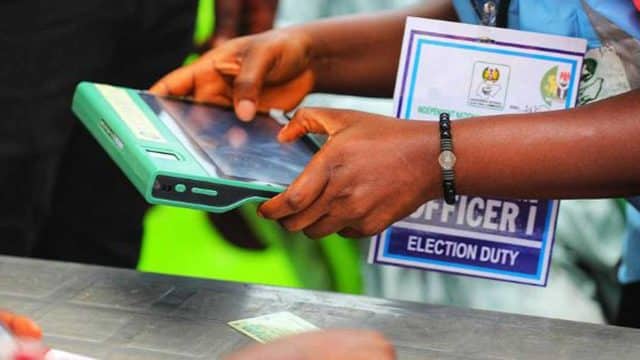
Is INEC prepared to defend its electronic accreditation and result-transmission systems against manipulation?
Nigeria’s presidential and National Assembly elections are set for 16 January, 2027, and much of the public’s trust will rest on the devices that check voters in and the systems that send results to the public.
This report reveals questions about Independent National Electoral Commission’s (INEC’s) readiness to protect that technology from manipulation, failure, and attack.
What technology will INEC deploy for the 2027 elections?
INEC’s core tools are the Bimodal Voter Accreditation System, or BVAS, which checks voters against the register before they vote, and the INEC Result Viewing Portal, or IReV, where polling-unit results are meant to appear.


The commission claims that it has deployed 57,000 newly procured BVAS devices and has lowered the accreditation limit to 850 voters per device, with extra machines for busier polling units.
It has also introduced an eEC8A platform, which it says will improve how results are traced from polling units to the national collation centre.
The first real test now is a mock exercise on Saturday, 28 November , covering 17,676 polling units between 8:30 a.m. and 2:30 p.m.
That exercise will show how the technology performs under conditions closer to real voting day.
How secure are INEC’s electoral technology systems?
The safeguards INEC has described mostly concern the data itself. The commission announced that it has added technical checks that stop inaccurate results, including figures that show over-voting, from being uploaded to IReV.
BVAS uses biometric checks to confirm that a person matches the register. These are concrete controls. They govern what the system will accept, however, and say less about how well it would resist a determined attacker.
Meanwhile INEC has not publicly described how devices are stored and handled between elections.
Besides, no published cybersecurity framework has been identified. This article does not attempt to identify specific weaknesses, since that would be speculation and would not help voters.
While some safeguards are documented, the wider security design cannot yet be judged from public information.
What independent security assessments have been conducted?
From available reports and sources, no independent cybersecurity audit, penetration test or third-party vulnerability assessment of the 2027 systems has been publicly revealed.
Some reviews may be confidential, and INEC has not said whether it commissioned any. The absence of public disclosure suggests that the public cannot check what such a review covered or what it found.
The commission does point to related work. The voter register clean-up used an Automated Biometric Identification System and a statutory claims-and-objections audit, but that work examined the data rather than the security of the technology.
The planned mock exercise will test whether devices function and results can be uploaded. Such tests can expose weaknesses, but they are not security tests.
INEC’s chairman has also acknowledged that stress-testing across states fell short before 2023. That revelation is useful, but it is an admission rather than an independent assessment. Available reports and sources did not tell whether outside experts or civil-society groups have been allowed to examine the systems.
How voter information and election results are protected
Voter records are sensitive. The register holds names, biometric records and other personal details, including 232,658 persons with disabilities who need accessible voting arrangements.
Accreditation records link voters to devices and polling units, and result records link polling units to vote totals. All of these are valuable targets for anyone seeking to manipulate an election.
INEC’s introduction of the electronic Form EC8A (EEC8A), which checks result figures entered on BVAS against the physical result sheet and accreditation data before allowing uploads to IReV, offers a new form of protection against result manipulation.
Nonetheless, beyond this safeguard, questions remain about the security of the commission’s wider electoral technology. How are voter records, biometric accreditation data, and election results stored, accessed, and protected against unauthorised interference?
With millions of voters’ personal information and polling unit results handled digitally, the integrity of these systems is central to the credibility of the 2027 elections.
Under the amended Electoral Act, electronic transmission is allowed, but manual result sheets remain the legal basis for collation if technical problems arise. This gives the public a paper record to check against. Critics, including Yiaga Africa and the Nigeria Democratic Congress (NDC) presidential candidate, Peter Obi, argue that loosening the real-time transmission rules could weaken transparency.
What happens when INEC’s electronic devices or systems fail?
The law provides a fallback. If electronic transmission fails, results can be collated from manual sheets. INEC Chairman Prof. Joash Amupitan has described this as a safety provision rather than an expectation, and says the commission’s determination is that transmission will not fail.
The fallback is a legal backstop, not a plan to abandon electronic transmission, and it should be judged on those terms.
Again, less is publicly known about what happens at a polling unit when a device stops working. Public information does not yet include guidelines on spare devices, on who decides when to switch to manual procedures, or on how that switch is recorded.
One point of lesson is 2023, when INEC blamed the failure to upload presidential results on technical issues with BVAS.
Former resident electoral commissioner Mike Igini has said publicly that he still cannot clearly explain what caused it, and no full technical account has been released.
How will INEC handle areas with poor network coverage?
Electronic transmission depends on mobile networks, and coverage across Nigeria is uneven. The chairman says network availability, not the idea of electronic transmission, is the main operational challenge.
INEC’s director of voter education, Victoria Eta-Messi, made a similar point when she said successful uploads would depend on network availability. These are candid admissions that point to a real constraint.
INEC has not yet publicly released a network coverage assessment for the polling units where the systems will be used. It has not said how many polling units are expected to have weak or no signal. Under the hybrid framework, manual collation can go ahead if uploads fail.
The 28 November exercise should show how uploads perform in different places, but only if INEC publishes the results, including how many tested units uploaded in real time. Poor coverage does not automatically stop the process, but the fallback’s performance in the most affected areas has yet to be demonstrated.
How INEC identifies and addresses suspected fake or invalid voter records
Two register issues have drawn scrutiny. INEC published a preliminary register online on 26 October, 2026, and says it is the same version displayed at registration areas in mid-October.
During that display, the commission flagged a number of questionable records for review. Civil observers have reported suspicious AI-generated photographs, duplicate entries and records of people who have died.
INEC claimed it would examine the photographs, including the possibility of technical or procedural lapses.
INEC also says it has removed more than 1.6 million invalid, duplicate and deceased records. Of roughly 311,000 complaints received during the claims-and-objections period, about 232,000 were found to be genuine and addressed.
These figures show that a correction process exists. But how many eligible voters were wrongly flagged? That question matters as much as the removals.
There is also an arithmetic gap. Removing 1.6 million from a register of about 103 million leaves about 101.4 million, not the 100 million being reported. The final register is due for certification on 15 December, 2026, so the figures should be explained before then.
What previous technological failures have been documented, and what has INEC done about them?
The defining failure is the 2023 presidential result upload. INEC did not upload polling-unit results to IReV in real time, citing technical issues with BVAS.
The delay sparked allegations of manipulation and several legal challenges, which the Supreme Court ultimately dismissed. A dismissed case is not a technical explanation, and the public has not received a full account of the fault. Igini has pointed out that the other two elections held that day were transmitted, and argues that this single failure badly damaged trust in the commission.
INEC’s corrective steps include a nationwide mock test, the hybrid legal framework, newly procured devices, the eEC8A platform and new upload checks.
These are sensible responses to the problems identified. None has yet been tested at national scale. Amupitan has maintained that technical glitch has been eliminated. This is a claim that the November exercise and the January vote will test.
He also cites the Osun governorship election as an example of what the commission can achieve. That was a single-state contest, which does not show how the commission would cope with 36 states and the Federal Capital Territory voting together.
INEC’s testing, training and operational readiness for 2027
Several preparations are under way. A six-zone readiness tour has begun in Lagos, the first time in more than two decades that zonal preparations have been taken outside Abuja. It covers logistics, staffing, technology, security, training and stakeholder engagement.
The 28 November mock is the main technical rehearsal, and a real-time readiness tracker is planned for the six months before the vote. The Continuous Voter Registration exercise and the Osun election are complete. The mock and the tracker are not yet complete.
READ RELATED NEWS
INEC fears violence could empty polling units, endanger 1.4m election workers
INEC prepares state trainers for 2027 election results management
INEC moves to block AI-generated images from voter register
Staffing is the clearest weak point. INEC needs more than 1.41 million ad hoc staff, most of them National Youth Service Corps members.
The commission says that political violence has discouraged applications and that it lacked the numbers needed to begin training, so it has extended the recruitment deadline to 3 December, 2026.
Devices are only as good as the people operating them, so this shortfall affects the technology as much as the logistics. Public information says little about how long training lasts, how it is tested, or how staff will receive technical support on polling day.
Procurement, maintenance and the infrastructure behind INEC’s technology
INEC says it has procured and deployed 57,000 new BVAS devices. It has not publicly released contract values, technical specifications or total cost. The commission has also said it is still waiting for the outstanding part of its 2027 budget. That affects procurement, maintenance and staff pay, and it becomes a real risk if the money does not arrive in time.
Arrangements for repairs, spare parts, storage between elections and software updates have not been publicly described. These routine matters often decide whether machines work on the day. No audit report, procurement disclosure or oversight statement covering the 2027 equipment has been published. This does not mean wrongdoing, and a contract or expenditure line does not prove irregularity. It does mean the public cannot yet confirm that the equipment meets its stated specifications and will stay secure in storage and transit.
Commentators have also pointed to power shortages and weak bandwidth as common obstacles to election logistics, concerns that INEC has itself raised about budgets and logistics.
Stakeholder positions and concerns about INEC’s electoral technology
Stakeholders disagree sharply, and it helps to separate claims by how well they are supported. INEC’s leadership is confident. Amupitan says the commission is determined to prevent a repeat of 2023 and aims for what he calls a near-perfect election. Those are commitments the results will test.
Civil society is more cautious. Yiaga Africa has criticised the changes to the transmission rules, and its September 2026 survey found that only 34 per cent of respondents were confident INEC would conduct credible elections, down from 45 per cent in earlier surveys.
Just 49 per cent said they trusted BVAS and IReV. Security officials have pledged to protect voters, staff and politicians, and the chairman has described attacks on campaigns and INEC personnel in nine states.
Technical voices are less prominent in public debate so far. Commentators warn about the limits of automated detection tools, but their views are opinion rather than audits of INEC’s systems.
On balance, the strongest evidence-based concerns are the 2023 failure, the thin public detail on security, the register figures and the staffing shortfall. The strongest reassurances are the legal fallback, the new upload checks and the national mock exercise. Neither side has yet produced the evidence that would settle the argument.
WHAT READERS SHOULD KNOW
The available evidence answers the questions this article set out to address. INEC plans to use upgraded BVAS devices, the IReV portal, the eEC8A platform and a hybrid legal framework that allows manual collation as a fallback. It has bought new devices and planned a national test. How the parts connect and what the software contains are not fully public.
On security, INEC has described checks on the data that goes into results and a biometric approach to voter identity. The wider security design has not been described in enough detail to test. No independent security audit has been publicly reported, so the claim that the systems are fully secure cannot yet be verified. The stress-testing gaps the chairman has acknowledged are said to be addressed.
Voter data and results are protected by a mix of law, procedure and paper. The paper result sheets matter a great deal, because they provide a backstop that does not depend on the network or the device.
For technical failure and poor network coverage, INEC has a legal fallback and has admitted that the network is the main challenge. Its operational guidelines, coverage assessment and technical support plan are not yet public, and the staffing gap adds pressure.
On the register, a clean-up process exists and removes a large number of records. Allegations about AI-generated photographs and duplicates remain under review, and the register figures do not reconcile neatly. The final certification on 15 December is the next test.
On testing, the 28 November mock is the first real measure of readiness, and it has not yet taken place. Procurement and budget questions remain open, and the shortage of ad hoc staff is the most immediate practical concern.
The strongest criticisms concern transparency more than the existence of technology. The 2023 failure has never been fully explained to many observers. The safeguards that exist are real but are mostly described at a high level.
In several areas, public information is thinner than the INEC’s assurances. The steps that would answer the criticism most directly, such as published test results, a public security review and a clear explanation of the register figures, have not yet appeared.
The risks that could undermine the 2027 elections include staffing shortfalls, budget delays, network failures on election day, register errors, insecurity around polling units and falling public trust. Each can be managed, but each depends on information by the commission.
So what does the evidence establish? It shows that INEC is investing heavily in new equipment, is testing in advance, has a legal fallback and has acknowledged past shortcomings. The preparations are real, but they are not yet effectively proven.
What should be watched before the elections? The public should watch out for the results of the 28 November mock, including the share of tested polling units that uploaded results in real time and the problems the exercise found.
Also, Nigerians could watch whether INEC will publish its review of the register and explain the figures before the 15 December certification; whether the ad hoc recruitment target is met by 3 December; whether the outstanding budget is released; whether an independent security assessment or a published cybersecurity framework appears; and on 16 January, whether results appear on IReV in real time across the country. These are measurable tests. Until they are met, the question of INEC’s readiness will remain open.
For More News Details, Visit www.NewDailyPrime.news.