30
Can He Defeat NYESOM WIKE’s Rainbow Coalition?
The choice of former Rivers Governor Rotimi Amaechi as the running mate to former Vice President Atiku Abubakar has transformed Rivers State into one of the most closely watched battlegrounds of the 2027 presidential election.
For the African Democratic Congress (ADC), Amaechi is expected to do more than simply serve as Atiku’s running mate. He is potentially the ticket’s principal political asset in Rivers and a major instrument for expanding the party’s reach across the South-South.
But there is one enormous obstacle: Nyesom Wike. The former Rivers governor and current FCT Minister remains deeply involved in Rivers politics and has openly declared his opposition to the Atiku-Amaechi project. Wike has repeatedly argued that Amaechi lacks the political machinery to deliver Rivers to ADC and has said he is working for President Bola Tinubu’s re-election.
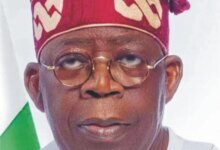

So the question confronting ADC is: Can Amaechi rebuild enough of his old political network to overcome Wike’s current influence—and can that battle be replicated across the 6 South-South states? Amaechi is a former Speaker of the Rivers State House of Assembly, two-term governor of Rivers State and former Minister of Transportation. He therefore brings something to Atiku that few other potential running mates could have provided: a direct connection to the South-South and, particularly, Rivers State.
ADC itself has described his political influence in the South-South and wider Southern Nigeria as one of the reasons for selecting him. But influence on paper and votes at the polling unit are 2 different things. The biggest challenge facing Amaechi is that his former political environment has changed dramatically.
Wike was once Amaechi’s Chief of Staff. He later succeeded him as governor. The 2 eventually became bitter political rivals. Today, Wike has a significant network within Rivers politics, and reporting on the state’s political structure has documented his consolidation of influence across both PDP and APC structures. In the August 2025 local government elections, APC won 20 of Rivers’ 23 LGAs, while PDP won three. The winners were Wike loyalists and the result is evidence of his renewed grassroots control.
That is the political reality Amaechi must confront. Wike is not merely campaigning against Amaechi. He has a formidable network. He says he is supporting Tinubu for 2027 and has repeatedly attacked the Atiku-Amaechi ticket. In August, Wike argued that Amaechi’s selection as Atiku’s running mate would not help the ADC win Rivers or the wider South-South. He cited Amaechi’s role in the 2015 political struggle that contributed to Goodluck Jonathan’s defeat and argued that this history would make it difficult for Amaechi to persuade South-South voters to support Atiku.
Wike has also claimed that Amaechi lacks sufficient electoral strength to deliver Rivers. Wike is attempting to frame the election as a test of Amaechi’s present-day political strength. The official 2023 presidential result declared by INEC gave Tinubu 231,591 votes in Rivers, Peter Obi 175,071, and Atiku 88,468. Tinubu was declared winner after taking 14 of the state’s 23 LGAs, while Obi won five and Atiku four.
Wike was governor at the time and he supported Tinubu. Therefore, the 2023 result provides Wike with an important political argument. He can say that his political structure helped produce a presidential victory for Tinubu in Rivers. Amaechi has a big advantage: He knows Rivers. It would also be a mistake to assume that Amaechi has no political network in Rivers.
He governed the state for eight years. He served as Speaker before becoming governor. He subsequently became a federal minister. He therefore has longstanding relationships with politicians, businessmen, traditional institutions and political actors across the state.
But how much of his old structure remains politically loyal to him in 2027? That is the critical issue. Presidential elections are not won simply through the popularity of a former governor. Amaechi needs a functioning organisation. He needs: Ward coordinators; local government mobilisation teams; polling-unit agents; youth mobilisation; women mobilisation; traditional and community engagement; credible defectors; funding; election-day logistics; and, most importantly, voters prepared to transfer their support to Atiku.
This is where Wike’s current political organisation becomes relevant. Can Amaechi rebuild his old coalition? This may be the single biggest determinant of the Rivers contest. Amaechi’s political career was built around a coalition of political actors.But many of those actors have moved. Some are with Wike. Some are in APC. Some remain with PDP. Some may be negotiating with different political camps. And some may simply be waiting to see which side has the strongest structure before making their move.
Amaechi therefore needs to demonstrate that he can bring back enough of his old political family while attracting new supporters who were not part of his original network. There is another problem that Wike is likely to exploit repeatedly. Amaechi played a prominent role in the APC’s 2015 presidential campaign against then-President Goodluck Jonathan. Jonathan was from the South-South.
Wike’s argument is that Amaechi helped prevent a South-South president from completing a second term and is now asking South-South voters to support him as Atiku’s running mate. Wike has repeatedly made this argument publicly. Even if Amaechi succeeds in Rivers, that does not automatically translate into an ADC victory across the South-South. The region contains 6 states: Rivers, Akwa Ibom, Cross River, Bayelsa, Delta and Edo.
Each has its own political structures and personalities. The ADC therefore needs a separate strategy for each state.
RIVERS
This is the principal Amaechi-Wike battlefield.
DELTA
The PDP and other opposition structures remain significant, while the state has its own political calculations.
AKWA IBOM
The state has a strong PDP history and its own political leadership network.
BAYELSA
The state is closely associated with the PDP and the political legacy of former President Goodluck Jonathan.
CROSS RIVER
Cross River has undergone significant party realignments in recent election cycles.
EDO
Edo’s politics have also experienced major changes, making it difficult to assume that the South-South will vote uniformly. Therefore, Amaechi’s influence in Rivers cannot automatically be converted into 6-state South-South support. The ADC has an advantage. It is not starting from zero. Can Wike deliver the South-South to Tinubu? That is also an open political question. Wike’s influence should not automatically be equated with control of every voter. Political structures matter, but voters ultimately cast the ballots. The ADC has used precisely this argument against Wike, saying that no individual politician can predetermine the result of Rivers.
Wike’s political influence is therefore one factor. It is not the same thing as a guaranteed electoral outcome. The big question is: Can Amaechi turn his personality into votes? This is the central challenge.
What do you think about this?
Drop your opinion in the comment section.
FOLLOW US & Share this with someone who needs to see this.