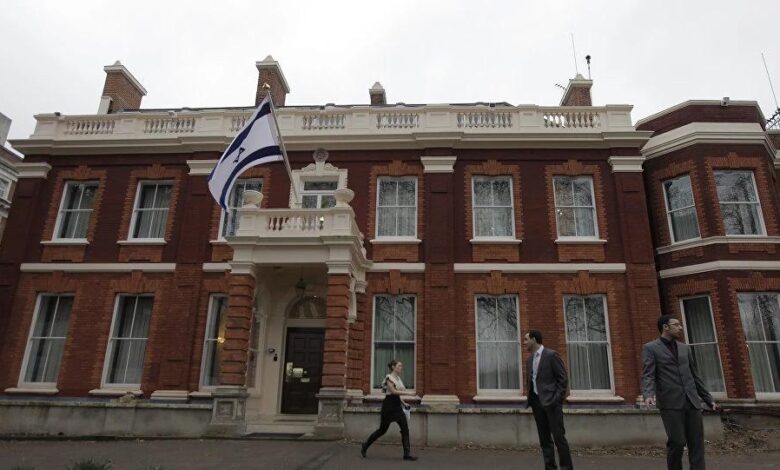
The Israeli Embassy in the United Kingdom has denied reports that Prime Minister Benjamin Netanyahu ordered Israeli diplomats to support Argentina’s position on the disputed Falkland Islands, describing the allegation as false.
Alex Gandler, a spokesperson for the embassy in London, rejected the report on Saturday, October 24, following claims published by British newspaper The Telegraph that Netanyahu had directed diplomats to support calls for direct negotiations between Argentina and the UK over the islands’ future.
“I categorically deny this allegation. No such directive exists,” Gandler wrote in a post on X.
The denial followed a report alleging that Israel had changed its diplomatic position on the Falkland Islands amid deteriorating relations with Britain over the Israeli government’s policies towards the occupied West Bank.


According to The Telegraph, which cited unnamed sources, Israeli diplomats had been instructed to support Argentina’s call for direct talks with Britain over the disputed territory. However, the reported shift did not amount to formal recognition of Argentina’s sovereignty claim.
The Falkland Islands, a British overseas territory in the South Atlantic, remain the subject of a sovereignty dispute, with Argentina claiming ownership and referring to them as the Islas Malvinas.
The sovereignty dispute has remained a longstanding source of tension between London and Buenos Aires. The two countries fought a war in 1982 after Argentine forces invaded the islands. Britain subsequently regained control.
DIPLOMATIC TENSIONS BETWEEN ISRAEL AND BRITAIN
The report emerged amid worsening relations between Israel and Britain following the British government’s announcement of economic sanctions targeting Israeli settlements in the occupied West Bank.
The measures, announced in September, included restrictions on goods originating from Israeli settlements and sanctions targeting activities linked to settlement expansion.
Israel strongly criticised the British government’s decision and announced retaliatory measures, including restrictions affecting Britain’s diplomatic presence in Jerusalem.
READ RELATED STORY
Isreal warns of intensified attack on Iran next week
Britain weighs diplomatic action if Israel shuts Jerusalem consulate
Google faces backlash in Finland over gelling of 250,000 trees for AI data centre
Israeli Foreign Minister Gideon Sa’ar accused the British government of interfering in Israel’s internal affairs, while the dispute intensified disagreements between the two countries over their policies towards the Palestinians.
Against this background, The Telegraph reported that Israeli officials had interpreted Britain’s position as a reason to reconsider aspects of Israel’s diplomatic approach to the Falklands dispute.
However, the Israeli embassy’s denial means the claim that Netanyahu issued a specific directive remains contested.
UN AMBASSADOR’S REMARKS FUEL SPECULATION
The controversy was also linked to remarks by Israel’s ambassador to the United Nations, Danny Danon, who addressed Argentina’s longstanding claim to the islands during a recent UN discussion.
Danon said Israel recognised the importance of the issue to the Argentine public and acknowledged Argentina’s diplomatic efforts to resolve the dispute.
“Israel recognizes the importance that the Argentine public attaches to this issue as well as its ongoing efforts through diplomatic channels and in accordance with the principles of international law,” Danon said, according to reports of his remarks.
He also indicated that progress should take account of the historical, legal and human considerations surrounding the dispute.
The comments were interpreted by The Telegraph as a possible departure from Israel’s previous diplomatic position. However, they did not explicitly recognise Argentine sovereignty over the islands.
The embassy’s subsequent denial sought to distinguish the ambassador’s remarks from the alleged instruction attributed to Netanyahu.