French President Emmanuel Macron has postponed his planned state visit to Nigeria until after the country’s 2027 elections, delaying a diplomatic engagement expected to advance cooperation between Abuja and Paris in trade, infrastructure, energy and investment.
The visit, scheduled for October 28 and 29, was deferred following consultations with President Bola Tinubu amid protests and political tensions in France, as reported by New Daily Prime on Saturday.
The postponement means Nigeria will have to wait longer for Macron’s first visit since July 2018, when he met former President Muhammadu Buhari in Abuja and visited the New Afrika Shrine in Lagos.
Although the new date has not been announced, the delay raises questions about the pace of bilateral engagements and when both governments will translate existing investment commitments into tangible benefits.

RELATED NEWS:
France’s domestic crisis disrupts plans
Macron’s decision comes amid demonstrations in France over public services, education and government spending proposals. The protests have reportedly spread across several major cities, including Paris, Marseille, Lyon, Nantes and Bordeaux.
Demonstrators have raised concerns about teacher shortages, overcrowded classrooms, inadequate school facilities and the cost of living. Industrial action by public-sector workers has added to pressure on the French government.
The unrest has also required attention from French security authorities, particularly following reported clashes and damage to public property during demonstrations.
The domestic situation has complicated Macron’s diplomatic schedule, with the French leader expected to prioritise developments at home.
What Nigeria stands to lose
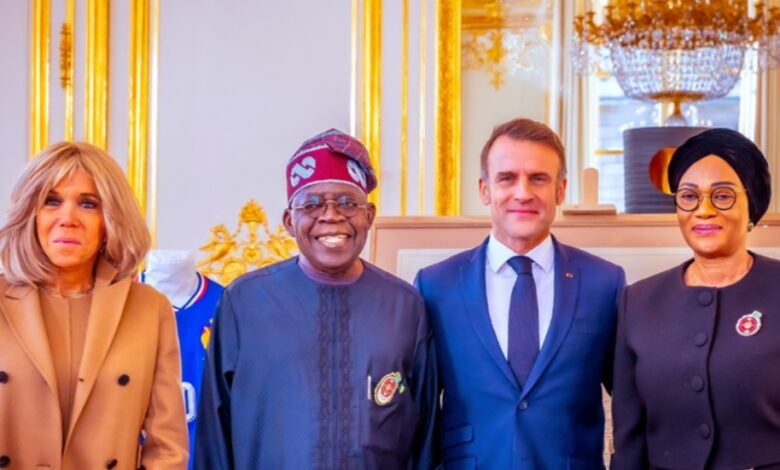
The postponed visit was expected to build on Tinubu’s state visit to France in November 2024, when both countries discussed cooperation in infrastructure, agriculture, energy, finance and investment.
That engagement produced agreements and investment initiatives intended to support Nigeria’s development priorities. A proposed €300 million investment programme covered sectors including transport, healthcare, renewable energy and agriculture.
The programme’s significance lies in the potential to support infrastructure delivery, improve food production and attract financing for projects that could generate jobs. However, the announcement of an investment commitment does not necessarily mean the entire amount has been disbursed or that projects have been completed.
The postponed visit would have offered both governments another opportunity to review progress, address implementation challenges and identify fresh areas of cooperation.
Financial services have also featured in the relationship. Zenith Bank opened a branch in Paris, while United Bank for Africa pursued plans to expand into the French market, reflecting Nigerian businesses’ interest in accessing European markets.
Strategic ties beyond diplomacy
Nigeria and France cooperate in trade, education, security, culture and development financing. Their relationship has gained added importance as France seeks stronger partnerships with English-speaking African countries following setbacks to its influence in parts of the Sahel.
Bilateral trade exceeded $5 billion in 2023, according to figures cited in reporting on Tinubu’s 2024 visit. That commercial relationship gives both countries a practical reason to sustain engagement despite the postponement.
For Nigeria, the immediate priority is to ensure that existing agreements continue to advance despite the change in schedule. Businesses seeking French investment will also be watching for continuity in financing discussions and commercial partnerships.
The delay does not, by itself, signal a breakdown in relations between Abuja and Paris. Both presidents reportedly agreed on the postponement after consultations.
The key question now is whether the diplomatic pause will affect the delivery of existing commitments or simply shift high-level discussions to a later date.
Until a new date is announced, the impact will depend less on the postponed ceremony than on whether both governments continue implementing their agreements and converting diplomatic promises into measurable economic gains.
For More News Updates, Visit New Daily Prime News