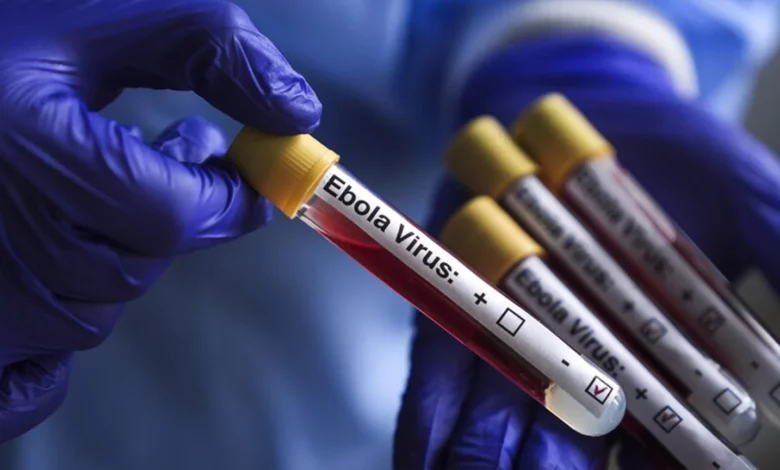
Nigeria’s confirmed Ebola case shares a close genetic similarity with the virus found in Kenya’s first imported case, Health Minister Muhammad Pate has said.
Genomic sequencing, a laboratory method used to study the genetic make-up of a virus, found that the two samples differ by only one mutation, Pate disclosed in Abuja on Friday.
The analysis was conducted through a partnership between the Nigeria Centre for Disease Control (NCDC) and the African Centre of Excellence for Genomics of Infectious Diseases at Redeemer’s University.
Pate said Nigeria still had only one confirmed Ebola case, as health authorities continued contact tracing and laboratory tests to check for possible transmission.


The Federal Government also reported that the patient was showing signs of recovery days after the case was confirmed in the Federal Capital Territory (FCT).
Patient recovers as tracing continues
The Federal Ministry of Health disclosed the patient’s condition in a post on its official X handle on Friday.
“The Federal Government has provided an update on the confirmed Ebola case in Nigeria, reporting that the patient is showing signs of recovery. There is currently no evidence of community spread.”
The ministry said contact tracing, quarantine and monitoring were continuing alongside national coordination, health facility preparedness and public health measures.
Contact tracing involves identifying people who may have had contact with an infected person and monitoring them for possible signs of infection.
READ RELATED NEWS
Falana questions Ebola task force leadership, cites ₦10bn fund
Uganda rejects Ebola link as Nigeria probes infection source
Ebola’s eighth case in Kenya puts hospital support staff under scrutiny
The government’s update indicated that no community spread had been detected as health authorities continued to monitor people who might have been exposed to the virus.
Pate said the genomic findings provided scientific information about the Nigerian case. However, he maintained that the country had only one confirmed infection.
Health authorities are continuing laboratory testing as part of their response to the case.
Government plans health worker retraining
Pate said the government was preparing to retrain health workers in tertiary and primary healthcare facilities to improve the country’s readiness to handle suspected Ebola infections.
The training is intended to improve workers’ ability to identify suspected cases, manage patients and respond to possible infections.
The minister also appealed to Nigerians to observe public health precautions, saying vigilance and public cooperation were necessary to contain the virus and prevent further transmission.
He reassured the public that there was no cause for alarm, even as health authorities continued their response.
The genetic comparison between the Nigerian and Kenyan samples provides information about their similarity, but the minister’s update did not establish any further confirmed Ebola infections in Nigeria.
The NCDC and Redeemer’s University’s African Centre of Excellence for Genomics of Infectious Diseases conducted the analysis together.
Their work provided the genetic findings announced by Pate in Abuja on Friday.
WHAT READERS SHOULD KNOW
Nigeria has one confirmed Ebola case, and the patient is showing signs of recovery, the Federal Government has reported. The government also said there was no evidence of community spread as of its Friday update.
Genomic sequencing found that the Nigerian sample differed by one mutation from the strain identified in Kenya’s first imported case. The finding establishes a close genetic similarity between the two samples, but the information provided does not explain how the virus reached Nigeria.
Contact tracing, quarantine, laboratory testing and monitoring are continuing. The government is also preparing to retrain health workers in primary and tertiary healthcare facilities to improve their response to suspected Ebola cases.
Pate has asked Nigerians to observe public health precautions and cooperate with measures intended to prevent further transmission.
For More News Details, Visit www.NewDailyPrime.news.