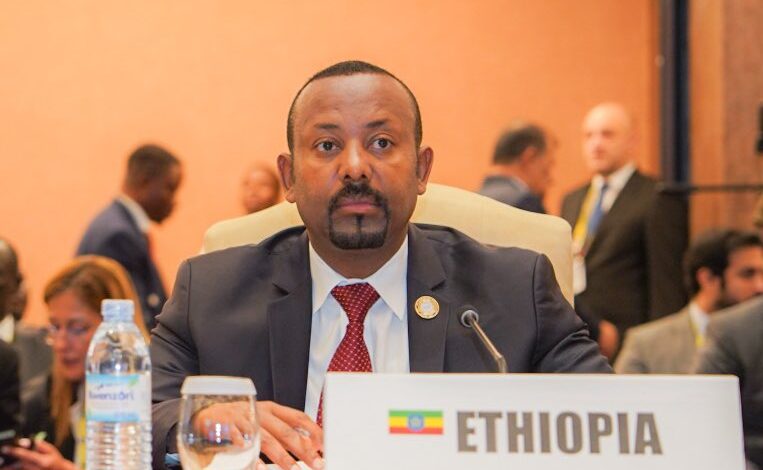
Ethiopia ordered 10 Eritrean diplomats to leave Addis Ababa within 48 hours on Thursday after accusing Asmara of backing a new seven-member rebel alliance fighting to remove Prime Minister Abiy Ahmed from power.
The diplomatic expulsion prompted Eritrea to immediately sever all ties with Ethiopia, ending the peace deal that won Abiy the Nobel Peace Prize in 2019.
The diplomatic breakdown coincided with midnight explosions near Ethiopia’s military headquarters in Addis Ababa as government troops battle fighters across Tigray, Afar, and Amhara regions.
The new opposition coalition includes the Tigray People’s Liberation Front (TPLF) and the Amhara Fano militia, who joined forces last month to overthrow the federal government.


How fighting erupted across northern regions
Federal forces and pro-government militia launched advances toward Mekelle, the regional capital of Tigray, while heavy combat spread into Afar along Ethiopia’s vital transport route to Djibouti.
In the southern Tigray town of Alamata, a doctor confirmed that intense three-day shelling and fighting killed at least 52 civilians.
Tigrayan authorities claimed they were defending against federal air strikes and drone attacks, while the central government said TPLF fighters started the offensive by seizing federally managed airports.
READ RELATED NEWS
Ethiopia accuses Eritrea, Sudan, Egypt of backing Tigray rebels as fighting intensifies
Ethiopia conflict escalates as Sudan rejects support allegations
Dangote, Ethiopia and Djibouti launch $660m petroleum pipeline project
A pro-government militia commander stated that Eritrean troops joined the combat inside Tigray, but Eritrean Information Minister Yemane Gebremeskel denied any military involvement.
The fighting has forced tens of thousands of citizens to flee their homes, while an internet blackout across Tigray has cut off communications from the war zone.
What readers should know about the Red Sea conflict
Ethiopia lost its direct coastline and ocean access when Eritrea gained independence in 1993, leaving Addis Ababa reliant on neighbouring nations for maritime trade.
Abiy previously declared that securing direct access to the Red Sea remains a vital economic and national security priority for Ethiopia.
Eritrea accused Abiy’s administration of planning to seize its Red Sea ports, turning the former allies into bitter rivals.
Eritrean soldiers previously fought alongside Ethiopian federal troops against the TPLF during the two-year Tigray war that ended in 2022.
An African Union mediator estimated that two-year conflict killed roughly 600,000 people before the peace agreement was signed.
How the violence affects civilians and aid work
United Nations spokesman Stéphane Dujarric warned that air strikes and military drone activity threaten civilians, power networks, and aid distribution.
Road blockades and active shooting have trapped relief workers, leaving thousands of displaced families without food or medical supplies.
The UN demanded that all fighting factions grant humanitarian agencies safe access to deliver emergency aid to displaced populations.
The African Union called on Ethiopia, Eritrea, and Egypt to stop military actions and use dialogue to prevent total regional collapse.
Ethiopian authorities have not named the group responsible for the explosions in Addis Ababa as military operations continue in the north.
For More News Details, Visit www.NewDailyPrime.news.