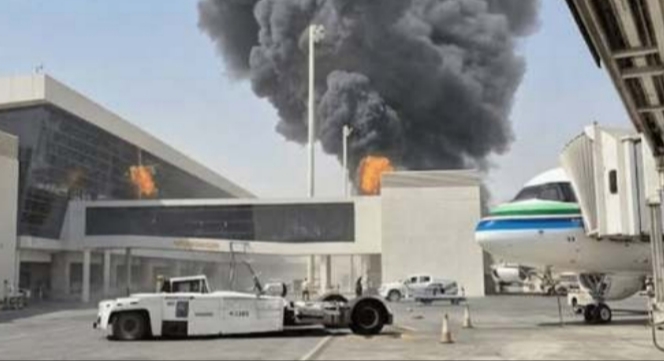
A second attack on Saudi Arabia’s King Khalid International Airport in two days has killed one person and injured 11 others and has, since then, raised fresh concerns about the safety of civilian air travel as fighting between Saudi Arabia and Yemen’s Houthi rebels intensifies.
Saudi Arabia’s civil aviation authority identified the latest fatality as a Pakistani resident. The attack on Sunday also triggered a fire in a passenger hall, according to Saudi officials. Authorities were assessing the damage and checking airport facilities for safety.
The recent strike followed Saturday’s deadly assault on the same airport, which initially left 12 people dead and more than 300 injured. An Indian national later died from injuries sustained in that attack, bringing the reported death toll to 13. The victims included Saudi nationals and foreign residents.
READ RELATED NEWS UPDATES:
Houthis threaten more airport attacks


The Houthi movement, which controls parts of Yemen, claimed responsibility for the attacks and warned airlines, airport workers and passengers against using Saudi airports and airspace. Its military spokesman, Brigadier General Yahya Saree, said the group had deployed ballistic missiles, cruise missiles and drones in its latest operations.
The group also claimed attacks on oil facilities and King Fahd International Airport in Dammam, eastern Saudi Arabia. Saudi authorities separately reported incidents involving projectiles near the airport. These claims and incidents point to a campaign targeting important transport and economic facilities, although individual battlefield claims require independent verification.
The repeated attacks have already disrupted aviation. King Khalid International Airport was closed after Saturday’s assault, with its closure extended following the subsequent strike. Reuters also reported that airlines including Lufthansa and Air India had suspended flights to Riyadh amid the earlier attacks.
Why the attacks matter beyond Saudi Arabia
Riyadh’s airport is a major gateway for international passengers, business travel and religious journeys. Continued disruption could leave travellers stranded, force airlines to change schedules and complicate connections through the Gulf. Passengers planning to travel through the region may need to confirm flight status directly with their airlines before leaving for the airport.
The security threat also extends beyond aviation. The Houthis have targeted energy facilities and warned that other Saudi airports could face attacks, potentially increasing pressure on regional transport and oil infrastructure. Any prolonged disruption could affect businesses and international travel, although the scale of any economic impact is not yet clear.
The group says its campaign is linked to Saudi support for Yemen’s internationally recognised government and recent attacks on Houthi-controlled areas. The conflict has intensified since the collapse of a ceasefire between the Houthis and Saudi-led forces.
US President Donald Trump has indicated that Washington could decide quickly whether to strike the Houthis, while British officials have signalled possible additional support for Saudi Arabia. Further military involvement could deepen an already dangerous confrontation.
The immediate concern is the safety of passengers and airport workers. With repeated strikes hitting a major civilian airport, the next response from Saudi Arabia and its international partners could shape whether the crisis escalates further.
For More Details, Visit New Daily Prime News