By New Daily Prime Financial Desk | Friday, 20 November 2026
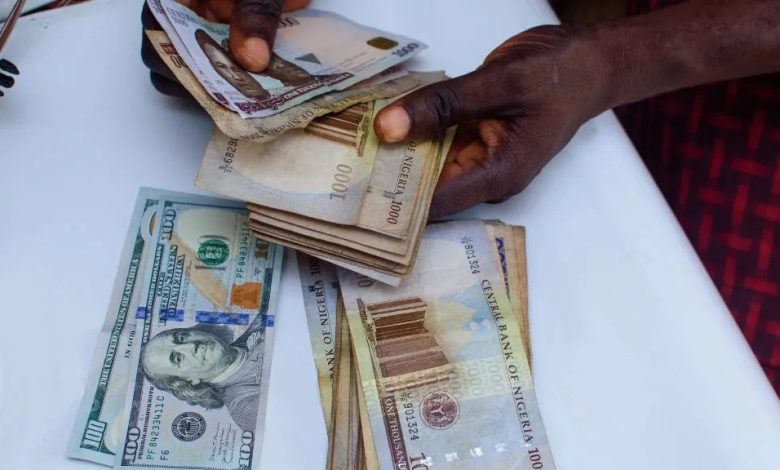
The dollar to naira exchange rate today, Friday, 20 November 2026, remains under pressure after Nigeria’s currency weakened in Thursday’s official trading session, with the dollar closing at ₦1,388 and parallel-market dealers in Lagos and Abuja reportedly quoting selling prices as high as ₦1,468 on Friday morning.
The Central Bank of Nigeria’s Nigerian Foreign Exchange Market (NFEM) volume-weighted rate stood at approximately ₦1,376.58 per dollar on Thursday, 19 November, compared with ₦1,363.23 on Wednesday. The movement represents a depreciation of ₦13.35, or approximately 0.98%, according to CBN data reported by financial-market publications.


The latest figures are important for Nigerians paying school fees abroad, importing goods, supporting families at home or converting foreign earnings into naira.
However, the official reference rate, market closing price and rates offered by banks or currency dealers are different measures. They should not be treated as interchangeable.
Latest dollar, pound and euro exchange rates
The table below uses the latest consistently identifiable CBN observations available during this review, dated Thursday, 19 November 2026.
| Currency | Official reference rate | Change from 18 Nov | Naira movement |
|---|---|---|---|
| US dollar (USD/NGN) | ₦1,376.08 | +₦13.35 (+0.98%) | Weakened |
| British pound (GBP/NGN) | ₦1,810.92 | +₦16.34 (+0.91%) | Weakened |
| Euro (EUR/NGN) | ₦1,513.14 | +₦18.08 (+1.21%) | Weakened |
CBN central reference-rate series, 19 November 2026, reproduced by exchange-rate data services. Figures rounded to two decimal places. The separately reported USD NFEM weighted-average and closing rates are not identical to the USD central reference rate.
Friday’s complete official trading results were not available for reliable confirmation at the time of this review. Consequently, Thursday’s published figures provide the main official benchmark.
Naira approaches ₦1,400 at official market close
Thursday’s trading exposed continued weakness in the Nigerian currency.
The dollar closed at ₦1,388, compared with ₦1,379.99 on Wednesday, representing an increase of ₦8.01.
During Thursday’s trading, the dollar reached a reported high of ₦1,397, placing it close to the ₦1,400 level.
The difference between the closing rate and the volume-weighted average reflects how foreign-exchange prices changed during the trading session.
Trading activity also increased. Reported interbank foreign-exchange turnover rose from $502.88 million on Wednesday to $800.31 million on Thursday, an increase of approximately 59.1%.
Despite the increase in activity, the naira weakened. Higher trading volume does not automatically mean stronger foreign-currency supply or an appreciating currency.
Black-market dollar selling rate reaches ₦1,468
Parallel-market quotations remained above official benchmarks on Friday morning.
Vanguard reported that dealers in Lagos and Abuja were offering dollars for sale at prices reaching ₦1,468, while other reported quotations varied by location and provider.
These figures represent reported dealer quotations rather than a single regulated nationwide exchange rate.
Using the reported ₦1,468 parallel-market selling quotation and Thursday’s ₦1,376.58 NFEM reference rate:
\[ ₦1,468-₦1,376.58=₦91.42 \]
The indicative difference is ₦91.42 per dollar, equivalent to approximately 6.64% of the NFEM reference rate.
This comparison illustrates the difference between the two published prices. It does not represent an automatically available trading profit because market access, transaction size, fees and rate definitions differ.
What £100, £500 and £1,000 are worth in naira
For Nigerians living in Britain, the pound-to-naira exchange rate is particularly relevant when supporting family members, paying for property or financing activities in Nigeria.
Using the CBN central reference rate of approximately ₦1,810.92 per pound for 19 November:
| Amount in pounds | Indicative naira equivalent |
|---|---|
| £100 | ₦181,092 |
| £500 | ₦905,461 |
| £1,000 | ₦1,810,922 |
For Nigerians in Europe, €500 would have an indicative value of approximately ₦756,569 using the corresponding euro reference rate.
For those in the United States:
| Amount in dollars | Indicative naira equivalent |
|---|---|
| $100 | ₦137,608 |
| $500 | ₦688,040 |
| $1,000 | ₦1,376,081 |
These are reference-rate calculations, not guaranteed money-transfer payouts. They exclude transfer charges and provider exchange-rate margins.
Readers in Canada should check the actual Canadian-dollar-to-naira rate quoted by their remittance provider. A USD/NGN benchmark cannot be used directly to calculate a Canadian-dollar transfer.
Why is the naira weakening?
Several developments may be contributing to pressure on Nigeria’s currency.
Foreign-currency demand can rise when businesses purchase imported machinery, raw materials and consumer products, particularly towards the end of the year.
International investment decisions also influence dollar availability.
Reuters reported on Thursday that the naira could remain under pressure because of seasonal imports and possible profit-taking by foreign portfolio investors. These are market expectations, rather than proof of what caused every recent price movement.
Meanwhile, financial analysts have raised concerns about the relationship between foreign-exchange reserves, market liquidity and demand.
Abiodun Ogunniyi, Head of Research at IRON Capital Partners, identified international monetary conditions, political uncertainty and import demand among factors affecting the currency’s outlook.
His assessment, reported by Nairametrics, suggested that the naira could face further pressure if underlying conditions remained unchanged. Such an outlook is not a prediction that ₦1,400 will necessarily be reached.
What the exchange-rate movement means for Nigerians
For Nigerians receiving money from relatives abroad, a weaker naira can increase the local-currency value of foreign earnings.
However, the benefit may be reduced if domestic prices rise or money-transfer providers offer less favourable exchange rates.
Import-dependent businesses face a different challenge.
Manufacturers purchasing foreign equipment, medicines, machinery or raw materials may experience higher naira costs when the currency weakens.
A business that needs $10,000 for imported equipment would face an indicative currency cost of approximately ₦13.77 million at Thursday’s NFEM reference rate of ₦1,376.58.
That figure excludes freight, insurance, duties and banking charges.
A single day’s currency depreciation does not mean that all consumer prices will immediately increase. Businesses may have existing stock, earlier purchase agreements or other arrangements that delay the effect.
What readers should know
- The latest corroborated official figures used in this report are dated Thursday, 19 November.
- The naira weakened against the dollar, pound and euro in the identified CBN reference-rate series.
- The dollar closed at ₦1,388 in Thursday’s official trading session.
- Parallel-market sellers in Lagos and Abuja reportedly quoted prices as high as ₦1,468 on Friday morning.
- Actual bank and remittance rates may differ substantially from published reference rates.
- Readers should confirm exchange rates, fees, provider authorisation and final recipient amounts before making transfers.
What happens next?
Attention will turn to the Central Bank of Nigeria’s next Monetary Policy Committee meeting, scheduled for Monday, 23 November, and Tuesday, 24 November 2026, in Abuja.
The meeting could provide further information about the direction of Nigerian monetary policy, although any decision and its impact on exchange rates remain uncertain.
The CBN has confirmed the meeting dates in its official notice.
For now, the main issue facing households and businesses is whether foreign-exchange availability can meet demand sufficiently to reduce pressure on the naira.
New Daily Prime will continue monitoring official trading data, parallel-market quotations and the cost of sending money to Nigeria.
Related New Daily Prime coverage