Nigeria’s new human rights partnership with India faces a major test at home, where the National Human Rights Commission (NHRC) received more than 3.7 million complaints in 2025, but completed investigations into only a small fraction of them.
The agreement, signed by the human rights commissions of both countries in Abuja, is intended to improve institutional capacity, strengthen access to justice and expand cooperation on emerging threats to fundamental freedoms. Attorney-General of the Federation, Prince Lateef Fagbemi, has pledged the Federal Government’s support and reaffirmed the NHRC’s statutory independence.
However, the scale of Nigeria’s unresolved human rights concerns raises questions about how quickly the partnership can translate into practical protection for citizens.
The NHRC’s December 2025 Human Rights Situation Dashboard recorded 3,724,822 complaints across its 38 offices nationwide. A separate disclosure by the Commission indicated that only 52,489 complaints had been fully investigated, representing approximately 1.4 per cent of the total.


The complaints covered insecurity, gender-based violence, child rights violations, discrimination and infringements on civil and political liberties. The figures do not establish that every complaint was verified, but they reveal the enormous workload confronting the institution.
The agreement with India could therefore provide an opportunity to improve investigation procedures, professional training, complaint management and institutional efficiency.
Fagbemi described the arrangement as a strategic partnership between two major democracies with shared common-law traditions and diverse populations. He said its success should be judged by the benefits delivered to ordinary citizens, particularly vulnerable people who struggle to obtain justice.
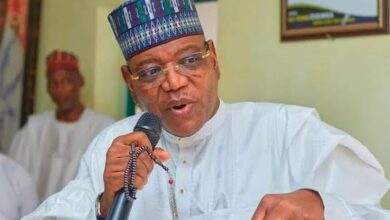
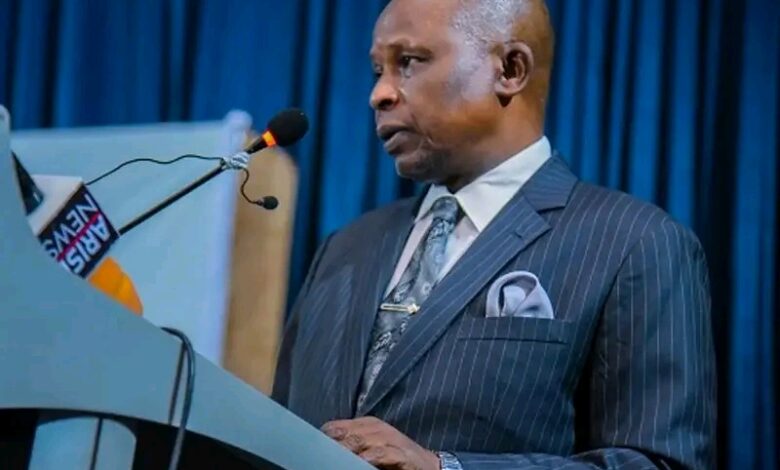
The Nigerian delegation was led by NHRC Executive Secretary, Chief Tony Ojukwu, while India’s delegation was headed by its commission chairperson, Justice V. Ramasubramanian.
The partnership provides for technical exchanges, knowledge transfer, joint research, professional development and cooperation on human rights challenges affecting both countries. Priority areas include alternative dispute resolution, security sector accountability, digital rights, artificial intelligence ethics and environmental justice.
RELATED NEWS:
Digital rights enter the spotlight
One significant feature of the agreement is its attention to the human rights implications of emerging technologies.
Fagbemi warned that the growing use of artificial intelligence and other digital systems creates new risks that existing legal safeguards must address. These include unlawful access to personal information, algorithmic discrimination, digital surveillance and restrictions on freedom of expression.
He called for research and policy recommendations that would protect data privacy, prevent algorithmic bias and preserve civic freedoms without obstructing technological development.
The concern is particularly relevant as governments and private organisations increasingly rely on digital platforms to collect personal information, monitor activities and make decisions affecting individuals.
An algorithm that produces discriminatory outcomes, for instance, can deny people opportunities or services without an obvious explanation. Similarly, unlawful surveillance can discourage citizens from expressing their views or participating in public affairs.
The two commissions are expected to exchange experience and develop approaches suited to their respective legal systems.
Fagbemi backs NHRC independence
The Attorney-General also used the engagement to reaffirm the Commission’s independence, drawing attention to Section 6(3) of the National Human Rights Commission (Amendment) Act, 2010.
The provision states that the NHRC shall not be subject to the direction or control of any other authority or person when exercising its statutory functions and powers.
This safeguard is central to the Commission’s credibility. An institution investigating alleged abuses by public officials must be able to examine complaints without interference from the authorities whose conduct may come under scrutiny.
The Act also empowers the Commission to summon individuals, obtain documents and conduct public inquiries into alleged human rights violations.
Fagbemi said the Federal Government respected these statutory protections and supported constructive cooperation between the Ministry of Justice and the Commission.
What Nigerians should expect
The agreement comes with an important implementation challenge. Neither the signing announcement nor the details made available so far specify a dedicated funding allocation, implementation timetable or measurable targets for reducing investigation delays.
These details matter because training and institutional exchanges alone cannot resolve a large backlog of complaints. The Commission also needs adequate personnel, investigative resources, accessible complaint channels and effective mechanisms for securing compliance with its findings.
Earlier, Ojukwu identified complaint management, security sector accountability and environmental justice as areas requiring stronger institutional cooperation. He also highlighted the complementary responsibilities of the judiciary and national human rights institutions.
During a separate meeting with Chief Justice of Nigeria, Justice Kudirat Kekere-Ekun, the Indian delegation discussed judicial cooperation and the protection of vulnerable groups, including women, children and persons with disabilities.
India’s NHRC chairperson described the agreement as a first-of-its-kind institutional partnership for his commission. He also pointed to the value of cooperation between countries in the Global South, which face similar challenges involving population diversity, institutional development and access to justice.
As for Nigerians, the real measure of this partnership will be whether complaints receive timely attention, victims obtain meaningful remedies and public institutions become more accountable.
The agreement has opened a channel for cooperation. Its credibility will depend on whether that opportunity produces results beyond official visits, training sessions and diplomatic assurances.