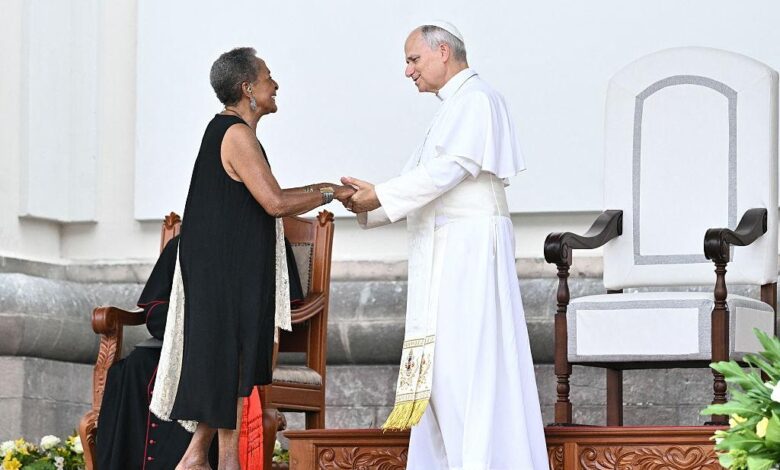
Pope Leo XIV’s visit to Zaña, a historic centre of Afro-Peruvian culture in northern Peru, is drawing renewed international attention to the country’s African-descended population and the lasting consequences of slavery.
As part of his apostolic visit to Peru, the pontiff is scheduled to hold a prayer meeting at the sanctuary of St. Turibius of Mogrovejo on Saturday, November 14.
His visit has become a significant moment for Afro-Peruvian communities seeking greater recognition of their historical experiences, cultural contributions and continuing struggles against discrimination.
A HISTORY SHAPED BY SLAVERY

Approximately 100,000 Africans were brought to Peru following the arrival of Spanish conquistadors and forced to work on sugar plantations and in silver mines.
Their descendants subsequently became an important part of Peru’s cultural and social history, particularly in Lima, where Africans and their descendants once constituted more than 40 per cent of the population.
Despite emancipation more than 170 years ago, Afro-Peruvians have continued to face discrimination, social exclusion and limited representation.
Zaña, located in the Lambayeque region, has emerged as an important centre for preserving African heritage and remembering the experiences of enslaved people.
In 2017, UNESCO recognised the town as a site of memory of slavery and African cultural heritage.
POPE’S APOLOGY FOR HISTORICAL INJUSTICE
Pope Leo has previously acknowledged the Catholic Church’s historical role in legitimising slavery and failing to condemn it for centuries.
In his first encyclical, Magnificent Humanity, the pontiff expressed regret over the suffering endured by enslaved people and called for forgiveness.
“It is impossible not to feel deep sorrow when contemplating the immense suffering and humiliation endured by so many in stark contrast to their immeasurable dignity as persons infinitely loved by the Lord,” Leo wrote.
He added: “For this, in the name of the church, I sincerely ask for pardon.”
His visit to Zaña is therefore expected to reinforce discussions about historical responsibility, racial equality and reconciliation.
READ RELATED NEWS
Pope Leo criticizes Milei’s austerity policies during Argentina visit
EU €20m package to equip Nigerian troops against bombs, drones
Trump confirms FBI investigation into Nvidia boss over China spy allegations
Pope Leo XIV begins 12-day South American tour following lung surgery
AFRO-PERUVIAN VOICES WELCOME THE VISIT
Afro-Peruvian singer Susana Baca, who performed for the pope during his arrival in Peru, described a connection between Leo’s emphasis on forgiveness and the history of Afro-Peruvian communities.
“I believe that one of the most important things in the history of Afro-Peruvians is that we did not remain submerged despite our history of suffering,” Baca said.
“We are an Afro-Peruvian people who have learned to forgive.”
Baca, a Latin Grammy-winning musician and Peru’s first Black Cabinet minister, has played a significant role in promoting Afro-Peruvian culture and challenging discrimination.
Her performance before the pontiff has been welcomed by members of the community as a moment of cultural recognition.
COMMUNITY SEEKS RECOGNITION BEYOND HISTORY
However, the visit has also renewed calls for attention to contemporary inequalities affecting Afro-Peruvians.
Community members say historical recognition must be accompanied by efforts to address racism, economic exclusion and unequal opportunities.
Zaña residents have expressed pride in the pope’s African ancestry, describing his visit as an opportunity to celebrate their identity and reinforce demands for equal treatment.
Felipe Gutierrez, a local chef and poet, said the community was proud to see an Afro-Peruvian performer sing before a pope with African roots.
“They show us how someone who is Black as we are in Zaña became a president and we’re proud because we all deserve the same rights,” Gutierrez said.
“Black, Indigenous, all of us are equal in the eyes of God.”
The town’s Afro-Peruvian museum preserves historical photographs, documents relating to enslaved people, plantation equipment and musical instruments reflecting African cultural influences across Latin America.
A SYMBOLIC MOMENT FOR AFRO-DESCENDANT COMMUNITIES
Leo’s visit comes as Afro-descendant communities across Latin America continue to demand greater recognition of their contributions and stronger protection against discrimination.
For Zaña, the papal visit represents an opportunity to preserve its historical memory while drawing international attention to the challenges facing its residents.
The community hopes the occasion will encourage broader conversations about racial justice, cultural preservation and the enduring effects of slavery.
As the pontiff returns to a town where he previously served during his years as bishop of Chiclayo, his visit carries both religious significance and a powerful historical message about dignity, equality and reconciliation.