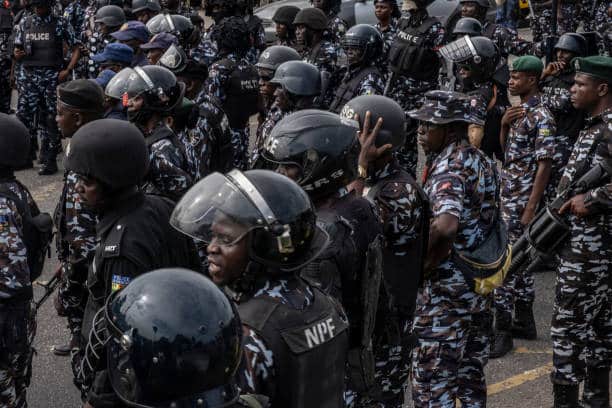
All 36 state assemblies have approved a bill that would end the federal monopoly on policing. Its safeguards appear promising on paper. But the main questions are: who will pay for the new forces, who will give them orders, and who will answer when something goes wrong?
For the first time since 1966, Nigeria is close to ending the federal monopoly on policing. Every one of the 36 State Houses of Assembly has approved the Constitution (Sixth Alteration) Bill, 2026, and it has been sent to President Bola Tinubu for assent. His Chief of Staff, Femi Gbajabiamila, says the approval of all 36 states exceeds the constitutional requirement of 24 states, which is two-thirds of the federation.
Signing the bill would not, on its own, put a single state police officer on the street. Each state would first have to pass its own law to set up a service, and that service would need to be certified as meeting national minimum standards. Much of the detail that would make the system work has not been written yet. The National Policing Bill, which is meant to set out how the system will operate, and a full funding framework are still outstanding.
What the bill would change
At present, the Constitution is clear. Section 214(1) provides for one police force for Nigeria and says that no other police force shall be established for the Federation or any part of it. Under section 215, the Inspector-General of Police commands the force, and the Commissioner of Police in each state answers to him.


The bill would replace that single force with two tiers: a Federal Police Service and a State Police Service in each state. Federal matters would stay federal. These include the Federal Capital Territory, federal institutions, organised crime, terrorism and cybercrime. State services would handle state laws, public order and local policing, including the protection of lives and property. A state service could not operate outside its own state unless an Act of the National Assembly allowed it.
Who would give the orders
The head of a state service would be appointed by the governor. The State Police Service Commission would recommend candidates to the National Police Council, which would then recommend one to the governor. The State House of Assembly would have to confirm the appointment.
The bill also gives the post some protection. A state police chief could be removed only for stated cause, after a fair hearing, on the recommendation of the National Police Council, and by a two-thirds vote of the State House of Assembly. The aim is to stop a governor from dismissing a chief who refuses improper instructions.
The bill also bars any direction to arrest, detain or investigate a person, or to leave a matter uninvestigated, for partisan, ethnic, religious, sectional or personal reasons. This rule applies to both the President and governors, and it is the bill’s main answer to the fear that governors could turn state police against their opponents.
The bill would also require the National Assembly to set national minimum standards by Act. These would cover recruitment, vetting, training, promotion, discipline, use of force, custody, complaints and public reporting. States could set higher standards, but not lower ones. In practice, every state would run its own service within one common national framework.
When the federal government can step in
The bill allows the Federal Police Service to intervene temporarily in a state’s internal security. It may take operational command of a state service, or part of it, in five situations. These include a breakdown of public order that the state service cannot contain, a request from the governor, a state service that is unable to function because of serious administrative or financial problems, substantial evidence that the state service is being used for political intimidation or persecution, and a threat to national security.
Any intervention would need the President’s written authorisation, stating its grounds, territory, functions and duration. The governor, the State House Speaker, the National Police Council and the National Assembly would have to be notified within 48 hours. The legality of any intervention could be challenged in court.
There is a gap, however. The length of an intervention is meant to be set by an Act of the National Assembly that has not yet been passed. Until it is, the bill sets no maximum period. The bill also says a state service stays under federal command until “the expiration of the situation that warranted the intervention.” Read literally, that could last longer than any period the law sets. The implementing Act will need to resolve this.
Put together, the intervention rules guard against two opposite risks: a governor who misuses or neglects a state service, and a president who uses an intervention to take over a state’s policing for political ends. Ground (d), on political intimidation, is the main check on governors.
Written authorisation, notice, time limits and judicial review are the main checks on the President. How well those checks work will depend on how quickly the courts can act, because an intervention could be over before a case is heard.
The money question
The bill itself says little about how states would pay. Each state House of Assembly could pass laws to fund its own service, and an Act of the National Assembly would provide for federal grants. Funds held for the State Police Service Commission would be paid to it directly. The service itself has no equivalent protection. Many states already struggle to meet their payroll and basic obligations, so running a police service would test their finances.
An earlier implementation framework, which is not confirmed in the final bill, offers a sense of the scale involved. It proposed a 60-month transition, with 60 per cent of existing police personnel moving to state services and 40 per cent staying with the federal government. It also proposed a national police strength of 566,306 officers, funded partly by a three per cent contribution from the Federation Account and a minimum 15 per cent contribution from each state’s security budget. Governors have said three per cent may not be enough to cover recurrent costs, especially salaries and allowances.
READ RELATED NEWS
State Police nears legislative test as Tinubu’s reform bill hits 90%
State Police breakthrough: 24 Assemblies unlock constitutional hurdle
Senate completes constitutional process for state police, sends bill to Tinubu
The existing federal force offers a warning. The Ministry of Police Affairs’ 2026 budget is about N1.33 trillion, of which about N1.268 trillion is recurrent spending and N60.9 billion is capital spending. The Nigeria Police Trust Fund has an allocation of about N233.96 billion for the year. Even so, a review announced on 12 November found inadequate allowances, pension arrears, gaps in death benefits, and no active insurance policies covering personnel and key assets for 2025 and 2026.
On 4 November, the Minister of Police Affairs, Ibrahim Gaidam, said the ministry wanted to raise its insurance provision from N30 billion to about N102 billion, subject to confirmation. The government has also announced plans to recruit 50,000 more officers.
Pay shows how recurrent these costs are. Under the CONPOSS salary adjustment approved in 2024, the first-step annual salary for a Constable II is about N622,452, or roughly N51,871 a month. A Constable I earns about N633,962 a year and a Corporal about N654,795. These are salary-table figures, not take-home pay, which can change with allowances. But even before pensions, insurance, training, accommodation and operations are counted, the wage bill of a single state service would be large, and it would have to be paid every year.
Can poorer states keep up?
This is where the debate sharpens. Lagos and Rivers could probably finance strong services. Many other states could not. Sadeeq Shehu, a former military intelligence officer and security consultant, has warned that states without money could not pay officers well enough to keep them.
He said: “Poorer states should not be condemned to inferior policing.” He proposes a State Police Equalisation Fund, financed from the Federation Account, with allocations set by a formula that considers population, land area, crime burden, poverty levels, internally generated revenue and compliance with national standards. States that fail to meet national standards would receive conditional federal support, linked to training, human rights, accountability and audits.
Shehu also argues that some functions are too expensive for each state to duplicate. These include national forensic laboratories, DNA and fingerprint databases, biometric systems, criminal intelligence databases, police aviation, cybercrime capacity and major training academies. In his view, states should pay for routine policing in their areas, while the federal government funds shared national infrastructure.
Lawrence Alobi, a retired Commissioner of Police, favours a different route. He proposes a National Police Trust Fund, paid into by the federal government, the states and companies operating in each state, and supervised by an independent body rather than politicians.
He argues that the fund should also strengthen the federal police, because crimes often start in one state and spread into another, which would still need federal coordination. He also wants a support fund for states that struggle to pay for their services, so that a state’s wealth does not decide whether it can have effective policing.
Plateau, Kano move ahead
Some states are already acting. Plateau State has proposed recruiting between 5,000 and 7,000 personnel for a state police service, with pilot deployments in flashpoint areas before statewide coverage. The proposal came from Habila Joshak, a retired deputy Inspector-General and chairman of a 14-member advisory committee, which the governor, Caleb Mutfwang, set up on 10 March 2026. The committee says it spent seven months on research and consultations. Its seven recommendations include an independent Police Service Commission with a civilian majority and phased implementation.
The Plateau Attorney-General, Justice Philemon Dafi, says the state has drafted a state police law and regulations. He also says that constitutional amendments and a national policing framework must come first. The deputy governor, Josephine Piyo, said the service “must not merely be another institution,” and must earn public trust.
In Kano, the State House of Assembly has passed a bill seeking constitutional amendments to allow state police. In the same session, lawmakers cut the governor’s 2026 supplementary budget from about N1.478 trillion to about N1.211 trillion, a reduction of about N266.61 billion.
Apart from these two states, NewDailyPrime had reported that the reception of the proposed state police bill has taken different legislative forms in Ekiti and Kebbi, with Ekiti’s lawmakers endorsing the constitutional alteration while proposing an additional amendment.
The Ekiti State House of Assembly unanimously approved the bill on 21 October, 2026, and recommended inserting a provision recognising the legislative powers of both the National Assembly and state assemblies in their respective constitutional jurisdictions. The Speaker, Adeoye Aribasoye, said state police could improve response to security threats and strengthen accountability through closer oversight.
In Kebbi, the State House of Assembly has received the bill from the National Assembly for consideration and approval, with the proposal referred to its Committee on Internal Security for deliberation. The transmission letter urged the lawmakers to expedite action and communicate their decision to facilitate the constitutional amendment process. Unlike Ekiti, which has already adopted the bill with a proposed modification, Kebbi is yet to take a formal position on its approval or rejection.
The politics of control
The strongest fear is political abuse. Critics point to the First Republic, when local police forces were used against opponents. On 18 November 2026, during the Senate debate, Senator Adams Oshiomhole, a former Governor of Edo State, warned that governors could misuse state police for political ends. He argued that this risk was not a reason to abandon the reform, but called for binding operational guidelines. Senator Ekong Sampson said the courts must check abuses through oversight and accountability mechanisms.
Supporters of the bill point to its safeguards. Critics ask whether those safeguards will hold once they are tested. The bill’s protections depend on laws that have not yet been written, on the independence of the bodies that will apply them, and on whether states can fund their services without leaning on the governor’s budget.
The Inspector-General of Police, Olatunji Disu, has taken a cautious line. He said Nigeria cannot simply copy the state policing models of the United States, India or Pakistan, and must design a system suited to its own security and administrative conditions. He described state policing as “futuristic,” and said the police, the National Assembly and the wider public still needed to work out what would improve security.
The legal ground beneath the reform
The reform also has to deal with what the law already allows. Policing is on the exclusive legislative list, and the Police Act 2020 created Community Policing Committees at state and divisional levels. These committees can help with intelligence gathering, conflict resolution and patrols.
But they fall short of real local policing, which would require a separate structure, a change to command hierarchies and a new allocation of jurisdiction. Six years after the Act, few states have activated their committees.
Some states have tried to fill the gap. Amotekun, set up in January 2020 by the South West states, is a regional security outfit with its own state laws and state-controlled structure. Critics say it operates on the edge of what the Constitution allows, because the Constitution gives the federal government the power to establish police forces. The bill would settle that question by putting state policing on a firm constitutional footing, but only if the amendment passes and the implementing laws follow.
So, what does the evidence show?
The central question is whether the proposed system could be financially sustainable, institutionally accountable, legally sound and operationally effective. The evidence does not yet give a clear answer to any of these.
On the legal side, the bill is detailed, and its checks on political misuse are real. Its weak points are the outstanding National Policing Bill, the unfixed length of federal interventions, and the wording on command during them. On money, the picture is least settled. No final funding framework exists, the most detailed figures come from an earlier framework that has not been confirmed, and the federal force already struggles to pay for welfare, insurance and recruitment.
Any state service would face these same problems on a smaller base. On accountability, the bill names the standards but leaves the complaints machinery to the implementing law. On operations, the bill’s own structure raises a practical question about whether state forces can address the threats that drove the reform.
That question is a critical one. The insecurity behind the call for state police is driven largely by terrorism and by organised violent crime, including banditry and kidnapping for ransom. Under the bill, terrorism and organised crime would stay with the federal police, while state services would deal with state laws, public order and offences within their competence. If the threats that prompted the reform remain in federal hands, it is unclear how much state police would change security on the ground.
Several measures would show whether the system is working: which states have passed laws and been certified, how much each state budgets for its service and whether that money is paid on time, how many complaints against officers are investigated and resolved, how often federal interventions happen and how long they last, and whether officers’ pay and insurance are kept up to date. Without these figures, the claims made for or against state police cannot be tested.
Assent would be the first step, not the last. Whether state police become a real improvement will depend less on the bill’s principles than on the funding and enforcement that follow. And when a community is attacked, the question that will matter most to residents is simple: who will answer for it, the state service or the federal one?
WHAT READERS SHOULD KNOW
The reform, for ordinary residents, would not change anything overnight, and the effect would depend heavily on where they live. Even after assent, a state would need its own law, a certified service and the national standards that the National Assembly has yet to write. In the meantime, the federal police would remain the only force in practice. Once services exist, the quality of protection could vary widely from one state to another, depending on the governor’s priorities, the state’s budget and whether it can pay and equip its officers.
The bill also keeps terrorism and organised crime with the federal police. The threats that most worry many communities, such as banditry and kidnapping for ransom, may therefore still be handled largely by federal officers, which means state police could leave some of the biggest problems unresolved.
Noteworthy are issues of money and control. Governors would fund the services and appoint their chiefs, subject to confirmation by state assemblies. The bill protects those chiefs from being removed without cause and bars orders to arrest or investigate for partisan or personal reasons. Those are meaningful safeguards, but they depend on laws that have not been written.
The funding framework is missing, the complaints system is left to future legislation, and the length of federal interventions is undefined. A state that cannot pay its officers properly will struggle to keep them professional and free from pressure, and the federal police already face unpaid pensions, gaps in insurance and inadequate allowances. Without a reliable funding structure, the independence the bill promises could be hard to sustain in poorer states.
Readers should judge the reform by evidence rather than promises. The key things to watch are the National Policing Bill and its funding formula, the Act that will set how long federal interventions can last, the states that meet certification, and the figures that will show how the system performs in practice: how much each state spends on its service, whether officers are paid and insured on time, how many complaints are investigated, and how often the federal government intervenes. These measures will show whether state police strengthen security and accountability, or simply move the same problems to a new level of government.
For More News Details, Visit www.NewDailyPrime.news.