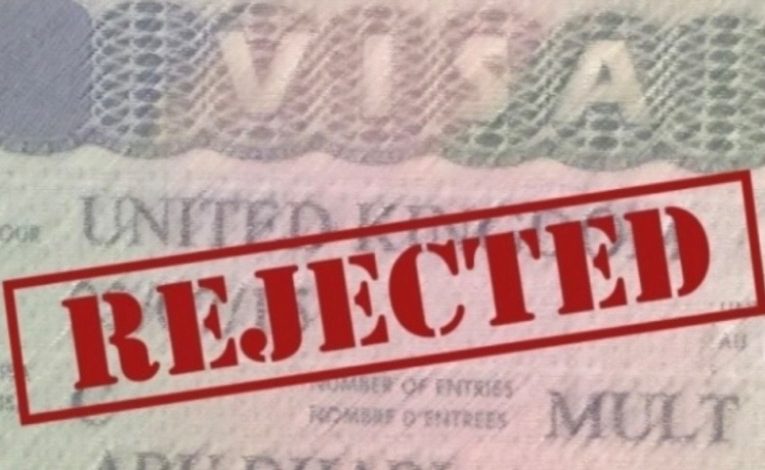
The number of Nigerian students granted UK sponsored-study visas has fallen by 34 per cent in one year, raising questions about tougher immigration rules, rising education costs and whether British universities are becoming harder for international applicants to enter.
New Home Office figures published on Thursday, 26 November 2026, show that 19,734 sponsored-study visas were granted to Nigerian main applicants during the 12 months ending September 2026, compared with 30,009 in the previous year.
The figures represent a 34.2 per cent decline, equivalent to 10,275 fewer visa approvals within one year.
Nigeria ranked third, behind China and India, accounting for approximately six per cent of sponsored-study visas granted to main applicants.

The decline is not limited to Nigeria. The United Kingdom recorded fewer student visa grants across several major international recruitment markets.
However, the scale of Nigeria’s decline raises particular concerns for families spending substantial amounts on university applications, tuition fees and living expenses.
The central question is whether fewer Nigerians are applying, more applications are being refused, or universities are becoming more cautious about recruiting students from certain countries.
The evidence suggests that several factors are involved, but the available figures do not establish how much each has contributed.
How many Nigerians received UK student visas?
According to the Home Office’s latest immigration statistics, Nigeria recorded 19,734 sponsored-study visa grants to main applicants in the year ending September 2026.
These figures cover the period from 1 October 2025 to 30 September 2026.
The decline was larger than the overall fall in sponsored-study visa grants.
Across all nationalities, the UK issued 335,801 sponsored-study visas, including those granted to dependants. That represented a 23 per cent decrease compared with the previous year.
Of that total, 322,287 visas went to main applicants.
Nigerian grants fell by 34 per cent, compared with a 29 per cent decline for Indian students and a 22 per cent reduction for Nepalese applicants.
Pakistan recorded an even sharper fall of 72 per cent.
China remained the largest source of sponsored-study visa recipients, with 80,932 grants to main applicants.
India followed with 69,855, while Nigeria ranked third.
These figures show that Nigeria remains an important market for British universities, despite the reduction in successful student visa applications.
Why are Nigerian student visa grants falling?
The Home Office identifies changes in immigration policy and university recruitment practices as important factors behind the wider decline.
One significant development was the tightening of requirements imposed on universities that sponsor international students.
Under updated guidance introduced in June 2026, higher education institutions must meet stricter standards to retain their ability to sponsor overseas students.
The Basic Compliance Assessment requires institutions to keep their visa refusal rates below five per cent, achieve course enrolment rates of at least 95 per cent and maintain completion rates of at least 85 per cent.
The completion requirement is scheduled to increase to 90 per cent in June 2027.
These requirements place greater pressure on universities to assess applications carefully before issuing a Confirmation of Acceptance for Studies (CAS).
A CAS is the document an international student normally needs before applying for a sponsored Student visa.
Universities concerned about their compliance records may become more selective about which applicants they sponsor.
The Home Office acknowledges that continued credibility checks and tighter institutional responsibilities have led some universities to reduce recruitment from certain countries.
However, the published report does not establish how many Nigerian applicants were rejected by universities before reaching the visa application stage.
That distinction matters because a student denied university sponsorship would not necessarily appear in the Home Office’s visa refusal figures.
Are more Nigerian students being refused visas?
Visa refusals are an important part of the story, but they must be interpreted carefully.
A fall in the number of visas granted does not automatically mean that the refusal rate has increased by the same percentage.
The number of grants can decline because fewer people apply, fewer universities issue sponsorship documents, more applications are refused, or a combination of these factors.
To establish Nigeria’s actual refusal rate, the number of refused applications must be compared with the relevant total of applications decided over the same period and within the same visa category.
It would be misleading to describe the 34 per cent fall in grants as a 34 per cent refusal rate.
Similarly, a reported refusal rate among applicants selected for credibility interviews should not be presented as the refusal rate for all Nigerian students.
Those interviewed represent a specific group, not necessarily the entire applicant population.
A full assessment requires comparable nationality-level figures for applications, decisions, grants and refusals.
Until those measures are examined together, the available statistics cannot establish whether refusals were the main cause of Nigeria’s decline.
How much money must Nigerian students show?
Financial requirements are another important consideration for families planning to study in Britain.
Under current Home Office guidance, a Student visa applicant generally needs sufficient funds to cover outstanding tuition fees and living costs.
The living-cost requirement depends on the location of the university.
For courses in London, the required maintenance amount is £1,529 per month, for up to nine months.
Outside London, the requirement is £1,171 per month, also for up to nine months.
That means applicants studying courses lasting at least nine months may need to demonstrate:
- London: £13,761 for living costs.
- Outside London: £10,539 for living costs.
These amounts are separate from any outstanding tuition fees and visa-related charges.
For example, if a Nigerian student has £15,000 in outstanding tuition fees, the combined amount to demonstrate could reach £28,761 for a course in London or £25,539 outside London.
These are illustrative calculations, not fixed charges applying to every applicant.
The exact financial requirement depends on the course, payments already made, sponsorship arrangements and any applicable exemptions.
Applicants generally must hold the required funds for at least 28 consecutive days, with the relevant evidence meeting Home Office timing requirements.
For families funding education in pounds while earning income in naira, exchange-rate movements can increase the local-currency cost of meeting these requirements.
However, the Home Office’s latest visa figures do not measure how many Nigerians abandoned applications because of financial pressures.
Did restrictions on bringing family members make a difference?
Another major policy change came into effect in January 2024.
The UK restricted the ability of most international students to bring partners and children as dependants.
Exceptions remain for qualifying postgraduate research students and certain government-sponsored students.
Before the restriction, the possibility of relocating with family members was an important consideration for some applicants.
The Home Office reports that dependant visa grants declined sharply after the policy changed.
By the year ending September 2026, sponsored-study dependant visa grants across all nationalities were 91 per cent below their peak in the year ending June 2023.
The restriction may make Britain less attractive to some prospective Nigerian students who want to study while living with their spouses or children.
However, the latest statistics do not show precisely how much of Nigeria’s 34 per cent decline can be attributed to the dependant policy.
What does the decline mean for British universities?
International students are an important part of the UK’s higher education system.
They pay tuition fees, rent accommodation and spend money in local economies.
A sustained decline in international recruitment could place financial pressure on universities that depend heavily on overseas student income.
However, the effects will vary between institutions.
Universities recruiting large numbers of students from Nigeria and other countries experiencing sharp declines may face greater pressure than those with more diversified recruitment.
The Home Office’s data also show a wider reduction in demand for master’s-level study visas.
Across nationalities, 181,920 visas were granted for master’s-level courses in the year ending September 2026, down 29 per cent.
Master’s-level visas accounted for 58 per cent of relevant grants, compared with 63 per cent in the preceding year.
This suggests that changes in postgraduate recruitment are an important part of the wider decline.
The figures do not, however, identify how many Nigerian applicants were affected at each course level.
Read related news from New Daily Prime
How UK’s crackdown on student visas is impacting University finances
Relief for Nigerian care workers as UK scraps 15-year ILR plan, but new conditions apply
Andy Burnham may exempt care workers from the proposed 15-year ILR route
Are Nigerians already studying in Britain affected?
The figures concern new sponsored-study visa grants, but the Home Office also publishes statistics on students extending their permission to remain in the UK.
In the year ending September 2026, 3,746 Nigerian nationals were granted extensions on the sponsored-study route.
Nigeria was among the three leading nationalities receiving these extensions, alongside China and India.
Separately, 20,478 Nigerians were granted permission to remain under the Graduate route during the same period.
The Graduate route allows eligible international graduates to remain in Britain temporarily after completing qualifying courses.
These figures are separate from the 19,734 new sponsored-study grants.
They should not be added together and described as the number of Nigerians newly admitted to UK universities.
What should prospective Nigerian students do?
The latest statistics do not mean that Nigerian students are barred from studying in Britain.
Nigeria remains one of the three largest nationalities receiving sponsored-study visas.
However, applicants should prepare carefully before committing substantial money.
Prospective students should:
- Confirm that their chosen university is licensed to sponsor international students.
- Check tuition fees, scholarships and the full financial requirements before applying.
- Ensure that information supplied to universities and immigration officials is accurate and consistent.
- Understand the restrictions on bringing dependants.
- Prepare for credibility checks and be able to explain their chosen course and study plans.
- Check the current Student visa rules directly on GOV.UK.
- Avoid agents promising guaranteed university admission or visa approval.
Students should also remember that receiving a university offer does not guarantee that a visa will be issued.
The Home Office assesses whether applicants meet the relevant immigration requirements.
What the government still needs to explain
The 34 per cent fall raises questions that require more detailed analysis.
How many Nigerians applied for sponsored-study visas during the latest reporting period?
How many applications were refused, and how did the refusal rate compare with the preceding year?
How many applicants were unable to obtain university sponsorship?
Did particular courses or institutions account for a disproportionate share of the decline?
And how much did tuition fees, maintenance requirements and restrictions on dependants influence applicants’ decisions?
Answers would help distinguish between reduced student demand and tighter immigration controls.
For now, the official figures establish a substantial fall in successful sponsored-study visa applications from Nigeria, alongside wider reductions across the international student market.
The decline does not mean Britain has closed its universities to Nigerians. But it does show that obtaining a place and securing permission to study in the UK has become a more demanding process, with financial preparation and university sponsorship playing an increasingly important role.