President Bola Tinubu’s agricultural financing interventions have reached more than 500,000 smallholder farmers across 16 states as the Federal Government commits ₦450 billion to agricultural programmes and approving a ₦1.5 trillion recapitalisation of the Bank of Agriculture (BoA), the All Progressives Congress Presidential Campaign Council (APC-PCC) has disclosed.
The council said the initiatives were designed to improve food production, strengthen agricultural value chains and expand access to financing, particularly for small-scale farmers who often struggle to obtain credit, modern equipment and essential farm inputs.
In a statement issued on Sunday by its spokesperson, Dele Alake, the APC-PCC outlined several agricultural programmes under the Renewed Hope Agenda, including fertiliser distribution, mechanisation, irrigation, commodity price protection and specialised financing for selected crops.
The council said the ₦250 billion Renewed Hope Smallholder Support and Value Chain Fund had supported more than 500,000 farmers in 16 states, including over 70,000 women. The programme has facilitated the distribution of about 2.5 million bags of fertiliser and 300,000 bags of certified seeds.
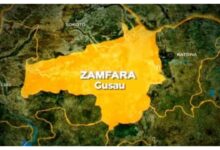

The government’s stated target is to reach two million farmers and distribute more than 10 million bags of fertiliser, with states such as Kaduna, Kano, Katsina, Niger, Borno, Gombe, Taraba, Adamawa, Yobe and Bauchi among the beneficiaries.
Beyond input distribution, the Bank of Agriculture is implementing a ₦200 billion Guaranteed Minimum Price Programme, under which it has purchased about 170,000 metric tonnes of maize, rice, sorghum and cassava.
The arrangement is intended to provide a market for farmers’ produce and reduce the pressure to sell at unfavourable prices during harvest periods.
The bank has also introduced an onion financing scheme in partnership with the National Onion Producers, Processors and Marketers Association of Nigeria, which represents more than 11,800 farmers. Under the arrangement, cooperatives bear 30 per cent of input costs, while the bank covers the remaining 70 per cent.
The council disclosed that dry-season agricultural financing was being developed to accommodate 400,000 farmers during the 2026 farming cycle, covering 120,000 hectares of wheat and another 300,000 hectares for crops including rice, maize, millet, sorghum, cassava and soybeans.
RELATED NEWS:
In Kaduna State, the Nigeria Ginger Recovery Programme has provided blight-free seeds to 3,200 farmers in Kachia, with more than 9,000 bags of ginger reportedly recovered for multiplication. Expansion across 20,000 hectares in 16 states is planned.
The agricultural push also includes 1,571 tractors deployed to 23 states to mechanise 1.2 million hectares, alongside a productive-use-of-electricity programme valued at ₦385 billion, which provides 44,000 electric cargo tricycles and 100,000 solar irrigation pumps, targeting 500,000 farming families.
The proposed ₦1.5 trillion recapitalisation of the Bank of Agriculture, which the council described as a major campaign promise made in 2023, is expected to strengthen the institution’s lending capacity and extend financing to farmers, processors, cooperatives and other agricultural businesses.
While the figures presented by the council outline the scale of the government’s stated agricultural commitments, the programmes’ long-term impact will ultimately depend on how effectively financing, farm inputs, infrastructure and market access translate into increased production, lower food costs and improved incomes for farmers and consumers.
For More News Updates, Visit New Daily Prime News