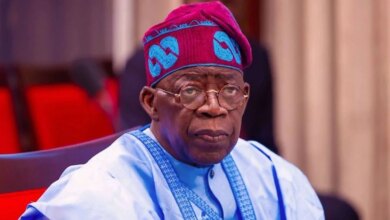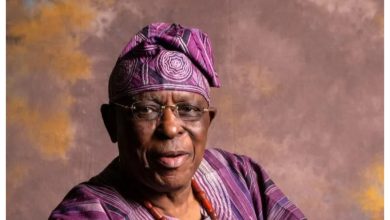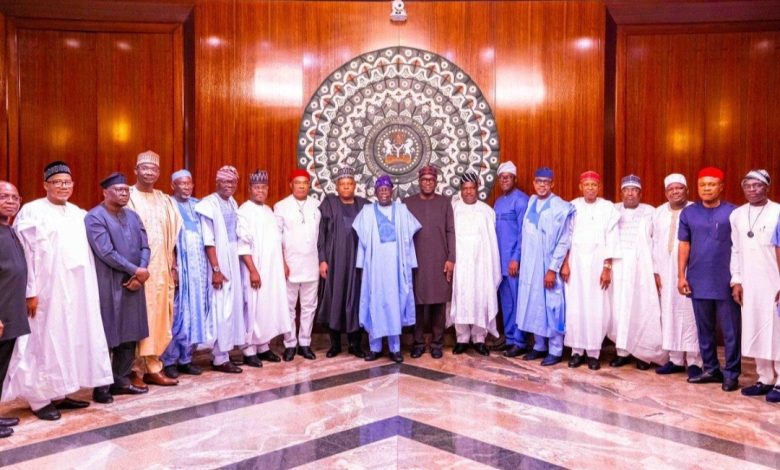
The burgeoning pledge by state governors to deliver millions of votes for President Bola Ahmed Tinubu in the 2027 general election is raising questions about the increasing dependence of state governments on the Presidency, political patronage and the balance of power within Nigeria’s federal system.
In an investigation into the growing political alliances ahead of the 2027 general election, New Daily Prime spoke to three political analysts to examine what may lie behind governors’ public pledges to deliver votes for President Bola Ahmed Tinubu.
Their responses point to possible calculations involving access to federal influence, political survival and strategic advantages and raise questions about whether the alliances extend beyond ordinary party loyalty and what they could mean for Nigeria’s federalism and electoral competition.
While they did not refer to any direct agreement in which federal projects or financial benefits were exchanged for electoral commitments, the analysts warned that governors’ public promises to deliver votes could reinforce a political culture in which electoral influence becomes a bargaining asset.

Professor Ayo Ayodele, a Professor of English at the Department of English, Lagos State University (LASU), Ojo, described the trend as “transactional federalism”, where political loyalty and access to federal influence continuously shape relations between the central government and state administrations.
Professor Sesan Fabamise, a Professor of Law at the College of Law, Afe Babalola University, Ado-Ekiti, suggested that some of the political realignments could also be driven by personal and political interests, including concerns about accountability after leaving office.
Robert Anjorin O., a political analyst, similarly argued that the current political atmosphere suggests a system of political networking in which politicians are encouraged to align with the Presidency, sometimes through political incentives.
Their observations raise concerns about whether Nigeria’s federal system, which constitutionally recognises different levels of government, is being shaped by political dependence and the pursuit of presidential favour more frequently.
RELATED NEWS:
Political endorsements or bargaining?
Governors publicly pledging support for Tinubu’s re-election have become an visible feature of the country’s political conversations ahead of 2027.
While endorsements are not unusual in Nigerian politics, the scale and manner of some declarations have drawn attention to the political calculations behind them.
Responding to New Daily Prime on this, Ayodele said governors’ promises to deliver specific numbers of votes for the President reflect a political culture in which electoral loyalty is increasingly presented as a bargaining asset.
He described the arrangement as “transactional federalism”. He argued that the relationship between state governments and the Federal Government could be shaped by the exchange of political loyalty for access, influence and other benefits.
According to him, governors are not just endorsing a candidate when they publicly promise electoral support. They are also positioning themselves as political intermediaries who can mobilise grassroots structures, party members and local political networks in favour of a presidential candidate.
However, he warned that such arrangements could weaken the independence of state governments if political support becomes tied to the expectation of federal favour.
Nigeria’s Constitution establishes the Federal Government and state governments as separate levels of government with their respective powers and responsibilities. Even though both levels must cooperate on several issues, the relationship is not intended to be one in which governors operate as political subordinates of the President.
In Ayodele’s opinion, the public presentation of governors’ electoral commitments could reinforce the perception that state governments are more heavily dependent on the political goodwill of the Presidency.
He, however, distinguished between legitimate political cooperation and arrangements that could become problematic.
Governors have the right to endorse presidential candidates, campaign for political parties and seek federal projects for their states. Such activities are not inherently unlawful.
The concern, he said, arises when access to public resources, government projects, appointments or other opportunities becomes conditional on electoral support.
“If federal projects, grants, approvals, or appointments are deliberately tied to political loyalty or vote commitments, then the relationship crosses from legitimate political cooperation into patronage politics and potentially abuse of public office,” Ayodele argued.
He said political endorsements alone do not establish that governors have entered into improper agreements with the President. The real question is whether public resources and government decisions are being influenced by private political arrangements rather than public needs and established procedures.
Federal revenue dependence and presidential influence
The financial relationship between the Federal Government and state governments remains one of the central factors in Nigeria’s political structure.
Although governors exercise considerable authority within their states, many depend heavily on allocations from the Federation Account to finance salaries, infrastructure, public services and other government obligations.
The Constitution provides for the distribution of revenue among the Federal Government, states and local governments through the Federation Account.
Ayodele said this financial arrangement could create political vulnerabilities, particularly for governors whose states have limited internally generated revenue or whose governments depend heavily on federal transfers.
He noted that the Presidency’s influence over national policy, federal infrastructure, security administration and other areas of government could also make political alignment attractive to governors.
Such dependence, he said, may encourage governors to maintain cordial relationships with the President, particularly where they believe political disagreements could affect their access to federal opportunities.
However, he cautioned that financial dependence does not automatically establish a direct political bargain.
The issue, he said, is whether federal decisions are being made fairly across states or whether political loyalty is becoming an informal condition for access to government benefits.
Anjorin also linked governors’ political alignment with the Presidency to their varying levels of strength within their states.
He suggested that governors who are struggling politically, who have weaker political structures or who depend heavily on federal goodwill may be more inclined to seek closer relationships with the President.
According to him, a governor who enjoys considerable public support, strong political structures and a relatively independent financial base may have greater room to resist pressure from the centre.
He recalled political tensions between former President Olusegun Obasanjo’s administration and some state governments during the period when the Federal Government withheld local government allocations from certain states.
Anjorin suggested that a politically strong governor with considerable public support could be better positioned to withstand such pressure than one whose political survival depends on external support.
He argued that the present political environment appears to encourage governors to seek alignment with the Presidency rather than risk being isolated from the centre.
Governors cannot own voters’ votes
One of the major questions surrounding governors’ promises to deliver electoral victories for Tinubu is whether they can realistically control the voting decisions of millions of Nigerians.
Political endorsements often come with ambitious figures as governors publicly express confidence that their states will deliver overwhelming support for a presidential candidate.
But Ayodele said such promises should not be mistaken for the ability to control voters.
He established that governors may influence elections through political organisations, grassroots mobilisation, party structures, campaign activities and the performance of their administrations. However, voters retain the freedom to make independent decisions at the ballot box.
“Governors can mobilise votes, but they cannot own votes. The electorate remains the ultimate authority,” he said.
Electoral outcomes, according to him, are influenced by several factors, including the performance of the incumbent government, economic conditions, public perception, candidate appeal, local political dynamics and the decisions of individual voters.
He said governors may have strong political structures but cannot guarantee that every voter in their states will support the presidential candidate they endorse.
Anjorin, on the other hand, was more sceptical about the electoral promises. He described many of the figures being announced by governors as largely political declarations.
He said some governors might be capable of delivering substantial votes for their preferred candidates, while others could struggle to achieve the figures they publicly promise.
According to him, political mobilisation does not always translate into actual votes, particularly as the electorate becomes more conscious of its choices and the electoral process relies more firmly on technology.
He revealed that the use of the Bimodal Voter Accreditation System (BVAS) and other electoral technologies could reduce some irregularities associated with previous elections, although technology does not eliminate all electoral challenges.
Anjorin maintained that some of the public promises being made by governors are more about signalling political strength, loyalty and relevance than providing an accurate forecast of election results.
Fabamise also questioned the credibility of some of the vote targets being announced by governors, suggesting that political leaders may sometimes make exaggerated claims about their ability to influence electoral outcomes.
However, claims that particular governors have promised figures exceeding the number of registered voters in their states were not substantiated with specific state figures or documentary evidence in his response.
Political survival and the attraction of the Presidency
Responding to New Daily Prime, Fabamise suggested that the growing political alignment with Tinubu could also be driven by the personal and political interests of some governors.
He identified that politicians often seek alliances that protect their interests, strengthen their political positions and improve their chances of remaining influential after leaving office.
The professor raised the possibility that some governors could be seeking presidential protection because of concerns about corruption investigations or legal consequences after their tenure.
He, in his response, alleged that some governors may have engaged in corrupt practices and could be concerned about facing investigations or prosecution when they leave office.
Anjorin, in the same vein, argued that governors may be attracted to the Presidency because of the political benefits associated with maintaining close relationships with the Federal Government.
He said the current political environment appears to reward politicians who align with the President, particularly where such relationships strengthen their influence within their parties or improve their access to political opportunities.
However, Ayodele rather cautioned against assuming that every governor’s endorsement of Tinubu is driven by personal interests or an expectation of financial or political rewards.
He said political cooperation between governors and the President could be legitimate, especially where it facilitates the delivery of infrastructure, public services and other projects that benefit residents.
The concern, he said, is whether the relationship is guided by public interest or by arrangements that could undermine transparency, accountability and the independence of state governments.
Opposition parties face growing political pressure
The growing number of political realignments towards the ruling party could also have consequences for opposition parties and Nigeria’s electoral competition.
Political defections often involve more than the individual politicians who change parties. They may also affect party officials, political associates, campaign structures, supporters and networks that have been built over several years.
Ayodele said the movement of governors and other influential politicians towards the ruling party could weaken opposition structures, particularly where those politicians have considerable influence over party organisation and grassroots mobilisation.
He noted that the trend could create an environment in which the ruling party becomes increasingly dominant, leaving opposition parties with fewer resources, weaker structures and reduced access to political influence.
Such a development, he said, could weaken political pluralism and make it more difficult for opposition parties to compete effectively.
The professor warned that the concentration of political influence in one party could also affect internal party democracy, as politicians may increasingly seek positions and opportunities through alignment with dominant political figures rather than through independent political competition.
Anjorin similarly expressed concern about the ability of opposition parties to compete in an environment where influential politicians appear to be gravitating towards the Presidency.
He said political competition could become difficult where opposition politicians believe that remaining outside the ruling party limits their access to political opportunities.
However, he contended that political dissatisfaction alone would not necessarily lead to the defeat of the ruling party.
According to him, opposition parties must organise effectively, build credible political structures, mobilise voters and present candidates capable of attracting public support.
The analysts also suggested that the weakening of opposition parties could have consequences beyond the immediate electoral contest. A strong opposition is important for holding government accountable, questioning policies, exposing abuses and providing voters with alternative political choices.
Where opposition parties become too weak to perform these functions, the ruling party could face less political pressure to respond to public concerns.
2027 may still be decided by voters
Despite the deepening political alliances around Tinubu, the analysts said the outcome of the 2027 election would not necessarily be determined by governors’ endorsements.
Ayodele said governors could influence political mobilisation but could not guarantee that voters would support their preferred candidates.
He made it clear that public dissatisfaction, economic conditions, the performance of governments and the strength of opposition parties could influence the final outcome.
Anjorin similarly said political promises and endorsements should not be mistaken for electoral certainty.
He maintained that some governors could deliver substantial votes for the President, while others could struggle to achieve the figures they publicly announce.
Fabamise also suggested that the ruling party’s political dominance would depend on the ability of opposition parties to organise, challenge the existing political structure and attract voters.
Therefore, the mounting alignment of governors with the Presidency may therefore provide Tinubu with political advantages ahead of 2027, particularly through party structures, grassroots mobilisation and the influence of state political leaders.
But whether those alliances translate into actual votes remains uncertain.
To this end, the analysts said the electorate retains the power to determine the outcome of the election, even where political leaders make ambitious promises about the votes they intend to deliver.
For Nigeria’s federal system, however, the political dependence of governors on the Presidency raises a more enduring question: is the relationship between the two levels of government being shaped by public interest and constitutional responsibilities or by political calculations that could weaken institutional independence and democratic competition?
For More News Updates, Visit New Daily Prime News