New posts
11:00
Iran Reverses Decision To Reopen Strait Of Hormuz
Some vessels had been reported to be transiting the Strait of Hormuz on April 18. (file photo)
Iran has reversed its decision to reopen the Strait of Hormuz, citing the continued United States naval blockade of Iranian ports, according to the Fars News Agency, which is close to the Islamic Revolutionary Guards Corps.
A spokesman for Khatam-al Anbiya central headquarters, which is the unified command structure of Iran’s military, said control of the strait had returned to its previous state and was again under strict military management.
Ebrahim ZulfaqarisaidTehran had earlier agreed with good intentions to allow limited passage for oil tankers and commercial ships during the cease-fire, but “unfortunately, the Americans… continue to engage in piracy…under the so-called ‘blockade.'”
Iran had reopened the route on April 17 after weeks of near-total disruption, a move welcomed by US President Donald Trump, who nevertheless said his country’s naval blockade of Iranian ports would remain in place.
Share
Share
Copy link
Facebook
X (Twitter)
LinkedIn
Email
10:37
Iran State Broadcaster Says Strait Of Hormuz ‘Now Closed Again’
An X account affiliated with Iran’s state broadcaster says that the Strait of Hormuz is “now closed again,” after Tehran allowed “a limited number of ships to pass through.”
The Islamic Republic of Iran Broadcasting account said that any subsequent transit now “requires IRAN approval” as the United States “did not fulfill their obligations.”
It has not yet provided any further details.
Share
Share
Copy link
Facebook
X (Twitter)
LinkedIn
Email
10:00
Iran Partially Reopens Airspace After Weeks of War
(file photo)
More than seven weeks after the start of the United States and Israel’s conflict with Iran, the Iranian Civil Aviation Authority (CAA) announced in a statement on April 18 that part of the countrys airspace has been reopened to international flights.
According to the notice, air routes in the eastern section of the countrys airspace are open for international flights transiting through Iran.
Over the past two months, Iran was attacked mainly from the west and south, while the east remained largely calm apart from Mashhad and its international airport, which were targeted at least twice.
The CAA also said that “a number of airports” had been “reopened.”
The statement did not specify which airports were included, and international airlines have not yet reacted to the announcement.
The CAA added that flight operations at the countrys airports will gradually resume from today, based on technical and operational readiness in the military and civilian sectors to provide passenger services.
During the period when many parts of Iran were under sustained attack by the United States and Israel, several airports — including Mehrabad Airport — were struck repeatedly.
Iranian lawmaker Mohammadreza Rezaei Kouchi said recently that around 50 aircraft in Iran were damaged during the war, of which about 10 were destroyed in direct attacks.
The CAA announcement came with only four days remaining in the current two-week cease-fire between Iran and the United States, while the two countries continue negotiations aimed at ending the war.
Share
Share
Copy link
Facebook
X (Twitter)
LinkedIn
Email
09:44
Several Ships Tankers Moving Through Strait Of Hormuz
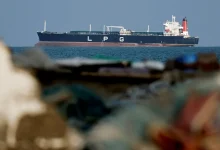
A group of vessels were moving through the Strait of Hormuz on April 18, according to data from shipping tracking service Marine Traffic.
The data said there were liquefied petroleum gas (LPG) carriers and several oil product and chemical tankers moving through Iranian waters south of Larak Island.
The ships were heading out of the Persian Gulf, with more tankers following from the Gulf.
Map: Strait of Hormuz (no title)
On April 17, Iranian Foreign Minister Abbas Araqchi said Tehran has opened the strait to commercial shipping traffic for the remainder of the 10-day cease-fire between Israel and Lebanon.
US President Donald Trump welcomed the move but said the US naval blockade would remain in place. It targets vessels entering or departing Iranian ports and coastal areas.
Share
Share
Copy link
Facebook
X (Twitter)
LinkedIn
Email
05:31
Trump Says Iran Talks Progressing, Hints At Imminent Developments
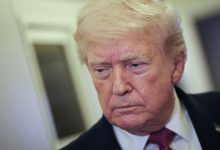
WASHINGTON — US President Donald Trump on April 17 said negotiations with Iran were progressing and that developments could soon become clear soon, as talks were set to continue over the weekend.
Things are going very well in the Middle East, with Iran, Trump told reporters aboard Air Force One. Well know over a short period of time.
Trump said a US blockade of Iranian ports had been very successful and — combined with prior measures — had strengthened Washingtons position in negotiations. He added that several elements of a potential agreement had already been discussed and, in some cases, agreed.
US President Donald Trump talks to members of the media aboard Air Force One on April 17.
The main thing is that Iran will not have a nuclear weapon, Trump said. You cannot let Iran have a nuclear weapon, and that supersedes everything else.
While declining to provide specifics, Trump expressed confidence that an agreement makes sense and said he expected a positive outcome.
He emphasized that although officials were negotiating on his behalf, he retained final decision-making authority. I have people representing me, but Im the one that makes a decision, he said.
Asked about conflicting signals from Tehran regarding the status of talks, Trump suggested Iranian officials faced internal pressures. They have people that they have to cater to, he said.
Trump also indicated that any deal could involve the United States taking custody of Irans nuclear material in coordination with Tehran after an agreement is signed.
Well go in with Iran and we will take it together, he said, adding that Washington would seek to remove 100 percent of such material.
He warned that failure to reach a deal could lead to renewed military action. If a cease-fire tied to the broader regional situation is not extended, Trump said, the blockade is going to remain, andwell have to start dropping bombs again.
Trump dismissed suggestions that Iran would impose restrictions or tolls on shipping routes through the Strait of Hormuz, saying no restrictions were expected.
Weve been pushed around by Iran for 47 years, but not anymore, Trump said.
Read morehere.
Share
Share
Copy link
Facebook
X (Twitter)
LinkedIn
Email
03:16
US Renews Waiver To Allow Purchases Of Some Russian Oil
The US administration on April 17 issued a waiver allowing countries to buy sanctioned Russian oil and petroleum products at sea for one month, two days after Treasury Secretary Scott Bessent said Washington would not be renewing the expiring waiver.
The Treasury is allowing purchases of the oil loaded on vessels as of April 17 through May 16, extending the original 30-day waiver that expired on April 11, a document on the department’s website said.
Thesanctions waiveris a bid by Washington to keep a lid on global energy prices that have surged during the US-Israeli war with Iran.
“As negotiations (with Tehran) accelerate, the Treasury wants to ensure oil is available to those who need it,” a department spokesperson said.
US Treasury Secretary Scott Bessent earlier in the week said sanctions waivers would not be renewed.
The US on March 20 also issued a similar 30-day waiver to allow purchases of Iranian petroleum products already at sea that is to expire on April 19. Bessent on April 15 also said that waiver would not be renewed, and the April 17 announcement did not include an extension of the Iranian waiver.
Read morehere.
Share
Share
Copy link
Facebook
X (Twitter)
LinkedIn
Email
01:43
Iran’s Powerful Parliament Speaker Says Strait Will Be Closed Again Unless Blockade Ends
Iran’s powerful parliament speaker set up another potential standoff with US President Donald Trump, saying Tehran will again close the strategic Strait of Hormuz if the United States continues its blockade of Iranian ports.
“With the continuation of the blockade, the Strait of Hormuz will not remain open,” Mohammad Baqer Qalibafwrote on X,adding that passage through the crucial waterway would depend on authorization from Iran.
The comments come after Trump said he did not see any “significant differences” with Iran in peace talks and that he expected a deal “in the next day or two,” according to an interview published by Axios.
Iran’s powerful parliament speaker, Mohammad Baqer Qalibaf. (file photo)
Trump wrote “THANK YOU!” to Iran for opening the strait but insisted that a US blockade of Iranian ports would remain in “full force” until completion of a peace deal.
“Iran has agreed to never close the Strait of Hormuz again. It will no longer be used as a weapon against the World,” Trump said on April 17.
Qalibaf, who has had the prominent position within Tehran’s negotiating team, wrote: “The president of the United States made seven claims in one hour, all seven of which were false.”
“With the continuation of the blockade, the Strait of Hormuz will not remain open,” he wrote.
He added that “passage through the Strait of Hormuz will be conducted based on the ‘designated route’ and with ‘Iranian authorization.'”
His comments follow those by media outlets close to Iran’s hard-line Islamic Revolutionary Guards Corps (IRGC) criticizing what they said has been the “silence” of Iranian officials regarding an agreement with the US on reopening of the strait, potentially indicating a split among Iranian leadership.
An hour after Foreign Minister Abbas Araqchi announced the opening of the strait, through which one-fifth of the world’s oil and liquefied natural gas supplies transited before the US-Israeli war with Iran began on February 28, the Fars and Tasnim news agencies both published several articles that implicitly criticized the move.
Tasnim also criticized Araqchi, calling his post on X — where the announcement about the strait was made — “bad and incomplete and a complete bad taste in information dissemination.”
Share
Share
Copy link
Facebook
X (Twitter)
LinkedIn
Email
23:44
17.4.2026
Trump Says Doesn’t See ‘Significant Differences’ With Iran Negotiators
WASHINGTON — US President Donald Trump on April 17 said talks with Iran were progressing and he downplayed reports of major disagreements, adding that a blockade of Iranian ports would end once an agreement is signed.
Speaking to reporters in Phoenix, Trump described the day as significant for ongoing discussions involving Iran and the broader region.
A big day. We’ll see how it all turns out, but it should be good, some very good discussions, Trump said.
The talks are going on and going over the weekend, and a lot of good things are happening. That includes Lebanon, too.
Asked about reports that Tehran sees significant differences remaining in negotiations, Trump dismissed the characterization.
SEE ALSO:
Trump Says US-Iran Deal ‘Very Close’ After Tehran Declares Strait Of Hormuz Open
I don’t think there’s too many significant differences, he said. If there are, I’m going to straighten it out.
On how long he would be willing to maintain the blockade tied to the talks, Trump said it would be lifted immediately upon a deal being reached.
When the agreement is signed, the blockade ends, he said.
Trump did not say when an agreement might be finalized and indicated negotiations would continue through the weekend. CNN reported that delegations would return to Islamabad over the weekend and that face-to-face talks mediated by Pakistan would resume on April 20. The White House did not comment.
US Vice President JD Vance led a US delegation in talks in Islamabad on April 11-12, but the negotiations broke off without a breakthrough.
Read morehere.
Share
Share
Copy link
Facebook
X (Twitter)
LinkedIn
Email
21:55
17.4.2026
Ryan Kirkley: From Oil To Bitcoin, Markets Shifting With Strait Of Hormuz Announcement
WASHINGTON — Cryptocurrency markets surged and oil traders recalibrated after signals that the Strait of Hormuz is reopening, even as military tensions and policy contradictions persist.
While equities have been slower to react, analysts say the divergence reflects how different parts of the global financial system process risk and liquidity.
In an interview with RFE/RL on April 17, Ryan Kirkley, CEO of blockchain payments company Global Settlement Network, explains the worldwide economic importance of the Strait of Hormuz, why markets are moving at varying paces, and why oil prices may already be turning.
To read the full interview, clickhere.
Share
Share
Copy link
Facebook
X (Twitter)
LinkedIn
Email
18:49
17.4.2026
IranianMedia Close To IRGC Criticize Hormuz Announcement
The front page of the Javan newspaper (left) and the front page of the Jam Jam newspaper, which features a cartoon of US President Donald Trump drowning in the Strait of Hormuz with the headline Marine Bluff, are pictured at a newsstand in Tehran on April 13.
Media outlets close to Iran’s hard-line Islamic Revolutionary Guards Corps (IRGC) have criticized what they say has been the “silence” of Iranian officials regarding an agreement with the United States about the reopening of the Strait of Hormuz.
An hour after Iranian Foreign Minister Abbas Araqchi announced the opening of the strait, through which one-fifth of the world’s oil and liquefied natural gas supplies transited before the US-Israeli war with Iran began on February 28, the Fars and Tasnim news agencies both published several articles that implicitly criticized the move.
In an article titled “Dear Officials! At Least Explain Your Failure To Explain,” Fars demanded that Iranian officials justify their “silence” regarding recent developments, writing: “Iranian society is plunged into a state of confusion.”
“If it is in the country’s interest not to disclose the details of recent negotiations or developments, why is this interest itself and the reason for avoiding transparency not explained to the people?” another article published by Fars asked.
Tasnim also criticized Araqchi, calling his post on X — where the announcement about the strait was made — “bad and incomplete and a complete bad taste in information dissemination.”
The message “was published without necessary and sufficient explanations and created various ambiguities about the conditions of passage and the details and mechanisms of passage, and caused much criticism,” it said.
Tasmin called on the Foreign Ministry to “reconsider” its decision, writing: “Any creation of concern or despair in this envoy nation is an example of political sin and a disruption in national cohesion.”
In another reaction, Nizam Mousavi, a media figure close to the IRGC and former editor in chief of the IRGC-owned Javan newspaper, posted a message on X saying: “The meaning of people’s trust in negotiating officials does not mean that we disregard public opinion.”
Addressing Iranian officials, he wrote: “Gentlemen! Say something!”
Share
Share
Copy link
Facebook
X (Twitter)
LinkedIn
Email
Load more
🚨BREAKING: Watch The Video Clip Here ➤