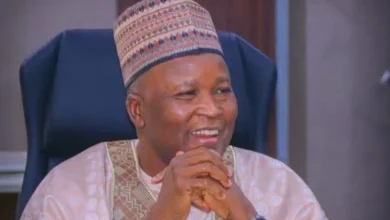
The One-Man Race: How Governor Aliyu’s Governance Has Shaped Sokoto State’s 2027 Contest

By Usman Garba Abubakar
In politics, the phrase “one-man race” is often treated with scepticism or dismissed as partisan exaggeration by loyalists of an incumbent seeking to manufacture inevitability where genuine competition exists. Yet, there are moments in democratic cycles when the convergence of governance performance, opposition weakness, and public perception gives such a claim real substance. In Sokoto State, the trajectory of Governor Ahmed Aliyu has increasingly prompted that conversation—not as rhetoric, but as a reflection of emerging political reality.
Elected in 2023, Governor Aliyu assumed office on 29 May amid high expectations for measurable improvement in several areas where the Aminu Tambuwal administration had fallen short. What has distinguished his tenure so far is not simply capacity, but the pace and consistency with which policy commitments have been translated into visible outcomes. Infrastructure has become the most immediate marker of this approach, with the administration completing numerous township and rural road projects while investing heavily in security, education, and health services. Roads, housing schemes, and water projects have also been deployed as instruments of integration, linking communities more effectively to economic and social opportunities.
The strategic importance of these projects lies in their distribution. By extending infrastructure into previously underserved rural corridors, the administration has directly challenged the historical “urban bias” of development in Sokoto State, using physical connectivity as a tool of social inclusion. This shift—from isolated, high-visibility projects to a more coordinated development framework—suggests movement away from governance as symbolism toward governance as systems-building. In practical terms, it has strengthened institutional credibility, as citizens increasingly respond to interventions that appear structured and sustained rather than sporadic.


This governance model is reinforced by a notable shift in fiscal posture. In an environment where subnational governments often rely heavily on borrowing, Aliyu’s administration has funded development through improved liquidity management while maintaining a “debt-free” stance with contractors. The 2026 “Budget of Socio-Economic Expansion,” totaling ₦758.7 billion, reflects this ambition, with 72% allocated to capital expenditure. By prioritising internal revenue mobilisation and aligning budgetary allocations closely with actual project execution, the government has sustained an expansive infrastructure drive while keeping recurrent obligations—including pension backlogs—disciplined and predictable.
This approach has generated debate. Some critics argue that limiting borrowing may constrain the scale and speed of transformation, particularly in a state with significant development needs. This concern—that responsible access to credit can accelerate growth—is not without merit. However, a counterargument is gaining traction: that steady, debt-conscious development may prove more sustainable than rapid expansion financed through fragile obligations.
More broadly, fiscal discipline has become part of the administration’s political identity. It reinforces an image of prudence and accountability—qualities that resonate strongly in periods of economic uncertainty. For many citizens, the assurance that development is not being built on future financial burdens carries considerable weight.
The impact of these policies is most evident in the lived experiences of residents in previously bypassed communities. In areas such as Gwadabawa and the rural stretches of Silame, the construction of tarred roads and functional primary healthcare centres has altered local economic realities. For a rural farmer, a new road can determine whether produce reaches the Sokoto metropolis in time for sale or spoils at the point of harvest. These micro-level outcomes generate a form of grassroots endorsement that no campaign messaging can easily replicate. By translating governance into tangible improvements in daily life—from mobility to healthcare access—the administration has built a reservoir of local goodwill that serves as a barrier to opposition penetration.
Beyond infrastructure, sustained investment in social sectors signals a broader development intent. The allocation of over ₦116 billion to education and ₦122 billion to healthcare in the 2026 budget addresses foundational deficits that have long constrained human capital development. Agriculture remains central, with initiatives such as the Kware Irrigation Scheme enabling year-round cultivation and supporting productivity at scale. These interventions are incremental, but they contribute to a longer-term vision of economic resilience by strengthening output at the grassroots level and reducing dependence on federal allocations.
In education, efforts to rehabilitate schools, expand infrastructure, and provide learning materials point to a focus on rebuilding foundational systems. In healthcare, initiatives aimed at improving primary care access and maternal services address some of the most immediate needs of the population. Youth empowerment programmes—particularly in vocational training and digital skills—reflect an awareness of the state’s demographic pressures, where employment generation is both an economic necessity and a political imperative. Similarly, the clearance of pension backlogs has restored a measure of trust among retirees, a socially influential constituency.
Security remains the most complex dimension of governance—not only in Sokoto State but across Nigeria. The administration has emphasised collaboration with security agencies, strengthened intelligence-sharing mechanisms, and provided logistical support. While challenges persist, instances of improved coordination and successful interventions suggest incremental progress. The broader strategy—combining immediate responses with longer-term measures such as community engagement and economic inclusion—reflects an understanding of the multifaceted nature of the problem.
Efforts toward economic diversification further illustrate an attempt to broaden the state’s development base. By supporting farmers with inputs and mechanised equipment while also encouraging small businesses and digital innovation, the government is working to expand productive capacity beyond traditional reliance on federal allocations. In a state where agriculture remains the backbone of livelihoods, even modest gains in productivity can produce wide-reaching economic effects.
Yet governance performance alone does not fully explain the conditions for a “one-man race.” Political outcomes are also shaped by the strength—or weakness—of the opposition. In Sokoto State, the opposition, largely associated with the immediate past administration of Aminu Tambuwal, faces a dual constraint. First is the burden of incumbency legacy. Having governed the state for eight years, it struggles to reposition itself as a credible alternative without confronting its own record, which many voters perceive as underwhelming in key areas.
Second—and perhaps more consequential—is fragmentation. In electoral politics, division can be more damaging than unpopularity. A fragmented opposition struggles to mobilise effectively, coordinate messaging, or build the alliances necessary to challenge an incumbent. Internal rivalries, competing ambitions, and the absence of a coherent post-incumbency strategy have weakened its capacity to present a unified front. As a result, opposition engagement has often been reactive, responding to government initiatives without advancing a clearly articulated alternative vision.
Against this backdrop, Governor Aliyu’s governance record assumes greater political significance. It is not merely that projects are being delivered, but that they are visible and widely distributed across the state. This has created a cumulative effect that is actively shaping public perception. In many communities, governance is no longer an abstract concept but a lived experience—roads constructed, pensions paid, services improved. This tangibility matters. Voters tend to respond more to what they can verify than to what they are promised, and over time, this has reinforced the perception of an administration that is both active and effective.
It is within this context that the notion of a “one-man race” begins to shift from rhetoric toward plausibility. Opposition voices have not disappeared, nor has criticism been eliminated. Rather, the balance between performance and political competition has become increasingly uneven.
Democratic systems, however, remain inherently fluid. Alliances can shift, new actors can emerge, and public sentiment can change—sometimes rapidly. Yet, as current trends suggest, the structural advantages are tilted in favour of the incumbent. Governance performance has established a strong foundation, fiscal discipline has reinforced credibility, and opposition fragmentation has reduced competitive pressure.
If this alignment persists, the 2027 contest may not be defined by the presence or absence of opposition, but by the scale of the incumbent’s advantage. In that sense, the idea of a “one-man race” is less a declaration than a diagnosis—a reflection of how governance, when sustained and visible, can reshape the contours of democratic competition.
What do you think about this?
Drop your opinion in the comment section.
FOLLOW US & Share this with someone who needs to see this.
🚨BREAKING: Watch The Video Clip Here ➤