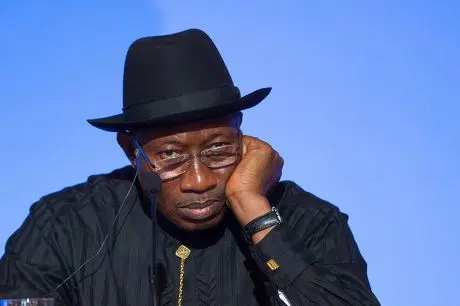
The campaign for Goodluck Jonathan’s political comeback appears to have begun without its presumed candidate. While support groups mobilise, endorsements multiply and political calculations intensify ahead of 2027, Jonathan himself has retreated into silence. The question, therefore, is whether this silence reflects the discipline of an experienced statesman carefully weighing his options or revives old concerns about political indecision at a defining moment. SAMSON ELIJAH writes.
As Nigeria gradually inches toward the 2027 general elections, one political figure continues to dominate conversations across party lines despite maintaining an unusual silence: former President Goodluck Jonathan. While support groups champion his return, endorsements gather momentum and political calculations intensify, Jonathan has chosen to stay above the fray.

His silence has fuelled speculation, sparked debate and left both supporters and critics searching for clues. The question is whether this measured restraint reflects strategic statesmanship or rekindles long-standing perceptions of political hesitation.
From political stakeholders and support groups to civil society actors and regional leaders, calls for Jonathan to return to active politics have intensified in recent months. Yet, the former president has neither accepted nor rejected the mounting appeals for him to contest the presidency in 2027.
What began as isolated calls from support groups has gradually evolved into a broader national conversation involving political actors, analysts, civil society organisations and sections of the opposition seeking an alternative political direction ahead of the next election cycle.
The uncertainty surrounding Jonathan’s intentions has, in many ways, become a political story of its own.
The PDP Nomination That Reignited Speculation
The debate gained renewed momentum following Jonathan’s adoption as presidential candidate by the Taminu Turaki-led faction of the Peoples Democratic Party (PDP).
Chairman of the faction’s Screening Committee and former Niger State Governor, Babangida Aliyu, announced on May 19 that Jonathan had effectively been cleared as the party’s presidential candidate.
“The party had already given our presidential aspirant the waiver,” Aliyu said.
“Like I said in the beginning, he was deputy governor, became governor, became vice president, became president, so we didn’t see anything that needed screening. Therefore, the party had given him a waiver. In other words, he had been declared and cleared as the candidate of the PDP for the presidential election, and that is President Jonathan.”
The nomination was later ratified on May 30, with House of Representatives member Fred Agbedi receiving the party flag on Jonathan’s behalf.
However, the development generated mixed reactions. While supporters viewed it as a strategic move to revive the opposition, critics questioned both its legitimacy and the wisdom of associating Jonathan with a deeply divided PDP.
More significantly, Jonathan himself neither endorsed nor rejected the nomination, thereby deepening speculation over whether the move was coordinated with him or merely an attempt by a faction of the opposition to leverage his popularity and national appeal.
From Defeat To Statesmanship
Jonathan’s political journey remains one of the most remarkable in Nigeria’s democratic history.
After serving as vice president between 2007 and 2010, he assumed office following the death of President Umaru Musa Yar’Adua and subsequently won the 2011 presidential election.
His administration recorded notable achievements, including the rebasing of Nigeria’s Gross Domestic Product (GDP), expansion of telecommunications, reforms in banking and agricultural financing, and Nigeria’s brief emergence as Africa’s largest economy.