44
As LAGOS ADC Governorship Candidate
Why The Obidients Are Not Supporting Him
+The Many Odds Against Him
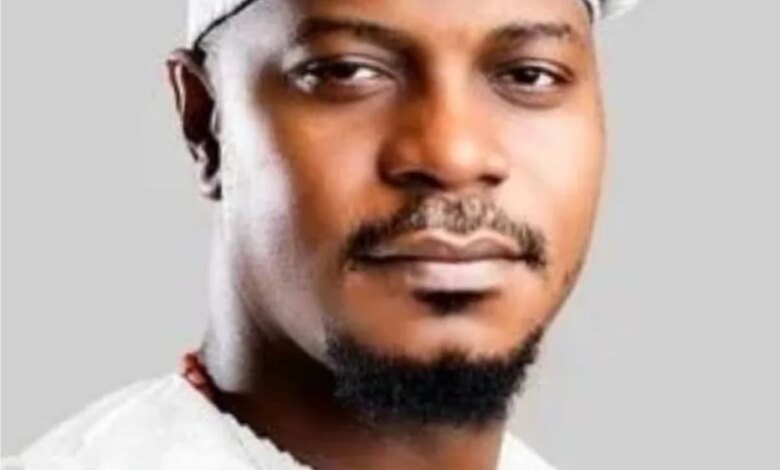
The Gubernatorial election is fast approaching in Lagos State, as political players have begun to adopt various strategies for preparation on how to win. Many parties now have their flagbearers to represent them. One of them is former Labour Party Gubernatorial candidate in Lagos, Gbadebo Rhodes-Vivour (GRV). It appears that his gubernatorial ambition in Lagos face significant challenges. While he gained prominence as an opposition figure in the 2023 governorship race and became the African Democratic Congress (ADC) gubernatorial candidate in the recent primaries for the 2027 race, he must overcome several interconnected hurdles to unseat the ruling establishment. Some of these hurdles are difficult to overcome. Following his high-profile run under the Labour Party in 2023, GRV’s political trajectory changed when he joined the ADC. Navigating new coalitions, winning the trust of a different political base, and managing internal party disputes over primaries and nominations present ongoing organizational challenges. GRV’s initial surge in popularity was closely linked to the “Obidient” movement and the widespread support for Peter Obi in 2023. As the political landscape shifts, separating his local governorship ambitions from a broader national movement and maintaining that momentum without the national coattail effect is a huge task.
Currently, there are many Obidients who are saying that Mr. Gbadebo has to go it alone in his new party without them because he was told and advised to cross over to NDC, where the leaders of Obidients are, but he refused. In fact, many Obidients who are now in NDC have advised the party leaders to field a gubernatorial candidate in Lagos to represent the party, but the suggestion hasn’t been considered. Don’t also forget that the sudden emergence of Peter Obi has been the face of the youth after the EndSARS saga, where the majority of the candidates of LP won their seats due to youth awareness. But this will be different this time, as Mr. Gbadebo will be contesting under another platform, and it won’t be a do-or-die situation for the minority of Obidient members who might still want to vote for him.
Another vital point why he will struggle in 2027 is that his new party, ADC, has no grassroots structure whatsoever in Lagos. Even with Labour Party, the party still struggled to compete with the ruling APC in the last election. The ruling All Progressives Congress (APC) has maintained an entrenched political grip on Lagos State for decades. This gives them unparalleled grassroots structures, financial resources, and incumbent advantages. Defeating a sitting governor—such as Babajide Sanwo-Olu—requires building an extensive statewide electoral machinery, a challenge given the APC’s dominance at local and national levels.
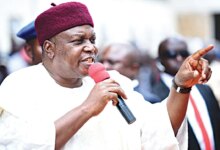
Another point is his roots. This has become a strong bone of contention between the Yoruba in Lagos and the Igbo. The Igbos are clamoring for a candidate who has an affiliation with them, while the Yoruba are saying it will not happen. There has been awareness not like before as to why the plan has to be aborted. During the 2023 elections, GRV was frequently targeted by opposition narratives surrounding his ethnic identity. Because he has a paternal Yoruba lineage but a mother of Igbo descent, his opponents weaponized ethnicity by spreading false narratives. While his supporters view him as a symbol of detribalized, cosmopolitan leadership, the highly polarized nature of Lagos identity politics remains a deeply rooted challenge for broader acceptance.
He has also been pressured by top Obidients to abandon Atiku Abubakar’s party and join Peter Obi so that he can also help Mr. Obi in Lagos, but he has told them his reasons for staying put, which has infuriated many Obidients. The politician (Mr. Gbadebo) said his decision to remain in the ADC stemmed from the efforts he invested in building the party, as well as his firm belief that the party offers the most viable pathway to victory.
He stated, “To those who have made the difficult decision to move on to a new platform, I offer my genuine respect and best wishes. These are hard choices. We are all fighting for a better Nigeria, even when our paths diverge. I want to make it clear that I am staying in the (ADC).
“I and my team have decided to stay put in the ADC, not because it is convenient, not because it is popular, but because it is the platform that we have built, the ground that we have fought on, and the vehicle that we believe will take us to victory.
“I’ve always stood on conviction, and that is why despite pressure, offers, and billions placed on the table to bribe me, I have never compromised with the APC in Lagos. That’s why I walked away when agreements were broken. That’s why every political decision I made has been rooted in principle, not personal gain.”
Mr. Rhodes-Vivour said he would never forget his experience during the 2023 general elections, when his supporters and polling unit Agents were allegedly brutalised by thugs linked to the All Progressives Congress (APC).
But the inescapable question on the lips of many Lagosians, especially those who observed the keenly contested 2023 Lagos governorship poll after Rhodes-Vivour announced his decision to remain in the ADC, is: can GRV survive without the movement that made him?
Without doubt, the split between the ADC and NDC has reshaped the opposition landscape, particularly raising questions about whether Rhodes-Vivour can sustain his political influence in Lagos without the unified Obidient movement that previously gave him momentum.
Isaac Abimbade
What do you think about this?
Drop your opinion in the comment section.
FOLLOW US & Share this with someone who needs to see this.