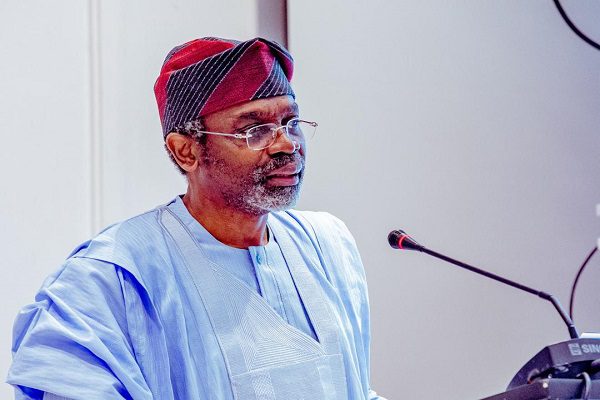
The Chief of Staff to the President, Femi Gbajabiamila, has indicated that the Federal Government is preparing to review workers’ salaries, stating that the current national minimum wage is no longer aligned with present economic realities.
Gbajabiamila made the remarks on Thursday in Abuja during an event organised by Working People United, where he acknowledged growing concerns over the adequacy of wages amid rising inflation and cost of living pressures across the country.
According to him, the ₦70,000 minimum wage approved in 2024 by the administration of President Bola Tinubu requires reassessment in light of current socio-economic conditions.
“The ₦70,000 wage, which was a milestone in 2024, must be honestly reassessed against today’s realities,” he said.

READ RELATED STORY
Gbajabiamila, Ribadu lead presidential delegation to Ogbomoso over abducted pupils, teachers
Gbajabiamila withdraws support for Desmond Elliott over Lagos Assembly crisis
Presidency debunks claims of change Gbajabiamila as Tinubu’s Chief of Staff
He further noted that the government would approach any wage review process as a collaborative effort with organised labour, rather than as a point of conflict.
“I can confirm to you that when the time comes to begin the process of reviewing the national minimum wage, this administration will approach that endeavour not as an adversary of labour, but as a partner,” he added.
Gbajabiamila emphasised that President Bola Tinubu remains committed to fair remuneration for workers, stressing that governance should be viewed as a partnership between the government and citizens rather than a one-sided exercise.
“Good governance is not a performance staged by government for the benefit of a passive audience; it is a partnership between those who govern and those who are governed,” he stated.
He also urged organised labour groups to maintain dialogue with the government, calling for cooperation rather than confrontation in addressing national economic challenges.
“It must be said that nowhere is that partnership more vital than the relationship between government and the working people of Nigeria,” he said.
Gbajabiamila appealed to labour leaders to continue engaging constructively with the government, noting that progress is better achieved through negotiation than industrial disruption.
The comments come at a time when Nigerian workers continue to face rising living costs, with debates ongoing over whether the current minimum wage sufficiently reflects inflationary pressures and broader economic conditions.