722
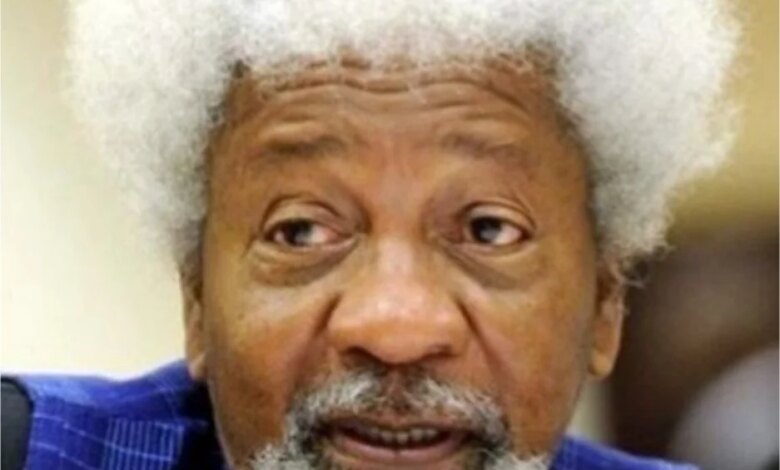
Nobel Laureate Wole Soyinka has recounted how the brutal years of military rule under late Head of State Sani Abacha forced him into exile, as he revisited some of the painful and courageous moments that shaped the struggle for democracy in Nigeria.
Soyinka spoke during the official launch of The NADECO Story, a book documenting the activities, sacrifices and resistance of the National Democratic Coalition, popularly known as NADECO, during the military era. The literary icon served as chairman of the occasion and used the opportunity to reflect on the dangerous years of pro-democracy activism, exile, underground operations and the sacrifices made by ordinary Nigerians.
The book was written by NADECO’s General Secretary and spokesman, Ayo Opadokun, whom Soyinka praised for preserving what he described as an authentic account of one of the darkest periods in Nigeria’s political history. According to him, the publication stood out because it told the truth without embellishment or distortion.
He said Nigeria had often earned a reputation as “a republic of liars,” but added that the book redeemed the country from that image because every page reflected honesty and authenticity.
“I must congratulate Chief Ayo Opadokun for doing something unbelievably invaluable by giving this gift to the community and to the world at large,” Soyinka said.
“Every page of this book rings with truth. It is truth one can personally testify to, and even anybody who was not directly involved would still feel the aura of authenticity because of the way it is narrated. It is written not just from physical participation, but from documentary evidence.”
The playwright explained that although the book did not claim to tell the complete story of the democratic struggle, it captured a significant part of it and provided a foundation for future generations to continue documenting the resistance against dictatorship.
According to him, the NADECO struggle was too broad and too deep to be fully captured in a single publication or gathering.
“So many things happened,” he said. “If we started telling the full story of that struggle, we would remain here for days, weeks and even years. It would become one of those endless epics from our traditions filled with music, memories, dance, eulogies and remembrances.”
He urged everyone with the ability to write to document their experiences during the struggle, stressing that history should not be left untold or forgotten.
Soyinka then revealed that his appearance at the event was “selfish” because the book revived memories of individuals whose sacrifices had never been adequately acknowledged. He recalled how many people appeared briefly during the resistance years, played dangerous but critical roles, and then disappeared quietly from public attention.
The literary icon particularly reflected on his years in exile, which he jokingly described as a “political sabbatical” undertaken for “health reasons.” Beneath the humour, however, was the grim reality of persecution under the Abacha regime.
Soyinka fled Nigeria in the 1990s after the military government accused him and several activists of treason over their opposition to dictatorship and the annulment of the June 12, 1993 presidential election believed to have been won by late businessman and politician Moshood Abiola.
During the event, Soyinka emotionally narrated encounters with fellow activists who travelled secretly across borders to attend exile meetings and coordinate international campaigns against the military government.
One of the first names he mentioned was human rights lawyer Olisa Agbakoba, whom he described as one of the iconic faces of the democratic resistance.
Soyinka recalled meeting Agbakoba in Paris after one of the underground exile conferences organised by pro-democracy campaigners abroad. The memory that remained most vivid to him, he said, was Agbakoba’s injured eye, which had become symbolic of the brutality meted out to protesters by security agents.
“The first thing I looked for was his black eye,” Soyinka said. “That iconic black eye which the police gave him while he marched through the streets demanding justice.”
According to Soyinka, the pro-democracy activists operating outside Nigeria constantly struggled financially. Funds were scarce and whatever support they managed to gather was often distributed among activists escaping persecution or those secretly joining the resistance network abroad.
He admitted that he felt ashamed by how little money he was able to offer Agbakoba during one of those difficult periods.
“We were permanently short of funds,” he said. “We tried to assist those who sneaked out to join us in that struggle. I’m ashamed to admit how paltry the amount I gave him was. But he was one of the heroes of that struggle and I have never forgotten him.”
While speaking about Agbakoba stirred admiration, Soyinka said the memory of late activist and medical doctor Beko Ransome-Kuti still brought tears to his eyes.
According to him, Beko embodied extraordinary courage and self-sacrifice during the years of military oppression.
Soyinka disclosed that the struggle against the Abacha regime took many dimensions, including secret operations that were never publicly discussed. During one of Beko’s visits to Paris, he arrived carrying what Soyinka described as a “very special weapon.”
The Nobel Laureate narrated that Beko had travelled to meet certain individuals connected to the democratic struggle and returned with a weapon capable of firing only once at close range.
“He brought with him a very unusual weapon,” Soyinka recalled. “At that time, it could even escape detector machines.”
Curious and alarmed, Soyinka said he asked Beko what he intended to do with it.
According to him, Beko answered without hesitation: “I’m going to kill Abacha with it.”
The revelation stunned him.
Soyinka said he immediately questioned how Beko intended to get close enough to the heavily guarded military ruler to carry out such an operation.
“I said, ‘Beko, how do you plan to get close to Abacha?’” Soyinka narrated. “He replied, ‘I’ll manage somehow.’”
Soyinka then reminded him that even if he succeeded, there was no possibility of escaping alive.
“He said, ‘It’s alright,’” Soyinka recalled solemnly.
The Nobel Laureate said the moment revealed the depth of frustration and desperation among many pro-democracy figures who believed Nigeria was descending irreversibly into tyranny under military rule.
According to him, Beko was not naturally a violent man and had no inclination toward armed confrontation. Instead, he was known for intellectual resistance, ideological conviction and principled activism.
“He had no gift for violence,” Soyinka said. “You all knew Beko. He lived to struggle and fight intellectually, through ideals. But he was prepared to sacrifice his life just to rid the country of that monster.”
Soyinka revealed that he immediately confiscated the weapon from Beko and sternly warned him never to attempt such an act again.
“I told him if I ever saw anything like that with him again, I would personally hand him over to Abacha myself,” he said.
The audience listened in silence as Soyinka spoke about the emotional weight carried by many activists who survived the military era. Beyond the famous names, he stressed that hundreds of ordinary Nigerians quietly contributed to the struggle in ways history may never fully record.
He remembered countless young Nigerians abroad who encountered exiled activists and spontaneously offered financial assistance from their own pockets before disappearing anonymously.
“There were young people who would just put their hands into their pockets, give us whatever money they had, and disappear,” he said. “They never realised the value of what they contributed at critical moments.”
According to Soyinka, many of those unsung contributors later felt ignored because public recognition often focused on symbolic figures and prominent leaders of the movement.
He insisted, however, that their sacrifices were not forgotten.
“It’s not true that they were not recognised,” he said. “Certain people merely became symbols representing wider contributions.”
The playwright then made an emotional appeal to prominent figures who benefited from the democratic struggle to find ways of honouring these forgotten supporters.
Drawing inspiration from an international example involving a Brazilian woman who reportedly presented a replica of her medal to former United States President Donald Trump in appreciation of political support, Soyinka suggested that veterans of the NADECO struggle should create replicas of their honours and medals for ordinary supporters who stood by them during the dictatorship years.
“I would like to ask that wherever possible, those of us who owe this debt should make replicas of our medals and awards and present them to these people,” he said.
He explained that the gesture would serve as a symbolic appreciation of the solidarity shown during one of the most painful chapters in Nigeria’s democratic history.
According to him, some supporters paid hotel bills, bought meals or quietly provided shelter and transport to activists without expecting recognition or reward.
“You would sit in a restaurant and someone who recognised you from the struggle would secretly pay your bill,” he said. “That was the kind of struggle it was.”
Soyinka noted that such gestures reminded activists that they were not alone despite the dangers they faced from the military government.
The event itself became more than a book launch. It transformed into a moment of remembrance for the generation that confronted dictatorship through protests, underground meetings, exile campaigns and international advocacy.
For many attendees, Soyinka’s recollections reopened memories of fear, courage, imprisonment and sacrifice during the Abacha years, when activists, journalists, lawyers and civil society leaders faced arrests, torture and assassination attempts.
As he concluded his speech, Soyinka thanked everyone who participated in the democratic struggle, insisting that their efforts went beyond politics and ultimately served humanity itself.
“Thank you all for coming here this morning,” he said. “And thank you for everything you have done for humanity in general.”
By Benprince Ezeh
08068599879
What do you think about this?
Drop your opinion in the comment section.
FOLLOW US & Share this with someone who needs to see this.