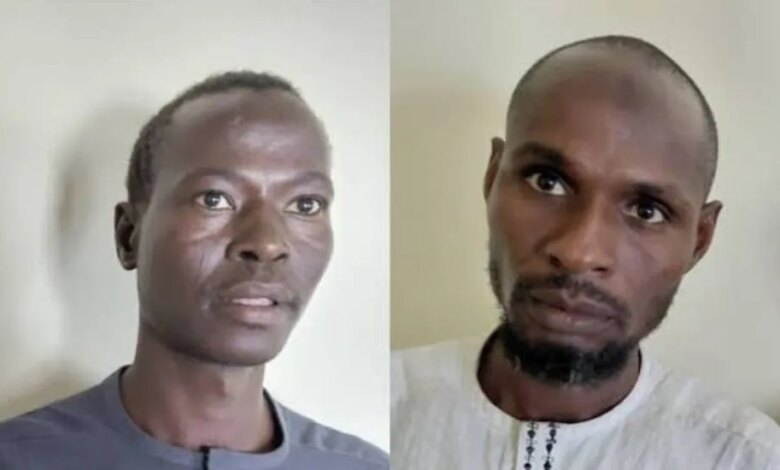
The suspects — identified as Ismail Mohammed and Abu Umar — surrendered to troops of the 159 Battalion in Geidam on June 8, military sources told The Whistler. Abu Umar is described as a specialist in the construction and deployment of Vehicle-Borne Improvised Explosive Devices (VBIEDs), the car bombs that have been among the deadliest weapons deployed against markets, mosques, military installations, and displaced persons’ camps across Borno, Yobe, and Adamawa states.
The second suspect, Ismail Mohammed, is said to be linked to ISWAP commanders operating along the Baa Shuwa axis within the Timbuktu Triangle — a stretch of territory spanning parts of Nigeria, Niger, and Chad that has functioned as a logistical and operational corridor for insurgent groups.
For communities that have borne the brunt of VBIED attacks — many of which have killed dozens of civilians in single incidents — the capture of a technical expert of Abu Umar’s reported profile carries particular significance. Security analysts note that VBIED specialists occupy rare and critical roles within terrorist organisations, with their expertise enabling mass-casualty attacks that are difficult to defend against and psychologically corrosive to civilian morale and economic activity.
Beyond immediate tactical value, intelligence officials say the surrender could unlock critical operational details — including the location of bomb-making facilities, the supply chains used to procure materials, and the network of couriers and financiers that sustain insurgent logistics. Such information, if acted upon swiftly, could disrupt attack planning cycles before they mature.


The development also underscores a quietly significant dimension of Operation Hadin Kai’s counter-insurgency strategy: alongside conventional military operations, sustained pressure has been applied to create conditions under which defection becomes a viable option for mid- and senior-level operatives. Whether those conditions include credible amnesty pathways, family safety guarantees, or simply the attrition of morale within ISWAP ranks remains a subject of scrutiny for policy advocates who argue that military pressure alone cannot resolve the insurgency.
The North-East’s civilian population, millions of whom remain displaced or living in proximity to active conflict zones after fifteen years of insurgency, will be watching whether intelligence gathered from the two suspects translates into tangible reductions in bomb attacks — or whether it remains one data point in a long, grinding campaign.
Operation Hadin Kai did not provide further details on the ongoing investigation or the disposition of the suspects.
What do you think about this?
Drop your opinion in the comment section.
FOLLOW US & Share this with someone who needs to see this.