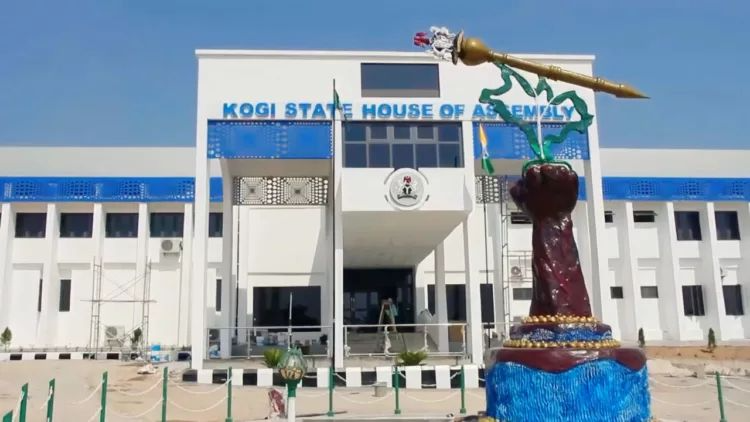
The Speaker of the Kogi State House of Assembly, Mr Aliyu Yusuf, says the Assembly has passed 59 out of 76 bills considered in the last three years, representing a 77.6 per cent passage rate.
Yusuf disclosed this on Thursday in Lokoja during activities marking the third anniversary of the Third Legislative Session of the 8th Assembly.
He said the achievement reflected the Assembly’s commitment to effective lawmaking, prudent appropriation of resources and support for development projects across the state.
According to him, the Assembly received 23 bills during the current legislative session, comprising 19 Executive Bills and four Private Member Bills.
The speaker said 19 of the bills had been passed into law, while four others were undergoing committee scrutiny.
He explained that cumulatively, the Assembly had considered 76 bills in the last three years, comprising 55 Executive Bills and 21 Private Member Bills.
“This represents an 82.6 per cent passage rate for the current session and 77.6 per cent cumulatively.
“This is evidence of high legislative productivity and strong engagement with both executive and member-sponsored legislation,” he said.
Yusuf described the Assembly as stable, focused, productive and people-oriented, noting that its activities had remained rancour-free since inauguration.
He said the legislature had fulfilled its constitutional mandate of lawmaking, appropriation and oversight in the interest of the people of Kogi.
The speaker attributed the Assembly’s achievements to the unity among members and the cordial working relationship with Gov. Ahmed Ododo.
He said major development projects recorded by the administration were made possible through legislative approval and appropriation of public funds.
According to him, such projects include road construction and rehabilitation in urban and rural communities, upgrading of healthcare facilities, recruitment of health personnel, establishment of tertiary institutions and payment of examination fees for students.