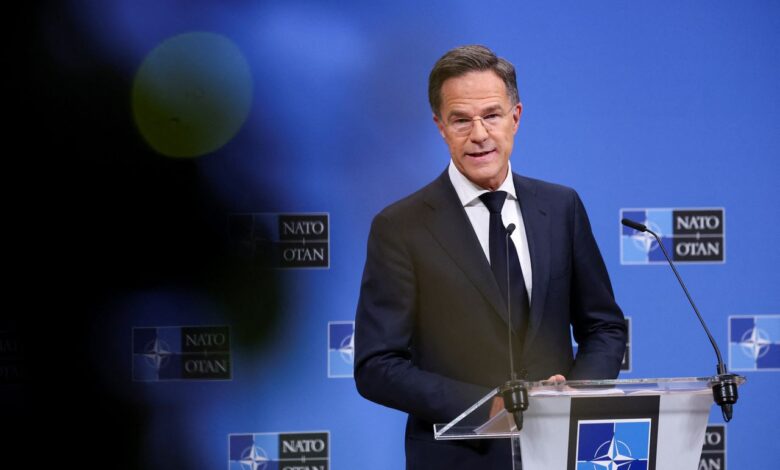
NATO’s deputy commander has said that he wants a summit in Türkiye to spur member countries to spend more on defence, reaffirm support for Ukraine and underline the unity of the alliance, The Associated Press reported.
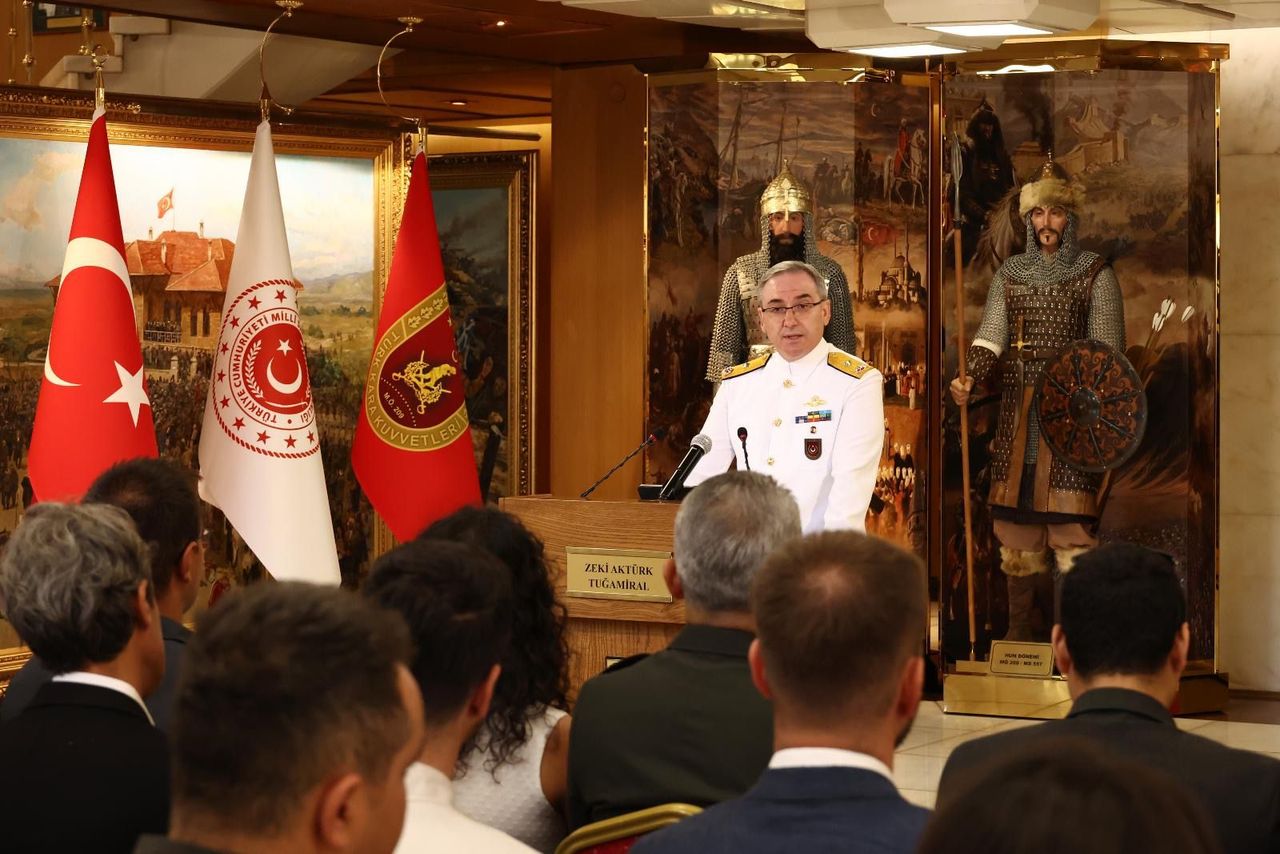
Air Chief Marshal Sir John Stringer, NATO’s deputy supreme allied commander in Europe, spoke to AP in London less than two weeks before the crucial Ankara summit on July 7-8 tests the cohesion of the 77-year-old alliance.
US President Donald Trump has sent conflicting signals over America’s force posture in Europe, at times threatening to leave and at other times unnerving European leaders with his push to annex Greenland or his flattery of NATO adversary Russian President Vladimir Putin.
US Defence Secretary Pete Hegseth lambasted NATO allies last week for not allowing use of their bases to attack Iran, as he announced a surprise six-month review of American forces in Europe.
Meanwhile, government ministers in the UK have quit over what they say are military spending plans that fail to keep Britain safe.
Summits are “highly political events and they are a demonstration of any organisation’s unity,” said Stringer, a senior British air force officer. It would be strange if over decades of NATO expanding there weren’t moments of turbulence, he said.
Related
“Are we in one of those moments at the moment? Yes, we are,” Stringer said in an interview at a military conference in London where AP also interviewed other senior European military officials about their hopes — and fears — for the summit.
NATO’s European members step up on defence
Trump has long urged European allies to take more responsibility for their own defense, and with the notable exception of Spain they have largely heeded with an unprecedented effort to spend more on their armed forces.
Russia is increasingly threatening Europe, so allies should boost their own militaries while also helping Ukraine degrade Russia’s fighting power, said Maj Gen Indrek Sirel, a commander in Estonia’s armed forces.
“Europe as a whole has a lot to do in order to be credible against Russia,” said Brig. Gen. Jyri Raitasalo of Finland, which shares NATO’s longest border with Russia.
Stringer said European nations are investing to generate a “really credible force,” citing as an example how some countries are quadrupling production of 155 mm artillery shells. The summit will discuss ramping up production in ways the alliance has not had to do in decades, Stringer said.
European military chiefs wait for clarity on US plans
The outcome of Hegseth’s six-month review of forces will determine how fast Europeans must take responsibility for their own security. The US military in Europe had said earlier in the month that Washington would be withdrawing some capabilities from Europe and expecting other allies to fill the gaps.
The Trump administration says that troop reductions in Europe have long been planned and coordinated with allies, but Sirel said it’s still not clear how US forces will be positioned in the Baltic states. That includes some US-led deterrence of Russia on NATO’s eastern flank.
Sirel said he was “confident” he could rely on a US presence, while also saying the Estonian military is finding ways to react to sudden changes.
Stringer said it would be difficult to replace US long-range strike and surveillance capabilities, but that he was “confident” allies could bridge the gap — not always with the same equipment but by mixing a “cocktail” of capabilities.
Related