Nigeria’s Leading Pharmaceutical Firm, May & Baker, Reports N13.147 Billion Gross Profit Surge

0
Lagos – Nigeria’s leading pharmaceutical firm, May & Baker Nigeria Plc, has recorded a remarkable 54.4% surge in gross profit, reaching N13.147 billion from N8.513 billion in the previous year. This achievement underscores the company’s resilience and strategic agility in navigating Nigeria’s challenging and volatile market landscape.
In a year marked by escalating energy costs, persistent foreign exchange volatility, and infrastructural deficiencies, the company recorded a remarkable financial performance for the year ended December 31, 2025.
This impressive growth in gross profit is complemented by an extraordinary increase in Profit Before Tax (PBT), which soared by 154.2% to N6.539 billion in 2025 from N2.572 billion in 2024. Such a leap in profitability, despite the macroeconomic hurdles, signals the company’s robust operational management and unwavering consumer trust in its products.

Company’s Resilience Amidst Industry Challenges
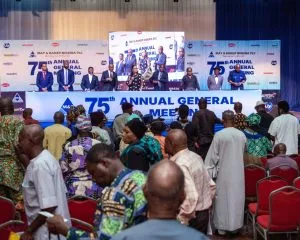
Speaking at the company’s 75th Annual General Meeting (AGM) held in Lagos, Senator Daisy Danjuma, Chairman of May & Baker Nigeria Plc, emphasised the company’s steadfastness in a difficult business climate. She acknowledged that several multinational pharmaceutical firms had exited Nigeria due to foreign exchange instability and rising operational costs, yet May & Baker had maintained its market position and continued to deliver value to shareholders.
“Our gross profit grew by 54.4% to N13.147 billion in 2025, from N8.513 billion in 2024, while the PBT increased by 154.2% to N6.539 billion from N2.572 billion,” Danjuma stated. She further announced that the board had recommended a dividend of 50 kobo per share, amounting to a total payout of N866.7 million, reflecting confidence in the company’s sustained performance.
A Legacy Of Trust And Quality
Danjuma lauded May & Baker as one of Nigeria’s most trusted pharmaceutical brands, with a legacy dating back to 1944 when it was established as West Africa’s first pharmaceutical company. She highlighted that the company’s reputation for quality has remained intact over decades, making it a household name across Nigeria.
“May & Baker is a household name. Nigerians trust our products because of the quality we have maintained over the years,” she affirmed.
Operational Challenges
Despite these achievements, Danjuma expressed concern over the difficult operating environment, particularly citing rising energy costs, inadequate infrastructure, and foreign exchange challenges as significant hurdles. She pointed out that stable power supply is critical for pharmaceutical manufacturing, yet companies are compelled to spend substantial sums on generators, diesel, and alternative energy sources to sustain production.
“Our energy costs have increased from about N100 million to nearly N170 million monthly,” she lamented. “This escalation severely impacts our operational efficiency and profitability.”
Capacity And Regional Growth Investment
Patrick Ajah, Managing Director and CEO, provided further insights into the company’s strategic responses to these challenges. He noted that the relative stability of the exchange rate over the past year, hovering around N1,400 to the dollar, had enabled better planning and cost management compared to previous years marked by severe volatility.
“The stability in the exchange rate allowed us to plan more effectively,” Ajah explained. “It reduced the unpredictability of raw material costs and helped us maintain our production schedules.”
He revealed that May & Baker had invested heavily in expanding its production capacity to meet surging demand, particularly for products such as bottled water and paracetamol. The company acquired new machinery to increase output, but demand continues to outstrip supply, prompting plans for further capital expenditure.
Looking ahead, Ajah disclosed that the company intends to undertake major investments in new facilities between 2026 and 2027, aiming to bolster its market share and operational capacity. Additionally, the company is exploring expansion opportunities across Africa under the African Continental Free Trade Area (AfCFTA). Notably, the government of Benin has invited May & Baker to establish a manufacturing facility within its free trade zone, an opportunity the company is currently evaluating to ensure it delivers strong returns for shareholders.
Energy Costs And Sustainability Initiatives
Ajah highlighted that rising energy costs remain a significant operational expense, with monthly energy bills increasing from N100 million to nearly N170 million. To mitigate this, the company is considering integrating solar energy solutions to reduce dependence on diesel and lower production costs, aligning with broader sustainability goals.
Market Performance And Shareholder Value
On the Nigerian Exchange, May & Baker’s share price has experienced substantial growth, rising from approximately N19 to over N59 per share. Ajah attributed this increase to the company’s strong financial performance and strategic initiatives, which have enhanced shareholder value.
He also disclosed that the company purchased more than ten new machines last year. While the initial plan was to pay higher dividends, constraints related to working capital, machinery investments, and high financing costs limited dividend payouts. Commercial lending rates of about 33% remain a significant burden on manufacturing firms, underscoring the need for policy interventions.
Advocacy For Policy Support And Regulatory Compliance
Ajah called for stronger government support for local pharmaceutical manufacturing, noting that although the Federal Government’s Executive Order waiving duties on imported raw materials was beneficial, its impact was limited—saving only about 7.5% on raw material costs. He stressed that more comprehensive policies and infrastructural improvements are essential for the sector’s growth.
He reaffirmed the company’s commitment to regulatory compliance, undergoing frequent audits by agencies such as NAFDAC and the Pharmacists Council of Nigeria. Furthermore, May & Baker continues to support Nigeria’s healthcare delivery through local manufacturing partnerships and community health initiatives.
Local Manufacturing And Community Engagement
The company has transitioned several products previously imported, such as those formerly produced by Pfizer, to local manufacturing, thereby reducing reliance on imports and supporting national self-sufficiency. Additionally, May & Baker partnered with Ikeja Local Government and the National Youth Service Corps to provide free healthcare services and medicines during World Hypertension Day, exemplifying its commitment to community health.
Future Growth, Innovation, And Regional Expansion
The management expressed optimism about the company’s future prospects. It plans to continue investing in expansion projects, new product development, and regional growth initiatives to reinforce its position as one of Africa’s leading pharmaceutical brands.
In conclusion, May & Baker Nigeria’s financial results for 2025 underscore the resilience of Nigeria’s manufacturing sector amidst macroeconomic challenges. The company’s strategic investments, commitment to quality, and proactive responses to operational hurdles exemplify the potential for growth and stability within Nigeria’s pharmaceutical industry. However, sustained government support, infrastructural development, and favourable policies remain critical to unlocking the sector’s full potential and ensuring long-term sustainability.