WASHINGTON – The Trump administration on June 29 said it would pay Duke Energy US$129 million (S$166.9 million) to abandon its plans to build an offshore wind farm off North Carolina.
It was the fourth such deal struck by the administration to throttle the development of offshore wind power, a source of renewable energy that President Donald Trump has disparaged for decades.
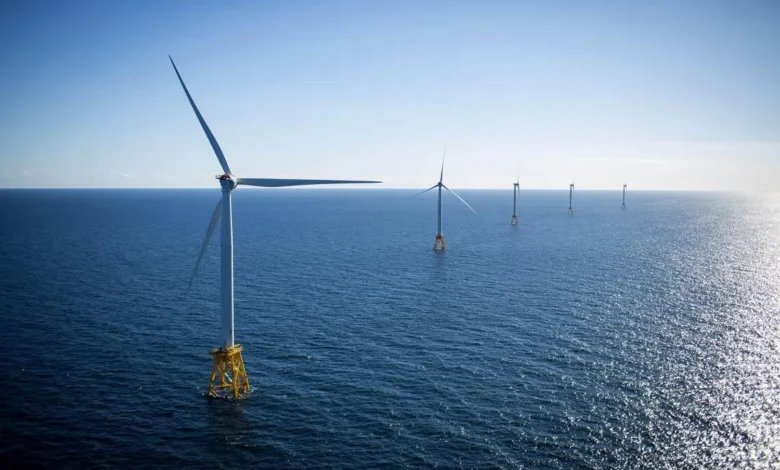
Under the agreement, Duke Energy would surrender its lease in federal waters for a wind farm that was planned in the Carolina Long Bay area, roughly 24 to 35km off southeastern North Carolina. The project was in the early stages of development, and construction had not yet begun.
The government plans to reimburse Duke Energy US$129 million, slightly less than the amount that the utility paid for the lease under the Biden administration. Duke Energy would then reinvest that money in other sources of energy favored by the Trump administration, which could include new nuclear and natural gas projects, according to the utility.


Scientists and environmentalists say that offshore wind farms could play a crucial role in the fight against climate change. Unlike burning fossil fuels, wind turbines do not generate any of the greenhouse gases that are dangerously warming the planet. And unlike large-scale solar farms, they do not take up vast amounts of valuable land.
The Trump administration, however, has criticised offshore wind projects as ugly and inefficient.
“President Trump’s vision of unleashing affordable, reliable American energy for our country’s communities and using common sense to put the American people first is being implemented,” Interior Secretary Doug Burgum said in a statement on Monday.
Burgum also repeated his earlier claims that offshore wind farms threaten national security.
Last year, the Interior Department cited those concerns when ordering a halt to the construction of five other wind farms off the East Coast, saying their spinning turbines could interfere with military radar. But several federal judges struck down the stop-work orders, saying they were unpersuaded by the administration’s arguments.
After its losses in court, the administration pivoted to a new strategy: paying developers to walk away from offshore wind projects. It struck the first such deal in March with French energy company TotalEnergies.
That deal saw the government pay TotalEnergies nearly US$1 billion to abandon plans to build two wind farms, one off New York and the other in the same area off North Carolina. Seven Democratic-controlled states have sued the administration over that agreement, calling it an illegal use of taxpayer dollars.
The latest deal with Duke Energy means the government has so far committed to spend more than US$2.5 billion to get companies to terminate their offshore wind leases.
Duke Energy, based in Charlotte, North Carolina, is one of the nation’s largest utilities. It provides electricity to roughly 8.7 million customers in six states and natural gas to roughly 1.6 million customers in four states.
“This settlement allows Duke Energy to refocus US$129 million in ways that directly benefit our customers and communities in the Carolinas,” Kodwo Ghartey-Tagoe, the executive vice president and CEO of Duke Energy Carolinas, said in a statement.
Riley Cook, a spokesman for Duke Energy, said in an email that the US$129 million would be reinvested in “reliable, diverse energy sources that can help meet growing demand” for electricity. He said the investments could flow to nuclear reactors and “grid infrastructure projects” in the Carolinas, though he did not provide specific details.
But Pasha Feinberg, an offshore wind strategist at the Natural Resources Defense Council, an environmental group, said the scuttled wind project could have helped meet soaring power demand, too.
“We need more electricity, not less,” Feinberg said in a statement. “Cancelling clean energy projects is self-defeating. Paying off companies so they will abandon them is just ludicrous.”
Governor Josh Stein also criticised the agreement.
“The Trump administration is strong-arming companies into abandoning clean energy, and the industry is folding like a beach chair,” Stein said in a statement, adding that his state needed the power and jobs that the wind project would have generated. BLOOMBERG