DUBAI, June 3 – The U.S.-Israeli war on Iran was meant to break the Islamic Republic. Instead, the warring sides are edging towards an interim agreement that would leave Iran battered but not broken.
As the outlines of a potential deal emerge from sources familiar with the discussions, Iran looks set to emerge economically shattered and with its military-industrial base severely degraded, but with hardline Revolutionary Guard dominance more firmly entrenched than before.
Even if a memorandum on ending the war is agreed soon, it is less likely to be a lasting breakthrough than a temporary truce, diplomats, officials and regional analysts say.
They portray the likely outcome as a bargain designed to reopen the Strait of Hormuz, ease economic pressure on global financial markets and Iran and give U.S. President Donald Trump a political off‑ramp while deferring the more intractable issues to a later date.

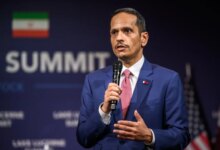
“There have been extraordinary tactical military successes and no fundamental strategic gains,” said Dennis Ross, a former senior U.S. diplomat. “There is no file that has been closed.”
‘MINIMAL OVERLAP’ BETWEEN IRAN AND US
After U.S.-Israeli strikes on Iran began on February 28, Trump said they were aimed at eliminating imminent threats from Iran, citing its nuclear and ballistic missile programmes, and urged Iranians to take control of their country.
Under an emerging memorandum described to Reuters by sources familiar with the discussions, Iran would lift its effective blockade of the Strait of Hormuz – a major artery for global oil supplies – and secure financial relief through the release of frozen Iranian assets or the limited easing of sanctions.
Iranian officials see a narrow deal as a way to buy time, unlock financial relief and contain rising domestic risks over a deteriorating economy without addressing the more contentious issues.
Trump, with one eye on midterm elections to Congress in November, wants language allowing him to claim progress on Iran’s nuclear programme, particularly its stockpile of highly enriched uranium, needed to make an atomic bomb.
The main drivers of the war would remain largely intact, with Iran refusing to abandon enrichment, Washington unwilling to offer Iran security guarantees and Israel still determined to contain an adversary it sees as an existential threat.
Iran calculates that it can deter future attacks only if it retains its missile arsenal, its regional network of allies and the ability to disrupt Gulf energy flows.
“What Trump needs politically and what Iran is willing to give may look close – but the overlap is minimal,” said Alan Eyre, a former U.S. diplomat and Iran expert.
The model, he said, was to reach a deal now and “kick all the tough issues to a phase two” that is unlikely to follow.
SHORT-TERM CEASEFIRE
Trump looks set to be left with a short-term ceasefire, an ambiguously worded commitment on highly enriched uranium and the Strait of Hormuz still under Iranian control, according to two regional sources familiar with the discussions.
Regional analysts say that even if the strait is opened, it is, as one analyst put it, “basically going to be under Iranian control, regardless of how any fees for passage are structured.”
Washington has largely dropped its focus on ensuring Iran’s ballistic missiles are dismantled, despite Israeli and Gulf concerns, they said.
Obstacles to overcome include Iranian demands to link any agreement to Israel halting attacks on Hezbollah, and Trump’s desire to get the optics right on the nuclear issue, the sources said.
They said Trump has, in effect, accepted a linkage between Lebanon and the strait despite publicly denying it. He has pressed Israel to halt strikes on Beirut and its southern suburbs, wary that any escalation in that conflict could derail efforts to secure a deal on the strait.
Iran sees the immediate release of about $12 billion in frozen assets as central to any deal, and is unlikely to move ahead without it, the sources said.
David Schenker of the Washington Institute for Near East Policy said Trump wanted to avoid comparisons with a nuclear deal reached under former President Barack Obama in 2015 but releasing Iranian funds risked inviting exactly that charge.
“I’m not sure there’s any way around it,” Schenker said.
CORE DRIVERS OF WAR SET TO REMAIN
In 2018, Trump pulled the U.S. out of the 2015 deal, under which Iran agreed to curbs on its nuclear programme in exchange for the lifting of sanctions. He said the deal failed to protect U.S. national security interests.
Trump wants wording now that allows him to claim a win on Iran’s nuclear programme without an escalation of the war.
“I think you can end up with language that each side interprets their own way. And then the (subsequent) negotiations will be quite fraught,” said Ross.
Any pause in the conflict is likely to leave the Revolutionary Guards emboldened, analysts say.
“Before they were the power behind the throne, and now they are the power,” said Schenker.
An interim deal is likely to leave Israel uneasy, with Iran’s leaders casting the war in stark ideological terms and signalling that no deal will resolve the underlying conflict.
“For Israel and Iran, this chapter of the war may have ended, but the conflict is not ending,” said Ross. REUTERS