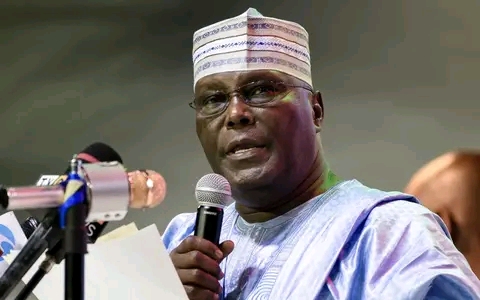
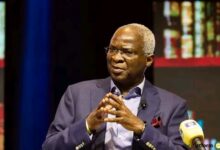
Former Vice President Atiku Abubakar has asked Nigeria’s anti-corruption agencies, the Auditor-General of the Federation and the National Assembly to begin investigations into claims that public spending took place outside the federal budget, citing findings in the International Monetary Fund’s latest review of Nigeria’s economy.
The call came on Saturday, 4 July, after Reuters reported on 1 July that the IMF’s Article IV consultation noted public expenditure worth about two per cent of Nigeria’s Gross Domestic Product was not recorded in recent official budgets. Atiku argued that the issue requires urgent action from public institutions responsible for financial oversight.
Read Related News
Atiku tells APC to end opposition harassment after ADC ticket win
David Mark backs Atiku, says democracy works
Tinubu assures IMF Chief of Nigeria’s commitment to social welfare
The former presidential candidate based his position on the IMF’s assessment, which he said pointed to off-budget government projects. He urged the National Assembly to hold emergency investigative hearings and asked the Auditor-General to carry out an independent audit of all expenditure referenced in the IMF report.
Atiku also requested that the Federal Government publish details of every project, contractor, procurement process and official linked to any spending done outside the approved budget. He said such information should be made available to Nigerians without redaction.
Call for institutional action
Atiku asked the Economic and Financial Crimes Commission, the Independent Corrupt Practices and Other Related Offences Commission and other law enforcement agencies to open formal investigations into the expenditure identified in the IMF review.
He also called on the Federal Government to account for what he described as ₦800 billion deducted from statutory allocations due to state governments and to return the money to the affected states.
The former vice president urged civil society groups, professional bodies, the media, businesses and international financial institutions to pay close attention to the IMF findings and support efforts aimed at ensuring accountability in public finance.
He described the issue as a constitutional matter that should not be handled only through government explanations but through independent scrutiny by institutions established under the law.
IMF report forms basis of allegations
Atiku claimed the IMF findings showed that spending equivalent to about two per cent of Nigeria’s GDP was carried out outside the official budget framework. Using Nigeria’s estimated GDP, he put the value at about ₦8.8 trillion.
He alleged that such expenditure escaped normal legislative oversight, procurement procedures and audit processes. He also linked the development to wider questions about transparency in public finance under the current administration.
The former vice president referred to the recent debate over funds appropriated for a presidential council that the government later said did not exist. He argued that the controversy made the IMF findings more significant.
Atiku further claimed that economic reforms introduced by the Federal Government had placed pressure on Nigerians through higher living costs, currency depreciation and expensive borrowing, while alleging that public funds were being spent outside the budget process.
He contrasted the figure cited from the IMF review with the economic stimulus proposal he presented during the 2023 presidential election campaign, arguing that transparent use of available resources could have supported businesses and job creation.
The Federal Government had not responded to Atiku’s latest remarks. His comments were based on his interpretation of the IMF’s Article IV consultation, which he said should prompt investigations and stronger oversight by Nigeria’s constitutional institutions.
For More News Details, Visit New Daily Prime.