A time was in Nigeria’s political evolution when opposition politics was regarded as a serious intellectual enterprise.
Opposition leaders were expected to scrutinise government actions, challenge policy failures, expose corruption and provide alternative pathways to national development.
They were not expected to become megaphones for every allegation that emerged in the public space. They were not expected to substitute emotion for evidence. Most importantly, they were not expected to pronounce guilt before facts had been established.
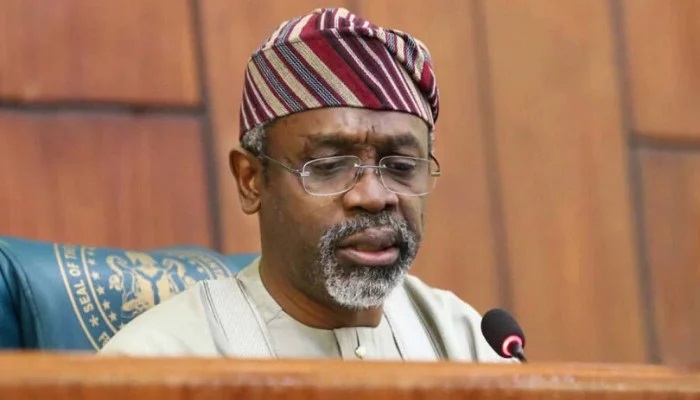
It is against this backdrop that the recent intervention by former Vice President Atiku Abubakar on the controversy surrounding the Chief of Staff to the President, Rt. Hon. Femi Gbajabiamila, must be examined.
Atiku’s call for the removal of the Chief of Staff over allegations made by Adeniyi Adeyemi, a man with evident character deficit, is not only premature; it represents a troubling departure from the standards of responsible opposition politics expected from a man, who has spent decades occupying the highest levels of public life.
One would have expected that a former Vice President of the Federal Republic, a serial presidential candidate and a politician who constantly projects himself as a defender of democratic values would insist on facts before conclusions.
This is more so that he is believed to have been a victim of false narattives in Nigeria’s recent history. Instead, what Nigerians witnessed was a rush to judgment that appears founded more on political convenience than on evidence.
This is unfortunate. The reason is simple. The entire foundation of the controversy remains riddled with unanswered questions. The most fundamental question remains the simplest one: Where is the appointment letter given to this serial impostor?
This question has stubbornly refused to go away because it lies at the heart of the matter.
Nigeria operates a structured system of public administration. Government appointments do not materialise through rumours, social media posts or verbal declarations. They are documented. They pass through official channels. They are accompanied by letters, records and approvals.
Anyone claiming to have held a government appointment should have no difficulty producing documentary evidence of such appointment.
It is, therefore, remarkable that many of those demanding the dismissal of Gbajabiamila appear less interested in establishing the authenticity of the underlying claim than in exploiting the controversy for political gain.
That is not accountability. That is opportunism. And opposition politics built on opportunism rarely serves the public interest.
Before a public official’s reputation is subjected to national ridicule, before calls for dismissal are made and before political actors mount the moral high horse, the minimum requirement should be proof.
However, the burden of proof does not lie with the accused. It lies with the accuser. This principle is so fundamental that it forms the basis of civilised justice systems across the world.
Yet, in today’s Nigeria, some politicians appear eager to reverse this logic. They demand that individuals prove their innocence while excusing those making allegations from proving their claims.
Such a position is dangerous. It is dangerous because it transforms politics into mob justice. It is dangerous because it destroys reputations without evidence. And it is dangerous because it undermines the very democratic values that opposition leaders claim to defend.
Atiku Abubakar should know this better than most. A few politicians in Nigeria have faced as many allegations, accusations and politically motivated attacks as Atiku himself.
Throughout his long political career, he has repeatedly argued that allegations must be substantiated and that due process should prevail over media trials.
Why then should a different standard suddenly apply when the target is Femi Gbajabiamila? Why should principles that Atiku has often invoked in his own defence be abandoned when political expediency beckons?
These are legitimate questions. They go to the heart of what separates principled opposition from partisan opportunism.
What makes the demand for Gbajabiamila’s removal even more puzzling is the absence of any credible evidence linking him directly to wrongdoing.
Even if one were to assume, purely for argument’s sake, that there were discrepancies in the claims made by Adeniyi Adeyemi, how exactly does that translate into culpability on the part of the Chief of Staff?
What is the chain of evidence? What documentary proof exists? What official record establishes wrongdoing? What investigation has reached such a conclusion? So far, the public has been offered little beyond insinuation. And insinuation is not evidence.
The tendency among some political actors to treat allegations as convictions reflects a broader crisis within contemporary opposition politics.
Instead of painstakingly building cases based on facts, research and documentation, there is an increasing temptation to jump onto trending controversies and weaponise them against political opponents.
The objective is obvious. Generate headlines. Dominate news cycles. Create public outrage. Force political damage. Whether the allegations are ultimately proven becomes secondary. The problem, unfortunately, is that such tactics gradually erode public trust.
When opposition figures repeatedly embrace controversies without first verifying the facts, they weaken their own credibility. Eventually, the public begins to view every intervention through a partisan lens.
That outcome benefits nobody. Certainly not democracy. Certainly not accountability. And certainly not the opposition itself.
Atiku Abubakar occupies a unique position in Nigeria’s political landscape. He is no ordinary politician. He is a former Vice President. He is a national figure. He is regarded by millions as an elder statesman. Such status carries responsibilities.
An elder statesman is expected to calm tensions, not inflame them. An elder statesman is expected to interrogate evidence, not amplify speculation. An elder statesman is expected to rise above the temptations of momentary political advantage.
The office may be gone, but the obligation to demonstrate maturity remains. That is why many Nigerians expected a more measured response from Atiku.
Rather than demanding the dismissal of a senior government official, a more statesmanlike approach would have been to call for transparency, encourage investigations and insist on the establishment of facts.
That would have strengthened public confidence. That would have demonstrated leadership. That would have reflected the temperament expected of a former Vice President and aspiring president.
Instead, the rush to demand Gbajabiamila’s removal has created the impression that politics, rather than evidence, is driving the conversation. This perception is difficult to ignore.
After all, if every allegation becomes sufficient grounds for dismissal, then no public official would survive a single news cycle in Nigeria. Public service would become impossible. Governance would become hostage to accusations.
And political actors would spend more time responding to rumours than addressing national challenges. That is not how serious democracies function. Responsible democracies insist on evidence.
Responsible democracies distinguish between allegations and findings. Responsible democracies protect both accountability and fairness. Nigeria should be no different.
There is another dimension to this matter that deserves attention. Those who know Femi Gbajabiamila’s political journey understand that he has spent decades building a reputation that transcends partisan politics.
From his years in the House of Representatives to his tenure as Speaker and now as Chief of Staff, he has remained one of the most visible figures in Nigerian public life.
Like every politician, he is not beyond scrutiny. Like every public official, he must be held accountable. But accountability cannot be divorced from evidence. Character assassination cannot masquerade as oversight.
Political convenience cannot replace due process. The question therefore is not whether public officials should be scrutinised. Of course they should. The question is whether scrutiny should be anchored on facts.
The answer must be yes. Anything less would amount to injustice. As matters stand today, those making allegations still bear the responsibility of substantiating them. The production of verifiable records remains essential.
The presentation of documentary evidence remains necessary. The establishment of a credible chain of facts remains unavoidable. Until these conditions are met, demands for dismissal appear not only premature but fundamentally unfair.
Nigeria’s opposition has a critical role to play in strengthening democracy. But that role cannot be fulfilled through reflexive outrage. It cannot be fulfilled through selective standards. And it cannot be fulfilled through the politicisation of every controversy.
The opposition must be better than the government it seeks to replace. It must be more disciplined. More rigorous. More evidence-driven. More thoughtful. That is how credibility is earned. That is how trust is built. And that is how democratic alternatives become attractive to the electorate.
Atiku Abubakar and other opposition leaders would therefore do well to reflect on the larger implications of their interventions. Every statement issued by a figure of such stature carries weight. Every accusation shapes public perception. Every demand influences national discourse.
The responsibility to get it right is therefore enormous. In the end, this controversy is about more than Femi Gbajabiamila. It is about the quality of Nigeria’s democratic conversation. It is about whether facts still matter. It is about whether evidence still matters.
It is about whether public figures can be condemned without proof. And it is about whether opposition politics in Nigeria will be guided by principle or by expediency.
The answers to these questions will ultimately determine not just the fate of individuals but the health of the democracy itself.
For now, one thing remains clear: before demanding anyone’s removal, before calling for anyone’s head and before transforming allegations into verdicts, the facts must come first. Anything else is not opposition politics. It is merely politics without responsibility.
*Tijani-Ahmed, a noted political analyst, writes from Kano.