0
Sola Shittu
The Nigeria Customs Service (NCS) has disclosed that the value of Import Duty Exemption Certificate (IDEC) approvals granted by the Federal Government rose to ₦34 trillion in 2025, a development it said significantly affected the Service’s revenue generation.
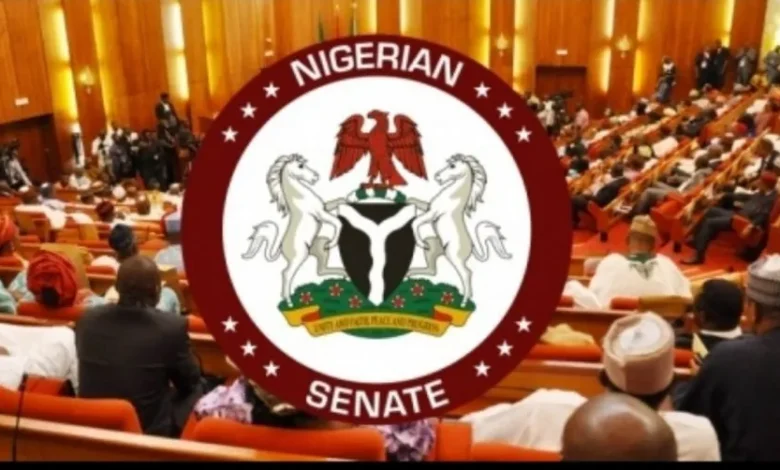
Comptroller-General of Customs, Bashir Adewale Adeniyi, made the disclosure on Monday while appearing before the Senate Committee on Finance during an investigative session with revenue-generating agencies.
Adeniyi explained that while the Customs Service remains one of the country’s leading revenue-generating institutions, government fiscal policies, particularly duty waivers and exemptions, have continued to reduce the amount of revenue collectible by the agency.
According to him, the Import Duty Exemption Certificate regime, which commenced in March 2020, has become one of the major factors limiting Customs revenue.
He told lawmakers that IDEC approvals reached about ₦34 trillion in 2025, adding that nearly 60 per cent of the exemptions were granted for the importation of military hardware in view of Nigeria’s security challenges.
He listed other categories that benefited from government-backed duty waivers to include the importation of Compressed Natural Gas (CNG) infrastructure, electric and hybrid vehicles, healthcare equipment and medical supplies, industrial machinery and manufacturing inputs, as well as food import intervention programmes.
The Customs boss, however, stressed that fiscal policy should not be assessed solely from the standpoint of revenue generation.
According to him, government interventions through import duty exemptions are often designed to achieve wider economic and social objectives, including industrial growth, improved healthcare delivery and enhanced national security.
He nevertheless urged the Federal Government to establish stronger monitoring mechanisms to ensure that beneficiaries of duty waivers deliver the expected outcomes, including lower consumer prices, increased local production and improved access to essential services.
Adeniyi also informed the committee that the Customs Service had made substantial progress towards its 2026 revenue target.
He said that out of the ₦11.04 trillion revenue target approved for the agency in the 2026 fiscal year, Customs had already generated ₦4.5 trillion as of June 30, leaving about ₦7 trillion to be realised before the end of the year.
Meanwhile, the Fiscal Responsibility Commission (FRC) accused the Customs Service of failing to remit ₦8.9 billion in operating surplus into the Consolidated Revenue Fund (CRF) as required by law.
The allegation was made by the Commission’s Deputy Director of Monitoring and Evaluation, Bello Gulmare, who represented the FRC at the hearing.
The Customs management, however, rejected the claim, insisting that the figures presented by the Commission were inaccurate.
The committee also queried the Corporate Affairs Commission (CAC) over an alleged ₦13.9 billion outstanding operating surplus covering the period between 2023 and 2025.
Responding, the Registrar-General of the CAC, Hussaini Ishaq Magaji, said the Commission had been making gradual remittances to offset the outstanding liability.
Following the submissions, Chairman of the Senate Committee on Finance, Senator Sani Musa (Niger East), directed the CAC, the Fiscal Responsibility Commission and the committee’s secretariat to jointly reconcile their records to determine the actual amount outstanding.
He directed that a comprehensive report of the reconciliation exercise be submitted within two weeks ahead of another interface with the committee.
The committee also expressed displeasure over the failure of several agencies to honour its invitation.
Among the agencies cited were the Nigerian Civil Aviation Authority (NCAA), the Small and Medium Enterprises Development Agency of Nigeria (SMEDAN), the Industrial Training Fund (ITF) and the Federal Medical Centre (FMC), Jabi.
Senator Musa warned that the affected agencies must ensure their chief executives personally attend the next hearing or face sanctions in line with the Senate’s rules and legislative powers.
“They must make themselves available at the next sitting. Failure to do so will compel the committee to invoke the relevant provisions of our rules to ensure compliance,” the committee chairman warned.