0
Oscar Okhifo
The Federal Government has intensified efforts to sanitise Nigeria’s construction sector, with the Minister of Housing and Urban Development, Engr. Muttaqha Rabe Darma, announcing plans to introduce a comprehensive regulatory framework for Nigeria’s built environment to curb quackery, prevent building collapse and improve professional standards.
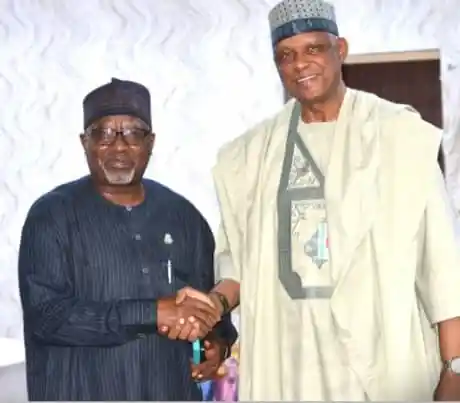
Speaking on Monday in Abuja while receiving the President of the Council for the Regulation of Engineering in Nigeria (COREN), Engr. Prof. Sadiq Zubair Abubakar, and members of the council on a courtesy visit, Darma said the reforms would also position the sector to contribute more meaningfully to Nigeria’s economic growth.


He disclosed that the Ministry of Housing and Urban Development would later this month present the proposed built environment regulation policy to key stakeholders for consultation before forwarding it to the Federal Executive Council (FEC) for consideration and approval.
According to the minister, the policy is designed to establish a unified regulatory framework that will enforce compliance with building codes, eliminate unqualified practitioners and promote accountability across the housing and construction industry.
Darma noted that the initiative forms part of the ministry’s broader agenda to strengthen the built environment, improve public safety and restore confidence in the nation’s construction sector while increasing its contribution to the country’s Gross Domestic Product (GDP).
Declaring regulation of the sector a personal priority, the minister said he was determined to ensure the built environment is properly governed before the end of his tenure, describing the initiative as one of the defining goals of his administration.
“Before I leave this office, we must regulate the industry. It is one of the landmark achievements that I have set my mind on doing,” he said.
Darma maintained that strict adherence to professional standards and building codes was non-negotiable, warning that the continued infiltration of unqualified practitioners posed a serious threat to public safety and the integrity of the construction industry.
“There must be certain codes that all of us are responsible to follow and obey. We cannot have an industry as big as what we have and quacks are controlling it,” he added.
He urged COREN and other professional bodies in the built environment to actively support the proposed reforms by participating in the forthcoming stakeholder consultations, stressing that broad collaboration would be critical to developing an effective and sustainable regulatory framework.
In his remarks, COREN President, Engr. Prof. Sadiq Zubair Abubakar, congratulated Darma on his appointment and described the Federal Ministry of Housing and Urban Development as one of the country’s key engineering-driven institutions.
He expressed confidence that the minister’s professional background would help deepen reforms and strengthen standards within the sector before formally inviting him to the 34th Engineering Assembly, an annual gathering expected to attract between 8,000 and 9,000 engineers, technologists, technicians, craftsmen and artisans.
Abubakar said this year’s assembly would be held in both physical and virtual formats to enable participation by professionals across Nigeria and the diaspora.
He added that the event would focus on public safety, regulation, compliance and enforcement, while unveiling COREN’s proposal for a tiered sanctions regime that distinguishes between preventive measures, disciplinary actions and criminal prosecution depending on the nature of violations, in line with international best practices.
Nigeria has witnessed recurring building collapses over the years, with many incidents resulting in loss of lives, injuries and the destruction of property worth billions of naira.
The Federal Government hopes the proposed regulatory framework, if approved and effectively implemented, will strengthen compliance with building standards, curb the activities of unqualified practitioners and significantly improve safety across the country’s built environment.