ISLAMABAD, Pakistan: On July 21, diplomats tried to save a temporary agreement between Iran and the United States that had broken down, while both countries continued attacking each other on the 10th day of renewed fighting.
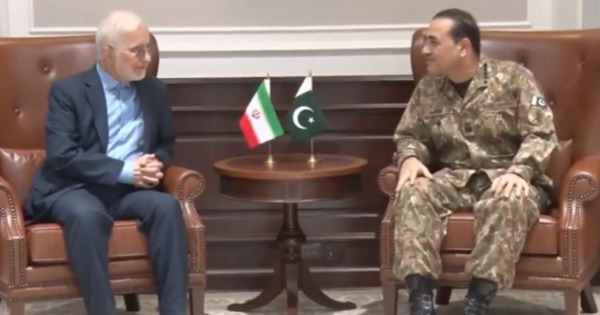
Iranian Interior Minister Eskandar Momeni visited Pakistan, which has been an important mediator in the conflict. His visit showed that diplomatic efforts were increasing, but it was still unclear what kind of new agreement could be reached to end the war.
Shipping through the Strait of Hormuz has mostly stopped. As both sides fight for control of this key waterway, they have also targeted civilian infrastructure in the region that millions of people depend on.
A series of U.S. airstrikes has not forced Iran to give up its control of the strait. Before the war, about one-fifth of the world’s oil and natural gas passed through this route. The United States continued its airstrikes early on July 21, while Iran attacked a tanker in the strait, forcing its crew to leave the ship.


Iran also continued attacks on U.S. allies in the region. Warning sirens sounded in Bahrain and Kuwait in the afternoon to alert people about incoming projectiles.
In the Red Sea, Iran-backed Houthi rebels opened a new front against Saudi Arabia by announcing a naval blockade. This move threatened global oil supplies and trade. With the Strait of Hormuz blocked, Saudi Arabia has been using a pipeline to the Red Sea to export millions of barrels of oil.
The rising conflict has caused oil prices to increase. Brent crude oil was trading above $90 per barrel on Tuesday, and the average price of regular gasoline in the United States rose to $4 per gallon. This has added financial pressure on Americans ahead of the midterm elections later in the year.
Momeni met Pakistan’s army chief, Field Marshal Asim Munir, according to two officials who spoke anonymously because the talks were private. He later also met Prime Minister Shehbaz Sharif.
In a statement, Sharif said he was deeply concerned about the recent increase in tensions between the United States and Iran. He urged all sides to show restraint and avoid actions that could further destabilize the region.
Pakistan’s political leaders and Asim Munir, who serves as both army chief and head of the defense forces, played an important role in helping to arrange last month’s temporary agreement between the United States and Iran. Pakistan has been trying to convince both sides to return to negotiations and resolve remaining issues under the June memorandum of understanding.
U.S. Secretary of State Marco Rubio said that the United States is still open to talks with Iran, but explained that any negotiations must be genuine. It is still unclear whether Iran will offer terms that President Donald Trump would consider acceptable.
There is still deep mistrust between the two sides. Iran was unexpectedly attacked in June 2025 and again in February while it was in nuclear talks with the United States. The temporary agreement fell apart after Iran restarted attacks on ships in the Strait of Hormuz, even though the deal had required the waterway to be reopened.
Meanwhile, the U.S. military’s Central Command said on July 21 that it had targeted Iranian military command centers, naval capabilities, missile and drone launch sites, and air defense systems. It also released more video footage showing airstrikes on locations inside Iran.


