Bangladesh is witnessing a deadly public health failure one that is now claiming the lives of its most vulnerable citizens: children.
In what should have been a near-eradicated disease, measles has returned with brutal force, exposing cracks in governance, policy decisions, and a fragile healthcare system now pushed to its limits.
“I have never seen an outbreak this huge,” said paediatrician Dr Mohammed Golam Mawla, as he surveyed the chaos inside a packed measles ward in Mymensingh a city now at the centre of a growing national tragedy.
This is a country that, until recently, was celebrated for keeping measles under control, with vaccination rates exceeding 90%. Today, that success story lies in ruins.
Since March, nearly 750 people—mostly children—have died. But even that number may be a dangerous understatement. With an overwhelmed health system and poor data collection, global health agencies warn the real toll could be far worse.
Inside Mymensingh Medical College Hospital, the reality is grim and unforgiving. Wards are operating at more than double their capacity. Nearly 130 patients are crammed into just 32 rooms. There are no beds for many. Families are left to spread mats on cold floors and crowded corridors, turning hospitals into makeshift survival camps.
This is not just a health crisis it is a system breakdown.
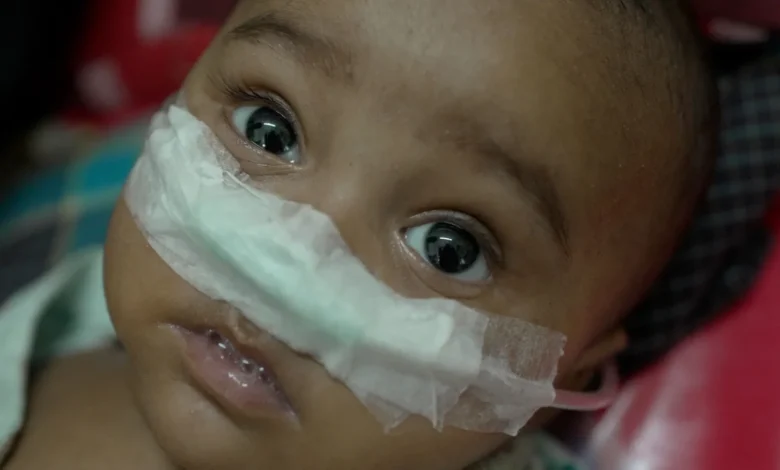
At the heart of the tragedy is four-month-old Arafat, a baby now fighting for every breath. His tiny nose cannot hold oxygen tubes, forcing doctors to tape them tightly across his face. He writhes in discomfort as his body battles pneumonia and heart failure deadly complications triggered by measles.
His father, Mohammad Alam Mia, has watched helplessly for over two weeks.
“We have been here for 15 days, but my baby isn’t getting any better,” he said, weighed down by fear, exhaustion, and mounting debt.
The family’s ordeal began with a desperate 10-hour journey to the hospital. Along the way, Alam Mia collapsed in the ambulance as his child slipped into a critical state.
Now, survival comes at a cost he cannot afford.
Arafat’s story is not isolated. It reflects a wider catastrophe over 120,000 suspected and confirmed cases reported in just a few months.
So, what went wrong?
Health experts point to a dangerous mix of delayed vaccine procurement, policy missteps, and the long shadow of the Covid-19 pandemic, which disrupted routine immunisation programmes. Mass vaccination campaigns have not been consistently carried out since 2020, leaving immunity gaps that have now exploded into a nationwide emergency.
Unicef has warned that delays by the interim government in securing vaccines may have worsened the crisis. Officials have pushed back, denying shortages but the scenes in hospitals tell a different story.
This is what failure looks like.
A preventable disease has been allowed to return. A healthcare system is buckling. And children who should have been protected are paying the ultimate price.
Bangladesh’s measles outbreak is no longer just a health issue. It is a warning.
When leadership hesitates, when systems weaken, and when prevention is ignored, the consequences are measured not in statistics but in lives lost.
@BBC