‘I’ll Defend Myself’ – Tinubu’s Former Minister Clarifies Court Case, Denies Hiding From ICPC

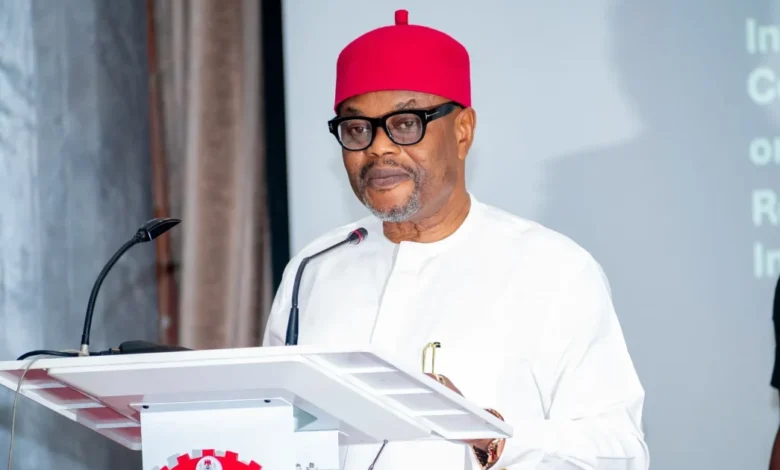
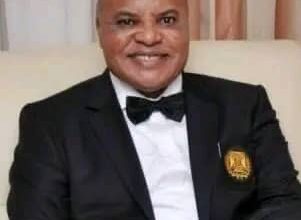
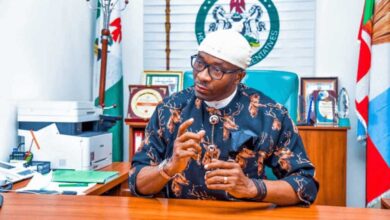
Former Minister of Innovation, Science and Technology and Peoples Democratic Party (PDP) governorship candidate in Enugu State, Uche Nnaji, has dismissed reports surrounding legal proceedings over his academic records, insisting that the controversies remain before the courts and should not be determined through public commentary.
Nnaji, in a statement issued on Wednesday by his spokesperson, Robert Ngwu, said recent media reports had created misconceptions by allegedly conflating civil proceedings, criminal investigations and procedural court actions.
He maintained that the dispute over his academic records remained subject to judicial determination and warned against presenting allegations as established facts.
According to the former minister, Suit No. FHC/ABJ/CS/1909/2025, currently before the Federal High Court in Abuja, is a civil action instituted by him to seek clarification and obtain his official university transcript.


The statement stressed that Nnaji was neither charged with an offence in the suit nor appeared before the court as an accused person.
It added that the matter was adjourned until October 20, 2026, after attempts by the parties to resolve the dispute outside the court failed.
“The proceedings are not a criminal trial and do not amount to a determination of guilt,” the statement said.
Reacting to reports that the Independent Corrupt Practices and Other Related Offences Commission (ICPC) had filed criminal charges against him, Nnaji said he had not been formally served with any charge, hearing notice or arraignment notice.
He, however, said he was prepared to defend himself if charges were formally brought against him in accordance with the law.
“Filing a criminal charge does not amount to a finding of guilt, and an arraignment is not a conviction,” the statement noted.
It added that criminal liability could only be established after a full trial in which the prosecution and defence were allowed to present their cases.
Nnaji also denied allegations that he ignored invitations from the ICPC or attempted to evade law enforcement authorities.
According to the statement, the former minister remained accessible and continued to participate openly in political and public activities.
It argued that suggestions that Nnaji was in hiding were inconsistent with his continued public engagements.
On the arrest warrant reportedly obtained by the ICPC, Nnaji maintained that the order was a procedural measure intended to secure his appearance before the anti-graft agency.
He insisted that the warrant did not amount to a conviction or a judicial finding that he had committed an offence.
The statement said Nnaji’s legal team, led by Chief Wole Olanipekun, had challenged the order before the Court of Appeal, where the matter remained pending.
The former minister also said he voluntarily resigned from office to concentrate on clearing his name through lawful and judicial processes.
He expressed confidence in the judiciary and maintained that the controversies surrounding his academic records would ultimately be resolved through due process.
Nnaji urged members of the public and media organisations to distinguish between allegations and established facts, civil and criminal proceedings, as well as arraignment and conviction.
“Every Nigerian is constitutionally entitled to the presumption of innocence until proven guilty by a court of competent jurisdiction after a fair hearing,” the statement added.