Nigeria’s 105 Million Children Face Growing Risks As UNICEF Demands Greater Investment

0
Lagos – Nigeria’s nearly 105 million children and adolescents represent the country’s greatest opportunity for economic transformation and national resilience, but rising living costs and mounting global pressures are threatening the investments needed to secure their future, UNICEF has warned.
Nigeria’s nearly 105 million children and adolescents represent one of the world’s greatest opportunities to build human capital, innovation and resilience, according to UNICEF Executive Director Catherine Russell.
She said the country’s youthful population, accounting for almost half of all Nigerians, could become the foundation of future prosperity if sustained investment in children’s welfare is maintained despite worsening economic pressures.

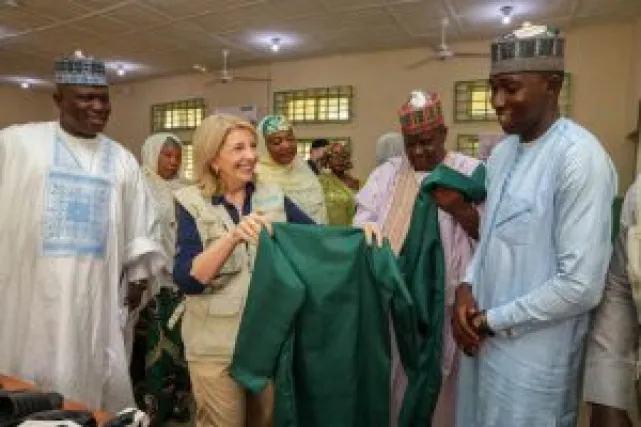
Russell made the remarks after completing an official mission to Nigeria, where she highlighted both the enormous potential of children and the urgent need to safeguard recent development gains.
She warned that rising prices were placing additional strain on vulnerable households, making investment in children more critical than ever.
The UNICEF Executive Director said she witnessed the determination, ambition and resilience of children and young people throughout her visit despite the significant challenges confronting many families.
Russell expressed encouragement over government-led efforts to expand essential services for children across the country.
She recalled visiting a UNICEF-supported healthcare centre in Sokoto, where children suffering from malnutrition were receiving life-saving treatment alongside their mothers.
She also met girls and boys benefiting from digital learning initiatives, which are providing many children with another opportunity to continue their education.
According to Russell, these experiences reflected both the challenges facing Nigerian children and the positive impact of targeted interventions.
She acknowledged progress in birth registration, social protection and school enrolment, describing the achievements as evidence that sustained investment in children produces measurable results.
However, she stressed that far greater efforts are required to ensure every Nigerian child enjoys the benefits of those gains.
Russell warned that global economic pressures, including the effects of the Middle East crisis, funding constraints and other external shocks, are creating fresh obstacles to sustaining progress for children.
She added that insecurity, displacement and climate-related shocks continue to expose children and families in several communities to greater vulnerability.
Despite these challenges, she said efforts remain focused on strengthening healthcare, nutrition, education, safe water and child protection services across the country.
Russell emphasised that stronger investment and broader partnerships are essential to ensure vulnerable children are not left behind.
She described the first years of life as a critical period for every child, stressing that proper nutrition, quality healthcare, early learning and protection enable children to reach their full potential.
According to her, these investments provide the foundation for stronger communities and a more prosperous economy.
 Russell welcomed the commitment demonstrated by federal and state governments towards improving children’s welfare.
She reaffirmed UNICEF’s commitment to working with governments, development partners and the private sector to expand opportunities for every Nigerian child.
She maintained that Nigeria’s future will ultimately depend on the choices made for children today.
Russell said Nigeria has the opportunity to become a positive example of investment in essential services and inclusive economic growth that benefits every child.
She reaffirmed UNICEF’s commitment to supporting the country’s efforts to unlock the immense potential of its young population through sustained investment and partnership.