Restoring UNIUYO’s Lost Glory: New Vice- Chancellor’s Bold Reform Agenda Raises Fresh

0
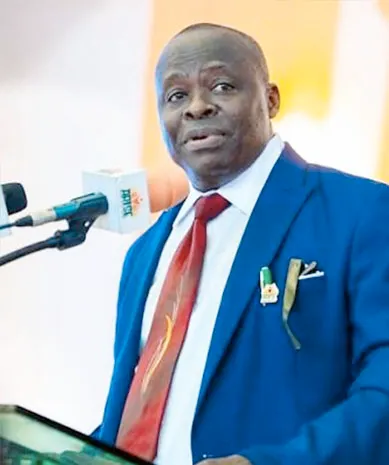
LAGOS – Professor Christopher Nyong Ekong assumed office as the ninth substantive Vice-Chancellor of the University of Uyo at a time when expectations for transformative leadership have rarely been higher.
For years, students have navigated lecture halls in need of rehabilitation, endured delays in transcript processing, struggled with unreliable internet connectivity and watched campus infrastructure gradually deteriorate. Academic staff have continued to pursue excellence despite limited research support, while alumni have increasingly questioned whether their alma mater was still living up to the reputation that once made it one of Nigeria’s most respected federal universities.
It is against this backdrop that Professor Ekong’s inauguration on June 16, 2026, has generated widespread optimism across the university community. More than a routine change of leadership, his emergence has reignited hopes that UNIUYO may be on the threshold of a new era of renewal and institutional excellence.

His inaugural lecture, “Restoring the Promise, Rebuilding the Future,” went beyond ceremonial declarations. It presented a comprehensive roadmap that openly acknowledged the university’s challenges, outlined practical reform priorities and invited staff, students, alumni, government and development partners to become active participants in rebuilding the institution. Whether those lofty aspirations translate into lasting reforms will ultimately define his tenure.
Established as the University of Uyo in 1991 after evolving from the former University of Cross River State, the institution has grown into one of Nigeria’s leading federal universities, boasting numerous faculties, a thriving postgraduate school and thousands of students. Over the decades, it has produced distinguished academics, judges, public servants, entrepreneurs, captains of industry and political leaders whose contributions extend well beyond Nigeria’s borders.
Yet, like many public universities across the country, UNIUYO has grappled with declining infrastructure, inadequate funding, rising enrolment, ageing facilities and intense competition for global relevance.
Professor Ekong confronted those realities with uncommon candour.
“We cannot change the past, but we can shape the future. Our mission is clear: to restore excellence, rebuild confidence, renew infrastructure, strengthen scholarship, and reposition the University of Uyo as one of Nigeria’s leading centres of learning, innovation, research and service.”
That declaration has become the defining philosophy of his administration.
Its significance is amplified by the wider challenges facing Nigeria’s higher education sector. Public universities continue to contend with infrastructure deficits, dwindling research funding, brain drain and declining positions in international university rankings. Education experts increasingly argue that visionary leadership, prudent resource management and strategic partnerships have become just as critical as government funding in determining institutional success.
Professor Ekong appears well prepared for that challenge.
Beyond his impressive academic credentials, the accomplished economist and specialist in Monetary and Development Economics brings more than three decades of institutional experience. Since joining the University of Uyo as an Assistant Lecturer in 1993, he has risen through the ranks to become Professor of Economics while serving in several key leadership positions, including Head of the Department of Economics, Director of International Programmes, Dean of the Faculty of Social Sciences and Chairman of the Committee of Deans.
His extensive public service experience further enriches his profile. He has served as Commissioner representing Akwa Ibom State on the Revenue Mobilisation Allocation and Fiscal Commission, Commissioner for Economic Development, Chief Economic Adviser to the Akwa Ibom State Government, Commissioner for Youth and Sports, Chairman of Akwa United Football Club and member of the Governing Council of the Federal University of Petroleum Resources, Effurun.
Those roles have equipped him with valuable expertise in public finance, policy implementation, institutional governance and stakeholder management—competencies increasingly regarded as indispensable for modern university leadership.
At the heart of his administration is an ambitious reform agenda built around six strategic pillars: infrastructure renewal; academic excellence and research; staff welfare; student-centred development; digital transformation and governance; and global partnerships.
Each pillar directly addresses longstanding concerns within the university community.
Students are expected to benefit from plans to improve hostel accommodation, strengthen campus security, provide reliable internet access, expand entrepreneurship programmes and streamline administrative processes.
Among the administration’s boldest commitments is the pledge to reduce transcript processing time to just 72 hours—a reform that could significantly enhance the university’s reputation among graduates seeking employment or pursuing further studies abroad.
Academic staff and researchers are equally encouraged by promises to expand access to research grants, strengthen postgraduate education, promote interdisciplinary research and deepen international collaborations.
Equally noteworthy is the administration’s emphasis on digital transformation. Plans are underway to modernise university administration through technology-driven systems, introduce biometric authentication, improve institutional data management and promote transparency through a Vice-Chancellor’s performance dashboard.
Such initiatives reflect the growing consensus that universities aspiring to global competitiveness can no longer depend on outdated administrative systems.
Another distinguishing feature of Professor Ekong’s inaugural address was his willingness to openly acknowledge institutional shortcomings rather than downplay them.
He admitted that infrastructure had deteriorated, research capacity had weakened, administrative processes had become inefficient and stakeholder confidence had suffered. Higher education experts often regard such honesty as the essential starting point for meaningful institutional reform.
His proposed First 100-Day Renewal Agenda reinforces that impression. Rather than focusing on symbolic announcements, the agenda prioritises practical interventions, including campus beautification, comprehensive institutional audits, improved security infrastructure, faculty-led maintenance initiatives and regular stakeholder engagement through town hall meetings.
Nevertheless, ambitious promises alone will not transform the university.
The real challenge lies in implementation, sustainable funding, stakeholder collaboration and the administration’s ability to maintain reform momentum long after the excitement surrounding the inauguration subsides. Infrastructure development demands enormous financial resources. Digital transformation requires continuous investment. Research excellence depends on sustained funding and robust international partnerships, while student welfare calls for prudent management in an era of constrained