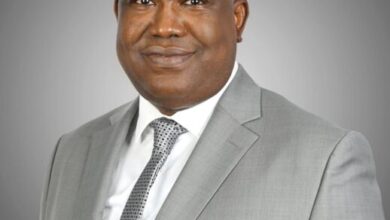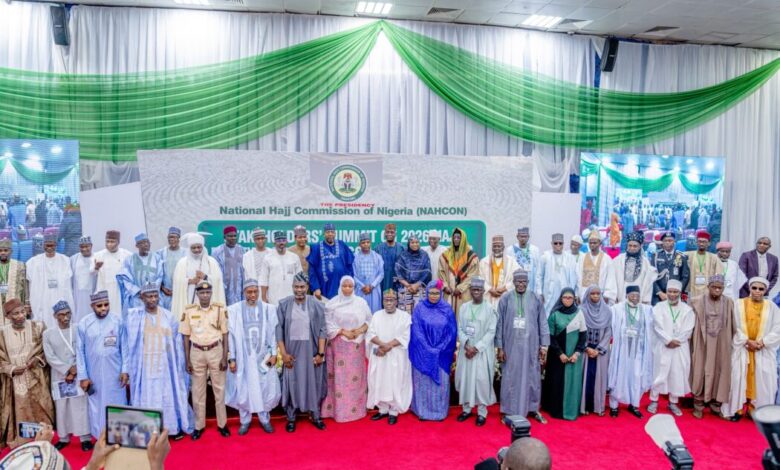
Represented by former Minister of the Federal Capital Territory, Dr Aliyu Modibbo Umar, at the Stakeholders’ Summit on the Post-2026 Hajj Review and NAHCON Reform Agenda in Abuja, the Vice President said Hajj administration demands the highest standards of integrity, accountability and selflessness.
He reminded NAHCON management, commissioners and other stakeholders that facilitating the pilgrimage was more than a public service, describing it as a religious obligation with eternal consequences.
“Your one leg is in Al-Jannah, the other leg is in the wrong place unless you do the right thing,” he said, urging officials to remain committed to ensuring pilgrims perform an acceptable Hajj.
Shettima also reaffirmed President Bola Tinubu’s commitment to strengthening Hajj operations through reforms aimed at improving transparency, accountability and service delivery.
Guest speaker, Professor Is-haq Oloyede, commended NAHCON for the noticeable improvement in the 2026 Hajj exercise, saying the Commission had spared Nigeria the embarrassment that often followed previous pilgrimages.
He, however, stressed that Hajj should never be treated as a commercial venture, urging the Commission to focus on its regulatory role by setting standards, enforcing compliance and allowing state pilgrim boards and licensed operators to handle day-to-day operations under strict supervision.
Representing the Sultan of Sokoto, Emir of Dutse, Alhaji Muhammad Hamim Nuhu Sanusi, praised NAHCON’s openness in acknowledging its shortcomings, describing it as the first step towards meaningful reform.
While commending the timely airlift of pilgrims by Nigerian airlines, he identified third-party service providers in Saudi Arabia as the major source of operational challenges during the 2026 Hajj and called for stricter vetting of vendors.
Earlier, NAHCON Chairman and Chief Executive Officer, Ambassador Ismail Abba Yusuf, said the summit was convened as a platform for accountability and institutional reform.
He acknowledged successes recorded during the 2026 Hajj, including orderly airlift operations, improved visa processing and enhanced medical services, but admitted there were lapses in catering, accommodation, transportation and compliance by some service providers.
Yusuf announced that the Commission had commenced post-Hajj reconciliation with Saudi service providers and warned that contractual failures would no longer go unpunished, declaring that future patronage would be based strictly on performance.
He also unveiled a reform agenda anchored on digital transformation, stronger regulatory oversight, financial transparency, professional training and early planning to align Nigeria’s Hajj operations with Saudi Arabia’s Vision 2030 pilgrimage reforms.