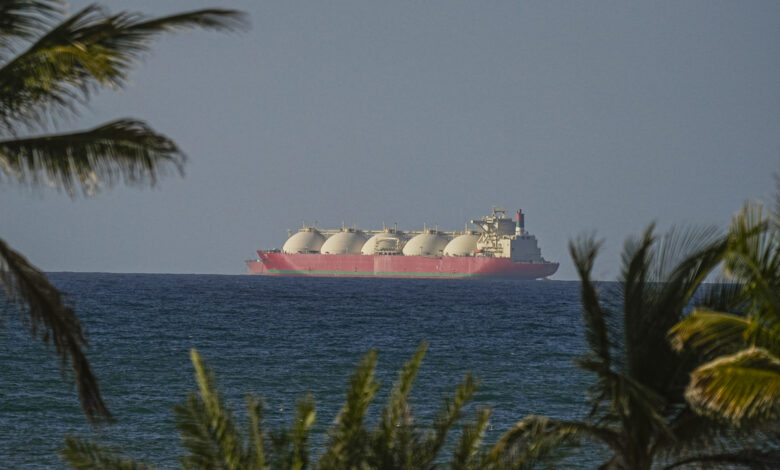
The significance of the Strait of Hormuz for global trade is beyond dispute. In the week preceding the US-Israel war on Iran, 38 per cent of global seaborne crude oil trade passed through the Strait, along with 29 per cent of liquefied petroleum gas (LPG), 19 per cent each of liquefied natural gas (LNG) and refined oil products trade, and 13 per cent of chemicals trade, including fertilisers. A smaller share of container shipping and dry bulk cargo trade also passed through Hormuz. The de facto closure of the Strait reduced shipping flows through it by more than 90 per cent. The Strait’s two major bypass routes, through Saudi Arabia and the United Arab Emirates (UAE), could carry only less than half of the daily seaborne oil volumes that would otherwise pass through Hormuz and some fertiliser, container and dry bulk trade.
Shipping traffic through the Strait is now resuming. However, vessel attacks have not completely halted and a new contentious issue has emerged over possible service fees, suggesting that future passage through the Strait may become costlier relative to pre-war levels. At the same time, geopolitical analysts believe that the recent crisis should not be treated as a one-off episode, as the core structural rivalry between the United States, Iran, and Israel persists.
Amid this, two key assumptions have come to the fore regarding the future of Gulf energy and trade routes. First, these routes are likely to decline in relevance as import-dependent states will seek supplier diversification. Second, given the risks of future disruption in Hormuz, a new bypass architecture is likely to emerge in the medium term that can help offset the impact of disruption, even if a short-term vulnerability remains high.
READ: Germany says Iran should pay for mine clearance in Strait of Hormuz
A deeper analysis, however, reveals that these assumptions may not fully hold true.
Assumption one: Declining relevance of Gulf energy and trade routes due to supplier diversification
The crisis demonstrated that, as global supplies of key commodities were disrupted, alternative suppliers, particularly the US, were able to partially increase the supplies, helping alleviate some shortages.
But for nations dependent on imports from the Gulf, supplies from alternative regions could serve only as imperfect substitutes.
Take, for instance, the case of crude oil. By May, the United States had increased its net seaborne exports by around 4 million barrels per day (bpd). But many refineries in Asia have been configured to process medium- to heavy-sour crude grades produced in the Gulf. Switching to lighter, sweeter crude grades from the US led to lower yields and narrower margins. Even if a refinery can process different grades, alternative supplies from distant markets mean higher freight costs, longer delivery timelines, and greater insurance costs. By June, global refineries, particularly in Asia, were processing around 5 million bpd less crude oil, with collateral effects felt in the refined products and petrochemical markets. Refinery reconfiguration is both a capital- and time-intensive endeavour. Liquefied petroleum gas (LPG) serves as another case in point. Asian importers turned to US LPG supplies, but by late May, reports emerged that they were cancelling some cargoes due to higher shipping costs. Also, countries such as India, one of the largest importers of Gulf LPG, require a butane-propane mix for the residential sector, but US LPG exports were mostly propane-heavy, making them less suitable without adjustment.
Taken together, while some supplier diversification may occur, a meaningful shift may be more challenging than commonly assumed, at least in the foreseeable future.
Assumption two: The rise of a resilient bypass architecture
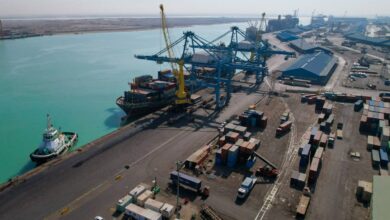
In response to the Hormuz crisis, the UAE has already fast-tracked work on a second crude pipeline, which is now expected to be completed as early as next year and have a capacity of 1.5-2 million bpd. It is also planning to develop its multi-fuel pipeline capable of transporting gasoline, diesel, and jet fuel. Meanwhile, Saudi Arabia has been weighing options to expand pipeline capacity to export more of its 10.2 million bpd of daily production of crude oil, while Saudi Aramco is considering increasing its oil storage capacity around the world. Kuwait has been considering expanding its overseas oil storage capacity and exploring potential tie-ups with Saudi Arabia and the UAE. Iraq has already commenced work on an oil pipeline linking Basra and Haditha within the country, with proposed future linkages to Jordan, Syria, and Turkiye.
While these projects are capital-intensive, analysts suggest that there now appears to be a genuine shift from ‘hypotheticals to operational reality.’ In the short- to medium-term, expansion of existing pipeline networks could realistically materialise, while Gulf nations are also likely to expand overseas oil storage capacities. This is in addition to the new UAE pipeline, expected to become operational by 2027.
READ: Medvedev says Strait of Hormuz gives Iran leverage comparable to ‘nuclear weapon’
Beyond oil, the GCC railway project connecting all six GCC member states is expected to become fully operational by 2030, but some routes may begin operations earlier, facilitating imports into the Gulf and exports of non-oil products. The crisis also demonstrated the utility of trucking arrangements linked to Red Sea ports for imports into Gulf nations, suggesting that supporting infrastructure for such arrangements could be further developed.
The emerging bypass architecture, however, may have its own limits. Not all countries and trade flows are likely to be equally insulated. Notably, Qatar has not officially announced any new plans for LNG, although discussions on several gas pipeline proposals involving cross-border or multi-country arrangements have been revived. However, even if a gas pipeline project is launched in the near term, it may still take several years to complete, given the longer timelines involved in arrangements involving more than a single country. For such arrangements, beyond financial requirements, political hurdles over who controls pipeline operations and supply flows are also likely to be significant. As a result, a full reopening of the Strait could reduce the urgency and perceived incentive to undertake complex projects. Second, and more importantly, the war demonstrated that bypass routes are not risk-free either.
Although attacks on infrastructure along these routes, including the UAE’s port of Fujairah, the Saudi East-West pipeline, and the Port of Yanbu, were limited during this war, this may not necessarily be the case in any future crisis.
Bottom line
For the Gulf nations, the broader consideration is that while bypass mechanisms can reduce vulnerability, they cannot guarantee security and cannot shield all states equally from the effects of a disruption. The way forward, alongside bypass strategies, is to pursue balanced diplomatic relations and accelerate economic diversification.
Without a foreign policy shift, symbols of economic diversification may also remain vulnerable to threats, as the recent war showed that data centres, airports, and the hospitality sector became carefully chosen strategic targets.
For energy-importing states, the broader lesson is to build domestic resilience and invest in alternative energy. This is necessary not only because bypass architectures may remain vulnerable to threats, LNG is likely to remain a key vulnerability, and supplier diversification may not be the most viable route, but also because even the fear of disruption can initially push energy prices up. For resource-constrained nations, even a brief increase of a few percentage points in energy prices can have a consequential impact on import bills and inflation levels. In addition, the fact that other chokepoints could also be weaponised in the future cannot be underestimated.
OPINION: The US-Israel war on Iran: Objectives, strategy, and escalation management
The views expressed in this article belong to the author and do not necessarily reflect the editorial policy of Middle East Monitor.